Antonio Veronese

Definition and stakes

Frank Jewett Mather,  A history of Italian painting (1923)

“ But no well-advised person looks to Paolo Veronese for soul. One rather seeks in him judgment and fine painting. Both are at their maximum.
Paolo Caliari was born at Verona in 1528, trained by a half primitive master, Antonio Badile, and influenced by the energetic compositions of Brusasorci. Paolo inherited the long Veronese tradition for spectacular narrative painting with splendid architectural accessories, and he carries the local tradition to its close and height. He came to Venice at twenty-seven, a finished and famous artist, bringing with him a novel sort of color.
”
Source: Gutenberg

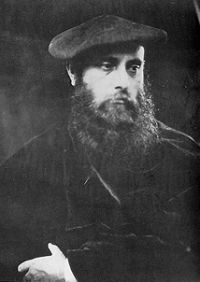
Portrait of William Michael Rossetti William Michael Rossetti,  1911 Encyclopædia Britannica, Volume 20… (1911)

“ PAUL VERONESE (1528–1588) , the name ordinarily given to Paolo Caliari, or Cagliari, the latest of the great cycle of painters of the Venetian school, who was born in Verona in 1528 according to Zanetti and others, or in 1532 according to Ridolfi. His father, Gabriele Caliari, a sculptor, began to train Paolo to his own profession. The boy, however, showed more propensity to painting, and was therefore transferred to his uncle, the painter Antonio Badile, whose daughter he eventually married. ”
Source: Wikisource

Sarah Tytler,  The Old Masters and Their Pictures…

“ He visited Rome in the suite of the Venetian ambassador in 1563, when he was in his thirty-fourth year, and he was invited to Spain to assist in the decoration of the Escurial by Philip II., but refused the invitation.
Veronese is said to have been a man of kindly spirit, generous and devout. In painting for churches and convents, he would consent to receive the smallest remuneration, sometimes not more than the price of his colours and canvas. For his fine picture now in the Louvre, the 'Marriage of Cana,' he is believed not to have had more than forty pounds in our money.
”
Source: Gutenberg

Get perspective with Kwize: daily news enlightened by great literature