“ There was no dirt in Exeter Cathedral to dim its complete and finished loveliness, and all its surroundings were in character and keeping with it, "composed" by time and circumstance to make the picture perfect—especially on a golden autumn day. What should be the cast of mind of a bishop privileged to live in such a house and grounds as lie, peaceful and stately and exquisite, under the shadow of the south tower? I like to remember that one bishop of Exeter had a son who was the father of my Eden Phillpotts, whose intellectual inheritance is the love of beauty, uncloistered, unsophisticated ”
Bishop of Exeter
Definition and stakes
Quotes about “Bishop of Exeter”
Various, The Southern Literary Messenger… (1836)
“ Do you not observe behind his grace, that little yellowish man with the eye of a caged tiger, constantly moving himself about, now leaning forward, now appearing so impatient, playing and jumping about on his bench: it is the bishop of Exeter, one of the sturdy pillars of the fanatic church militant. This man is the most cunning and dangerous foe to liberty; his evil nature clothes itself with all the seduction of the most amiable manners. ”
Henry Morse Stephens,
Dictionary of National Biography…
(1912)
“ The privy council had ruled there was nothing illegal in the figures, and the legislature had granted to the bishops discretionary power to stop proceedings. Accordingly, as bishop of London he refused to allow the case to proceed. His speeches while bishop of Exeter, in the House of Lords on the university tests bill (1870) and the bill for opening churchyards to non-conformists (1880) , showed him true to his liberal principles. While bishop of Exeter he became a member of the governing body of Rugby School, and for the last ten years of his life was its chairman. ”
Percy Addleshaw, Bell's Cathedrals: The Cathedral Church of Exeter
“ The most eastern window of the aisle is filled with stained glass representing four bishops of the Courtenay family. Peter Courtenay, Bishop of Exeter, will be recognized as he holds the great "Peter" bell, his gift to the cathedral, which hangs in the north tower. He is the bishop alluded to by Shakespeare (Richard III., Act iv, Sc. 4) : "In Devonshire Sir Edward Courtenay, and the haughty Prelate, Bishop of Exeter, his elder brother, With many more confederates are in arms." ”
L. Tyerman, The life and times of the Rev. Samuel Wesley (1866)
“ The founder of Exeter College was Walter Stapleton, Bishop of Exeter, Lord Treasurer of England, and Secretary of State to King Edward II., 1316. He founded a society of thirteen—that is, a rector and twelve fellows—one of whom, the chaplain, was to be appointed by the dean and chapter of Exeter; eight were to be elected out of the archdeaconries of Exeter, Totnes, and Barnstaple; and four out of the archdeaconry of Cornwall. Among the subsequent benefactors of Exeter College was Edmund Stafford, Bishop of Exeter, who settled two fellowships for the diocese of Sarum. ”
Memorials of Old Devonshire (1904)
“ Augustine, was founded in 1121 by William Warelwast, Bishop of Exeter, the nephew and chaplain of William the Conqueror. He was one of the most gifted and energetic ecclesiastics of his day, and to him we are indebted for the earliest existing portions of Exeter Cathedral, including the two noble Norman towers. He seems to have set his heart on making Plympton priory the richest and most important in this part of the kingdom, and conveyed to it very large properties in Exeter. Many noblemen followed his example. ”
Rosalind Northcote,
Devon, Its Moorlands, Streams and Coasts
“ During the furious struggle the Saxons' ammunition began to run low, and the priest of Pinhoe rode back to Exeter for a fresh supply of arrows. In recognition of his service, the perpetual pension of a mark (13s. 4d.) was granted him, and this sum the Vicar of the parish still receives. Two years later the Danes made a successful assault upon the city, and seized much plunder, but made no stay.Edward the Confessor visited Exeter, and assisted at the installation of Leofric as first Bishop of Exeter, when the see was transferred from Crediton. ”
Sabine Baring-Gould,
A Book of the West
(1899)
“ At Aveton Gifford is a fine screen, carefully restored. Walter de Stapledon was rector of this parish, and was raised thence to be Bishop of Exeter in 1307, and in 1314 he was the founder of Exeter College, Oxford. ”
A. G. K. L'Estrange, History of English Humour, Vol…
“ And among our old proverbs we have "Many men of many minds." "Fools build houses, for wise men to live in." "First come, first served." The motto of the Duke of Athole runs "Furth fortune and fill the fetters."The "Exeter Book," presented to his cathedral by Leofric, first Bishop of Exeter in 1046 deserves notice, as indicative of the course of early Anglo-Saxon literature. Here we have first religious meditations and legends of Saints, then proverbial, or as they are called "gnomic" verses, next allegorical descriptions by means of animals, and finally riddles. ”
The Parochial History of Cornwall…
“ Afterwards this collegiate church, thus founded and endowed, and dedicated to the Virgin Mary and Thomas Becket, Archbishop of Canterbury, received a greater augmentation of wealth, lands, and revenues from John Grandison, Bishop of Exeter, 1358, who had persuaded all rich priests of his diocese to make him his heir and executor, in order to build and endow churches with their riches ”
Henry Morse Stephens,
Dictionary of National Biography…
(1912)
“ As bishop of Exeter he had an early opportunity of putting his views into practice. Forster's Education Act was passed in 1870. It was necessary for church people to improve and add to their schools, and at a meeting at Exeter, by his words and his example in subscribing 500l., he induced the diocese to raise a large sum for the purpose. It was also necessary to deal with schools of higher rank in the diocese of Exeter. ”
Sir Edward Hall Alderson, A Second Letter to the Bishop of Exeter
“ A qualified employment of the Church Legislature is essential to the healthy action p. 16of the English Church. Let me take the Gorham controversy as an instance. There was a decision of five Judges and two Archbishops, with one Judge and the Bishop of London dissenting, which overruled the opinion of the Bishop of Exeter, the diocesan, and that of the Judge of the Arches, Sir Herbert Jenner Fust. Surely that was a case in which the expressions of the written law were so doubtful, that a declaratory Act of Convocation to avoid such doubts in future, was, to say the least of it, very desirable. ”
Cecil Headlam, Oxford and Its Story
“ Inspired by the example of Merton and a similar dislike of{125} monks and friars, Walter de Stapeldon, the great Bishop of Exeter, ordained that the twelve scholars whom he originally endowed (1314) should not study theology or be in orders. The society, afterwards known as Exeter College, was housed at first in Hart Hall and Arthur Hall, in the parish of S. Peter in the East, and was intended by the founder to be called Stapeldon Hall. ”
Douglas William Jerrold,
The barber's chair; and, The hedgehog letters
(1874)
“ Nevertheless, there’s no doubt that the Bishop of Exeter—for he’s very strong upon the offertory—has introduced it to make religion, what is so very much liked in England, select and respectable. You see the people who can’t afford to drop their Sunday shillings and sixpences, won’t have the face to go to worship at all—or they may turn Dissenters, and so the Established Church, like the Opera-house, will be made a place for what the Standard (I can tell you that is a religious paper, though you may never hear of it) calls the “better classes.” ”
Leslie Stephen,
Dictionary of National Biography…
(1898)
“ He was also chaplain to Clement V and precentor of Exeter. The king's license to elect a successor to Thomas de Bytton, bishop of Exeter, was granted on 6 Oct. 1307, and Stapeldon was unanimously chosen on 13 Nov., all the canons but one being present or represented. Much delay arose through the vexatious opposition of Richard de Plympstoke, rector of Exminster and Uffculme, who in an appeal to the pope contested the right of nine of the canons to vote. The king's assent to Stapeldon's election was notified on 3 Dec. ”
John William Cousin, A Short Biographical Dictionary of English Literature (1910)
“ C. was made Bishop of Exeter in 1551, but, on the accession of Mary, he was imprisoned for two years, at the end of which he was released and went to Denmark and afterwards to Geneva. On the death of Mary he returned to England, but the views he had imbibed in Geneva were adverse to his preferment. ”
The Parochial History of Cornwall…
“ This Sir Henry Killigrew, by the favour of Queen Elizabeth, as a boon procured Gervase Babington, Lord Bishop of Exeter, 1594, by lease and release, fine and recovery, to dismember from the church and bishopric of Exeter, the great manor, barton, and lordship of Kirton, in Devon, worth 1,000l. per annum, rents of assize, which had been in the possession of the Bishops of Kirton and Exeter, from the time of Edulphus, the first Bishop thereof, anno Dom. ”
Percy Addleshaw, Bell's Cathedrals: The Cathedral Church of Exeter
“ As Professor Freeman has pointed out, "The Bishop of Exeter, like the Archbishop of York, was the spiritual head of a separate people." Stapledon [pg 8] set about expediting the work of transforming the cathedral into the Decorated style in vigorous fashion. The Fabric Rolls record that he himself gave the (then) enormous sum of £1,800 towards defraying the cost. His generosity encouraged others to subscribe liberally towards the building fund. One of his first duties was to complete the choir, a payment being made to William Canon of £35 2s. 8d. for "marble from Corfe for the columns." ”
“ The Cathedral itself was first constituted a parish by being placed under the charge of a single dignitary, the dean, by Bishop Briwere, in 1225.Four years after he ascended the throne in 1042, Edward the Confessor gave the united bishopric of Crediton and Cornwall to his chaplain, Leofric, who, observing that Crediton was an open town, difficult to fortify against the Danish raiders, obtained from Pope Leo IX permission to remove the episcopal see to Exeter, when the Benedictine minster of St. Mary and St. Peter became the cathedral church of the diocese. ”
Thomas Gordon Hake,
Memoirs of Eighty Years
“ Exeter continues in my mind to be a mediæval city, its inhabitants a people of the middle ages. To enjoy the height of respectability it was necessary to have a visiting connection with the bishop of the diocese, and this secured the unenviable acquaintance of the dean, the Mr. Dean, the divinest of doctors, and the whole chapter, which, judging from its antecedents, owed its importance to and was in itself a mere Chapter of Accidents. To think how men, ignorant of all things save privilege and dogma, can testimonialize their fellow-citizens by means of a nodding smile! ”
Bertha Porter, Dictionary of National Biography… (1893)
“ He became a servitor of Exeter College, Oxford, on 5 April 1639, and graduated B.A. on 29 Nov. 1642. He became in 1652 vicar of St. Lawrence Clyst, near Exeter, and, being a staunch churchman and royalist, he lay under a long sequestration during the troubles, upholding the interests of the king and the church by constant preaching and writing (Letter from Lamplugh, bishop of Exeter, to Sancroft, 16 April 1634, Tanner MSS. in Bodl. Libr. xxxii. f. 30) . At the Restoration he was created B.D. of Oxford, by royal mandate, on 20 Sept. 1660, and prebendary of Exeter Cathedral on 18 Jan. ”
Mrs. Rodolph Stawell, Motor Tours in the West Country
“ Mary and its famous church; the church, says Pole, that John Grandison, Bishop of Exeter, “bwilded in imitatinge of ye church of St. Peter’s in Exon, with ye cannons’ howses round about, standinge in a sweete wholsom advanced ground.” He did not actually “bwild” it, however, but rather enlarged it and made it collegiate, and left upon it the marks of that taste for splendour in which he indulged more fully at Exeter. Not only a great part of the fabric itself is his, but the painted reredos and the stone screen and the choir-stalls were his gifts. The pulpit is of a much more modern date ”
W. H. Mallock,
Memoirs of Life and Literature
“ But my boyish appreciation of the Bishop's mundane qualities was equaled by my faith in the sacrosanctity of his office. I never for a moment doubted that men like Henry of Exeter were channels through which the Christian priesthood received those miraculous powers by their exercise of which alone it was possible for the ordinary sinner to be rescued from eternal torment. Of the structural doctrines of theology which were then the shibboleths of English Churchmanship generally, I never entertained a doubt. ”
Percy Addleshaw, Bell's Cathedrals: The Cathedral Church of Exeter
“ As men who had frequently travelled much and studied deeply, they summoned to their aid in the building and beautifying of their churches the most skilled artists end artificers of their time; so, with the story of the lives of the bishops of a diocese, the history of a cathedral's building is inextricably woven. To be elevated to a bishopric generally meant to be put into possession of great wealth—when Veysey became bishop the revenues of the see of Exeter have, by some authors, been computed at £100,000 ”
John Stoughton,
Ecclesiastical History of England…
“ Charles II., August 19. [468] "It is said, my Lord of London hath sent to those pastors that have quitted their flocks, by reason of these times, that if they return not speedily, others will be put into their places."—Ellis' Letters, vol. iv. [469] Neal, iv. 403. The returns dated 1665 from Exeter, St. David's, and Bristol, are among the Tenison MSS. (Lambeth) ; also the Bishop of Exeter's (Seth Ward's) certificate of the hospitals, and almshouses, pluralists, lecturers, schoolmasters, physicians, and Nonconformists in his diocese. ”
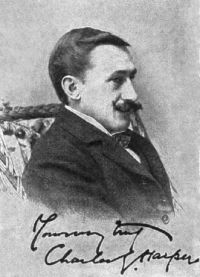
Charles G. Harper,
From Paddington to Penzance
“ Used to the more familiar type of cathedral city, dreamy old places where the atmosphere of the Minster is all-pervading, and where the Bishop, the Dean and Chapter, and their doings hold the foremost rank in men’s minds and talk, we were not prepared to come upon so busy a place as Exeter, where the ecclesiastical element is only one among many and is not pre-eminent. ”
Frederick Wilton Litchfield Stockdale, Excursions in the County of Cornwall
“ Leland says, that Bartholomew (Iscanus) Bishop of Exeter, who died in 1172, changed the Monks of St. Germains into Canons Regular, on account of the laxity of their lives. At the suppression of this monastery in 1535, it was valued at £227. 4s. 8d. clear yearly income. King Henry VIII. 108leased the site of the priory and other lands to John Campernown and others; relative to which grant, Carew has the following story. ”
Percy Addleshaw, Bell's Cathedrals: The Cathedral Church of Exeter
“ In the corner at the south-east is the grave of Bishop John the Chaunter, who died in 1191. He was for thirty years precentor of the cathedral, and was consecrated bishop by Baldwin, Archbishop of Canterbury, "preacher and pilgrim of the Crusade," and a native of Exeter. Bishop John assisted at the coronation of Richard I. He held the see for six years.Sir Peter Carew, whose mural tablet is a conspicuous feature, was buried at Waterford in Ireland. He is one of the most distinguished members of an ancient western family. ”
Percy Addleshaw, Bell's Cathedrals: The Cathedral Church of Exeter
“ Traces of one of these have been found at the end of the third bay of the north choir aisle. Bronscombe and Quivil (see p. 5) began their reconstruction at this end, and by adding the ambulatory and Lady Chapel linked together the sites of the old and new churches.With the episcopate of Leofric, Exeter first assumes the rank of a cathedral city. The sees of Devon and Cornwall had been held together by Lyfing, the last bishop of Crediton. But Crediton, an unfortified "vill," was an easy prey to the Irish, Danes, and other pirates, who devastated the diocese from time to time. ”
Morgan George Watkins, Dictionary of National Biography… (1886)
“ The bishop still kept up his scholarship. In 1572 the Books of Moses were allotted to him to translate for the new edition of the Bishop's Bible, at least to one 'W. E.,' whom Strype takes for 'William Exon.' Hoker, however, says (Antique Description of Exeter) : 'He was a professor of divinity, but not taken to be so well grounded as he persuaded himself. He was zealous in religion, but not so forwards as he was wished to be.' In 1576, when papists on one side and schismatics on the other were troubling the church, a glimpse is obtained of Bradbridge's administration. ”