Capitoline Hill

Definition and stakes

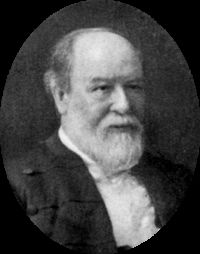
Portrait of Rodolfo Amedeo Lanciani Rodolfo Amedeo Lanciani,  Pagan and Christian Rome

“ Were we in the presence of the remains of the famous Capitolium, or of one of the smaller temples within the Arx? To give this query a satisfactory answer, we must remember that the Capitoline Hill had two summits, one containing the citadel, or Arx, the other the Temple of Jupiter Optimus Maximus, the Capitolium. Ancient writers never use the two names promiscuously, or apply them indifferently to either summit or to the whole hill. The name of the hill is the Capitoline; not the Capitol, which means exclusively the portion occupied by the great temple. ”
Source: Gutenberg

Paul Lachlan MacKendrick,  The Mute Stones Speak: The Story of Archaeology in Italy

“ The period of the first pebble pavement (575 B.C.) is one of major change, from village to urban life, to a city now for the first time boasting a civic center, destined to become the world’s most famous public square, the Roman Forum. Of the same date are the earliest remains on the Capitoline Hill, which was to be the arx or citadel of historic Rome. Of the same date are the earliest artifacts from the Regia, which later generations revered as the palace of the kings. ”
Source: Gutenberg

John Lord,  Ancient States and Empires

“ The rape of the Sabines leads to war, and Titus Tatius, king of the Sabines, obtains possession of the Capitoline Hill—the smallest but most famous of the seven hills on which Rome was subsequently built. In the valley between, on which the forum was afterward built, the combatants are separated by the Sabine wives of the outlaws, and the tribes or nations are united under the name of Ramnes and Tities, the Sabines retaining the capitol and the Quirinal, and the Romans the Palatine. Some Etruscans, in possession of the Cælian Hill, are incorporated as a third tribe, called Luceres. ”
Source: Gutenberg

Get perspective with Kwize: daily news enlightened by great literature