
“ Of all the slaves on the plantation, Chunk appeared the most docile and ready to oblige every one. He waited on the Confederate troopers with alacrity, and grinned at their chaffing with unflagging good-nature. In all the little community, which included an anxious Union scout, Chunk was about the most serene and even-pulsed individual. Nature had endowed him with more muscle than nerves, more shrewdness than intellect, and had quite left out the elements of fear and imagination. ”
Chunky
Definition and stakes
The term "Chunky" emerges as a multifaceted literary motif, often signifying physicality, resilience, or eccentricity. Authors such as Edward Payson Roe portray it through characters like Chunk, a plantation slave embodying stoic strength and unwavering calm, while John Cleland uses it in vivid, corporeal imagery to examine sensuality.
Sewell Ford and others inject it with humor, presenting "Chunky" as a name or characteristic within colloquial, anecdotal storytelling. From stoic endurance to playful absurdity, the motif reflects a wide range of literary explorations of human form and personality, highlighting its versatility across genres and contexts.
Quotes about “Chunky”
John Cleland, Memoirs of Fanny Hill
“ Then gently removing her hand, which in the first emotion of natural modesty, she had carried thither, he gave us rather a glimpse than a view of that soft narrow chink running its little length downwards, and hiding the remains of it between her thighs; but plain was to be seen the fringe of light-brown curls, in beauteous growth over it, that with their silk gloss created a pleasing variety from the surrounding white, whose lustre too, their gentle embrowning shade, considerably raised. ”
Traits of American Humour, Vol…
“ Next mornin’ when we waked, it was sorter cloudy and warm too. The wind war blowin’ mightily.“Now, Chunkey, let’s have a panter to-day, or nothin’.”“All sot,” says I.Well, arter breakfast Jem says, “Chunkey, you must take the right side the Lake, and I’ll take the ’yether, till we meet—and, Chunkey, you must rush; it ain’t more nor eight miles round, but your side may seem long, as you ain’t usen to the ground. Let’s licker out of my gourd, you ain’t got more nor you’ll want. Keep your eye skinned for sign, and listen for my horn!” ”
Alexander Andrew Knox, Once a Week (1860)
“ Every pupil who leaves Mountchauncey House is instructed how to play out a final card of this suit. A little extra bandoline gives a damp and sickly appearance to the hair—nothing is simpler than to bring the rest of the physiognomy into harmony with the once glossy, but now damp and faded tresses. When the gentleman is about to call upon his last visit, let the door be opened before he knocks—let the young lady be found in a darkened room, singing to herself in a disconsolate way some melancholy song. That expedient has never been known to fail, sir. ”
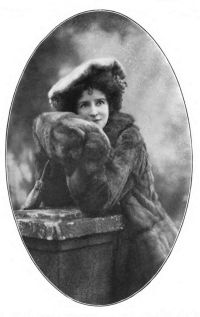 A. M. Williamson,
Lady Betty Across the Water
A. M. Williamson,
Lady Betty Across the Water
“ Stuyvesant-Knox, that a live woman could have a figure exactly like the fashion-plates, swelling like a tidal wave above an hourglass of a waist, and retreating far, far into the dim perspective below it, then suddenly bulging out behind like a round, magnificent knoll, after a deep curve inward under the shoulders. ”
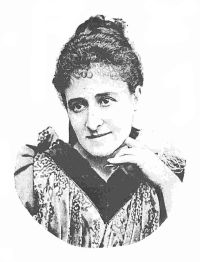 Ada S. Ballin,
Science of Dress
(1885)
Ada S. Ballin,
Science of Dress
(1885)
“ For my own part I cannot see what poetry there can be in a girl's waist reduced to ten inches less than its proper size, any more than there is in the mangled skull of a Chinook Indian. When I see a figure like that described, I invariably think of what it would look like on the dissecting-table, and probably the same unpleasant idea would occur to any one who is familiar with the natural proportions of the human frame. ”
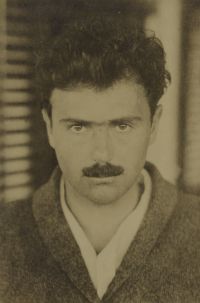 Waldo David Frank,
The unwelcome man
(1917)
Waldo David Frank,
The unwelcome man
(1917)
“ This gave accent to her rhythm. The discovered leg with its black silk stockings, pointed with tiny, white-canvas slippers, was straight and strong and fleshless. It cut like a tangent movement to the misty sway of her body. And here, Quincy kept his eyes enchanted. In the slow, steady rhythm of her body, to and fro against the railing, while her words sparked brightly, there seemed a faint, voluptuous deliberation. ”
“ He says his chief business is clammin’; but he does a little fishin’ and freightin’ on the side. He don’t work much, though, because it don’t take a lot to keep him.“But you have a wife somewhere ashore, I suppose,” suggests Chunk, “a dear old soul who waits anxiously for you to come back?”“Bah!” grunts Cap’n Spiller, knockin’ the heel out of his corncob vicious. “I ain’t got any use for women.”“I see,” says Chunk, gazin’ up sentimental 127 at the moon. “A blighted romance of youth; some fair, fickle maid who fled with another and left you alone?” ”
Traits of American Humour, Vol…
“ Chunkey dealt ’em mighty slow, and kept tryin’ to see my cards, but I laid my hand on ’em as fast as they fell on the log, to prevent him from seein’ the marks. He turned up the Ace of Clubs. When I looked at my hand, thar was the King, Jack, Nine, and Deuce,—I led my King——“High!” says I.“Low!” said Chunkey, poppin’ down the Tray.“Not edzactly,” said I, hawlin’ in the trick, and leadin’ the Deuce, and jist as I done so, I seed Chunkey starin’ over my shoulder, lookin’ wilder nor a dyin’ bar. I never seed a man look so awful in my life. I thought he were gwine to have a fit. ”
 Charles Darwin,
On the movements and habits of climbing plants
(1865)
Charles Darwin,
On the movements and habits of climbing plants
(1865)
“ When we consider, on the one hand, the thickness and stiffness of the petioles, and, on the other hand, the thinness and softness of fine cotton thread, and what an extremely small weight one-sixteenth of a grain is, these facts are remarkable. But I have reason to believe that even a less weight causes a curvature when acting over a broader surface than can be affected by thin thread. ”
Traits of American Humour, Vol…
“ This, Chunkey knowed; and whenever he seed one he gin me warnin’. Chunkey ain’t afraid of snakes; he’d jist as soon eat of a gourd with a snake, as not, if the snake would help himself and not meddle with his licker.Well, arter lookin’ about a spell I couldn’t see no snake-sign, and I then hollered to Chunkey, but darned a word did he say. It then flashed across my mind that as Chunkey fell on the side of the log whar the licker lay, he might sorter taste it, as he were dry enough to be able to swaller a little at a time ”
Édouard Cuyer, Artistic Anatomy of Animals
“ Now, the body, being required to have—whether in length, reckoning from the point of the arm to the prominence of the buttock, or in height, reckoning from the summit of the withers to the ground—two heads and a half; whenever the head, by its geometrical length, shall give, in length or in height, to the body measured more than two and a half times its own length, it will be too short; and if it gives less, it will be too long.‘In the case in which one of these faults exists there would be no further question of establishing by its geometrical length the proportions of the other parts. ”
Lardner Gibbon, Lieutenant, U.S.N., Exploration of the Valley of the Amazon… (1854)
“ After our breakfast of boiled rice, we turned, and on our way saw the tracks of five Chunchos on the sands. Their feet are very small, and they walk with toes much turned in. They hunt in small parties of from five to seven, always accompanied by a woman, who carries their fish and game, cooks and does all the hard work, while they stroll along with their bows and arrows. ”
Dorothy Quigley, What Dress Makes of Us
“ If he is too short-waisted he can lengthen his skirt and lower his waist-line, as shown in No. 86. In the one he escapes appearing too long and lanky in body, and in the other he obscures a lack of becoming inches that tends to give him a dumpy appearance.If you study your fellow-men you will observe that few are really perfectly proportioned. One man will have the body of a viking on the legs of a dwarf, or one will have the legs of an Apollo supporting the short body of a pigmy. The man who has a kingly body, too broad in proportion to his legs, as shown in sketch No. ”
Traits of American Humour, Vol…
“ Killin’ him sorter got my blood up, and I determined to have another. Chunkey had been jerkin’ it to the licker gourd mighty smart, and was jest right.”“ ‘Chunkey,’ says I, ‘let’s gin it to another!’“ ‘Good as ——,’ says Chunkey. ‘Who cars for expenses? a hundred-dollar bill ain’t no more in my pocket nor a cord of wood!’“With that we started down to the Bend; we haddent been thar long when in comes an old buck; he was a smasher, and one horn were broke off. I telled Chunkey now’s his time, as I skorn’d to toch him arter killin’ a bar. Chunkey lathered away, and ca chunk! ”
 Edward Mandell House,
Philip Dru: Administrator; A Story of Tomorrow…
Edward Mandell House,
Philip Dru: Administrator; A Story of Tomorrow…
“ She was disappointed in his appearance, for she had fancied him almost god-like in both size and beauty, and she saw a man of medium height, slender but toughly knit, and with a strong, but homely face. ”
Edward Armitage, Lectures on Painting, Delivered to the Students of the Royal Acadamy
“ In short, and even in medium-sized models, the middle of the figure is generally too low, so that you may increase the length of the leg without at all diminishing the proportions of the thigh. It is a curious fact, that sitting and especially kneeling figures by the side of standing ones always appear small if represented of their exact relative size. ”
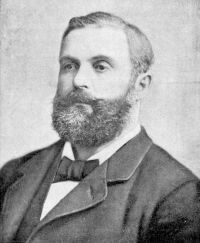 Thomas Wallace Knox,
The Story Teller of the Desert…
Thomas Wallace Knox,
The Story Teller of the Desert…
“ Anybody who knows me can testify that I am not a dwarf, that I stand over six feet, and have a proportionate breadth of beam. My berth was about an inch shorter than its occupant, and when I tried to lie flat on my back I took up all the width of it. ”
“ One would not be long enough; so I knotted the two together, taking care to make a neat, firm knot of it. They made a string of over four feet, and having laid it along the four-foot rule, I cut it with my knife to that length exactly. I was not satisfied till I had measured it over and over again, each time pulling the thong with all my strength, lest some “kink” might be lurking in it. A slight error would derange my intended scale, though there is less danger in graduating four feet down to inches than in going from the less to the greater standard. ”
Thomas Wallace Knox,
The Boy Travellers on the Congo
“ They were also pretty, of a rich brown color many of them, large-eyed, and finely formed, with a graceful curve of shoulder I had not often observed. But they were slaves of fashion. Six tenths of the females wore brass collars two inches in diameter; three tenths had them two and a half inches in diameter; one tenth were oppressed with collars three inches in diameter; which completely covered the neck, and nearly reached the shoulder ends. Fancy the weight of thirty pounds of brass, soldered permanently round the neck! Yet these oppressed women were the favorite wives of Chumbiri! ”
“ Even as he sits he measures four-and-twenty feet in height. His feet are disproportionately small, while his enormously long elbows rest upon his knees. His whole body is covered with a bluish-green scaly skin, like that of a sea-serpent wrinkled with age. ”
 Theodore Dreiser,
Twelve Men — III. My Brother Paul
(1919)
Theodore Dreiser,
Twelve Men — III. My Brother Paul
(1919)
“ Imagine, if you can, a man weighing all of three hundred pounds, not more than five feet ten-and-one-half inches in height and yet of so lithesome a build that he gave not the least sense of either undue weight or lethargy. ”
Allan Cunningham, Traditional Tales of the English and Scottish Peasantry (1887)
“ If the dress of the old man was rude and sordid, that of his granddaughter was gay, and even rich. She wore a bodice of fine wool, wrought round the bosom with alternate leaf and lily, and a kirtle of the same fabric, which, almost touching her white and delicate ankle, showed her snowy feet, so fairy-light and round that they scarcely seemed to touch the grass where she stood. ”
 Thomas De Quincey,
Theological Essays and Other Papers…
Thomas De Quincey,
Theological Essays and Other Papers…
“ A very little further extension to the elbows and the calves of the legs, and it takes a shape which survives even to this day in Asia. Now, as then, the female habiliment was distinguished from the corresponding male one by its greater length; and through all antiquity we find long clothes a subject of reproach to men, as an argument of effeminacy.According to the rank or vanity of the wearer, this tunic was made of more or less costly materials; for wool and flax was often substituted the finest byssus, or other silky substance ”
 D'Arcy Wentworth Thompson,
On Growth and Form
D'Arcy Wentworth Thompson,
On Growth and Form
“ In other words, there would seem to be a general tendency for the long trunks to grow slowly throughout the whole period under investigation. It is a well-known anatomical fact that tallness is in the main due not to length of body but to length of limb. ”
 Julia McNair Wright,
Nature readers
(1887)
Julia McNair Wright,
Nature readers
(1887)
“ Near his mouth he has two feelers, such as insects have, to touch things. [Pg 73] Where the feelers join his head he has two eyes.His foot is flat, and is as big as all the rest of his body. It is just the size of the open part of his shell. Why is that?The shoe on his foot is hard, like horn. When he draws back into his shell, that shoe is his door. It fits close. It shuts him in safe in his shell. LESSON XXXV. THE STORY OF MR. CONCH.The conch or winkle does not like to live in sand, or on hard rock. He likes deep water, where he has some sand and some rock. ”
Thomas De Quincey,
Memorials and Other Papers — Volume 2
“ If my head must of necessity lose as much weight as my trunk gains, and vice versa, then it is a clear case that I shall never be heavier. But why cannot my head remain stationary, whilst my trunk grows heavier? ”
Harry Woodworth Huntington, My dog and I (1897)
“ Body and Quarters.—Body very long and low, well ribbed up, and long in the coupling; chest of great depth and volume; loins powerful, and not too much arched; back long, broad, and straight, free from droop or bow. Length an important characteristic; the nearer the dog is in length to being two and a half times its height at shoulder, the better. Quarters shapely and very muscular, neither drooping nor stilty.Legs and Feet.—Fore legs short, straight, immensely heavy in bone, well in at elbow. Hind legs heavy in bone, but not as heavy as fore legs ”
Lila M. O'Neale, Chincha Plain-Weave Cloths
“ Complete widths of Chincha plain-weave fabrics in order from narrowest to widest:Seventy-odd individually woven breadths of material are incomplete as to width. The arbitrary groupings in which these fall are as follows:Side selvages strengthened by any one of the several methods we know from commercial weavings are rare in textiles from primitive looms. ”
John Henry Hessels, John Southward, and Hugh Munro Ross, 1911 Encyclopædia Britannica (1911)
“ The face is divided into the stem, marked 1, which comprises the whole outline of the type M; the serifs, or the horizontal lines marked 2, which complete Parts of a Type. the outline of the letter; the beard, consisting of the bevel or sloping part marked b, b, and the shoulder or flat portion below b. The shank is the entire body of the letter d, the front part (that shown) being known as the belly and the corresponding part behind as the back. The spaces at h and h are the counters, which regulate the distances apart of the stems in a line of type. ”
 Joshua Rose,
Modern Machine-Shop Practice, Volumes I and II
Joshua Rose,
Modern Machine-Shop Practice, Volumes I and II
“ In turning up the eccentric, the plain face should be faced first, setting it true, or nearly so, with the circumference of the eccentric, as will be the case if the circumference is held in a universal chuck, but if the hub is so long that this cannot be done because the chuck jaws cannot reach the circumference, the hub itself may be held in an independent jaw chuck. ”
Isidor Rosenfeld, The Practical Designer for Women's and Misses' Underwear (1918)
“ It is very important to know that lengths are, as a rule, followed according to style, because the petticoat is always to be shorter with 1 or 2 inches than the dress or skirt and, therefore, the length shall be guided according to the length of skirts or dresses. ”
Various, Scientific American Supplement…
“ If the giant could raise to his shoulder, some thirty-five feet from the ground, a weight twenty thousand pounds, the dwarf can raise to his shoulder, not, as might be thought, a fiftieth of a pound, but two full pounds. ”
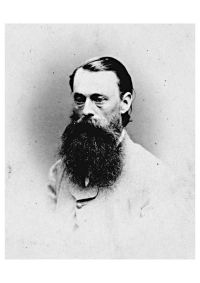 Peter Beveridge,
The Aborigines of Victoria and Riverina
(1889)
Peter Beveridge,
The Aborigines of Victoria and Riverina
(1889)
“ In the centre of an adult's back the lumps are about three inches long, by a thickness in the middle of about three-quarters of an inch, and the short ones on the shoulder are two inches in length, with a diameter in the middle of half an inch. ”
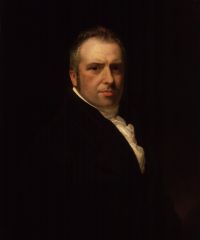 William Hone,
The Every-day Book and Table Book…
William Hone,
The Every-day Book and Table Book…
“ The shortness is principally owing to his inability to hold the face properly elevated, in consequence of which the chin drops down, and conceals the upper part of the neck. The flatness depends on the little muscular and cellular substance present, and on the great breadth of the neck, which takes from its natural rotundity. ”
Charles Herbert Sylvester, Journeys Through Bookland, Vol…
“ It is true the simple Indians were often puzzled by the great disproportion between bulk and weight, for let them place a bundle of furs, never so large, in one scale, and a Dutchman put his hand or foot in the other, the bundle was sure to kick the beam—never was a package of furs known to weigh more than two pounds in the market of Communipaw! ”
