Coptic language

Definition and stakes

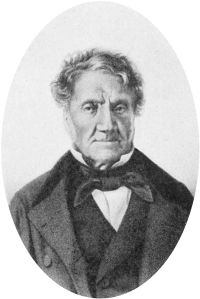
Portrait of Aimé Bonpland Aimé Bonpland,  Personal Narrative of Travels to the Equinoctial Regions of America…

“ Nevertheless the Coptic language has had its literature, like the Chinese, the roots of which, far from being aggregated, scarcely approach each other without immediate contact. We must admit that nations once roused from their lethargy, and tending towards civilization, find in the most uncouth languages the secret of expressing with clearness the conceptions of the mind, and of painting the emotions of the soul. ”

Source: Gutenberg

Various,  Notes and Queries, Number 84, June 7…

“ The Coptic language is not an inflected one; and it has very few affixes. There are many prefixes to its nouns and verbs, which before the former are articles or demonstrative pronouns. Between these prefixes and the noun or verb, pronominal infixes are introduced, by which possession is denoted in the case of a noun, and the subject in that of a verb. Thus, ran is "a name;" pi-ran, "the name;" pe-v-ran, "his name;" i, is the verbal root, "come;" a, the prefix of the past tense; and a-v-i, "he came." Some nouns take affixes, as jo-v, "his head." ”
Source: Gutenberg

Francis Llewellyn Griffith,  1911 Encyclopædia Britannica (1911)

“ This Old Coptic, as it is termed, was still almost entirely free from Greek loan-words, and its strong archaisms are doubtless accounted for by the literary language, even in its most “vulgar” forms, having moved more slowly than the speech of the people. Christian Coptic, though probably at first contemporary with some documents of Old Coptic, contrasts strongly with the latter. The monks whose task it was to perfect the adaptation of the alphabet to the dialects of Egypt and translate the Scriptures out of the Greek, flung away all pagan traditions. ”
Source: Wikisource

Get perspective with Kwize: daily news enlightened by great literature