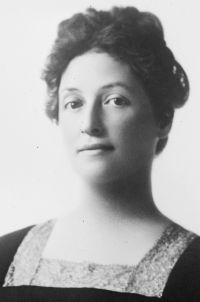
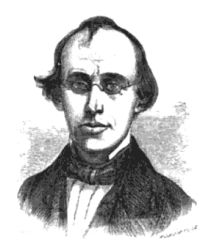
“ In him we have typified the dawning spirituality which is to show in the higher races of Daityas as they pass on into definite human evolution, and their form gives way that sexual man may be born. I need not dwell on that familiar story of the devotee of Viṣhṇu; how his Daitya father strove to kill him because the name of Hari was ever on his lips ”
Daitya
Definition and stakes
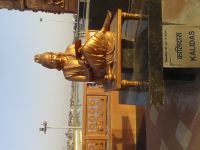
The term "Daitya" originates in Indian mythology to denote a race of powerful, often malevolent beings, typically adversaries of the devas (gods). These entities, connected to the Asuras, are depicted in texts like The Kathá Sarit Ságara and Kalidasa’s Sakoontala, where they embody cosmic struggle and divine competition. Authors such as Somadeva Bhatta portray Daityas as rulers of magical realms, while Kalidasa traces their ancestry to primordial progenitors of gods and demons.
The theme appears in varied contexts, from mythic conflicts to allegorical reflections on human weakness, illustrating their lasting symbolic role in Hindu cosmology. Their stories intertwine with ideas of authority, faith, and existential tension, highlighting their importance as archetypal adversaries in sacred and literary traditions.
Quotes about “Daitya”
active 11th century Somadeva Bhatta, The Kathá Sarit Ságara; or, Ocean of the Streams of Story
“ And the Daitya maiden made the king sit down on a priceless jewelled throne, and offered him the arghya in due form, and said to him, “I am the daughter of Kálanemi the high-souled king of the Asuras, but my father was sent to heaven by Vishṇu, the discus-armed god. And these two cities, which I inherit from my father, are the work of Viśvakarman; they furnish all that heart can wish, and old age and death never invade them. ”
Donald A. Mackenzie, Indian Myth and Legend
“ One of the Daitya tribes reside in the moving city named Hiranyapura, which they constructed for their protection; sometimes it sinks below the sea, or under the earth; at other times it soars across the heavens like the sun. ”
active 11th century Somadeva Bhatta, The Kathá Sarit Ságara; or, Ocean of the Streams of Story
“ She, for her part, when she beheld that king with all the auspicious bodily marks, said to herself, “Who can this exceedingly distinguished man be?” And so she went into the temple of Durgá to pray, and the king contemptuously went off to the garden, taking Sattvaśíla with him. And in a short time the Daitya maiden came out from the inner shrine of the goddess, having finished her devotions, and having prayed that she might obtain a good husband; and after she had come out, she said to one of her attendants, “My friend, go and see where that distinguished man is whom I saw ”
Lafcadio Hearn,
Stray leaves from strange literature…
“ In ancient years there were two Daityas, twin brothers sprung from the race of the Asouras, the [Pg 32] race of evil genii; and their names were Sounda and Oupasounda. Princes they were born; cruel and terrible they grew up, yet were ever one in purpose, in thought, in the pursuit of pleasure, or in the perpetration of crime.And in the course of time it came to pass that the brothers resolved to obtain domination over the Three Worlds, and to practice all those austerities and sacrifices by which the holiest ascetics elevate themselves to divinity. ”
A Prose English Translation of Vishnupuranam
“ The foolish wight will take delight even in hell, who is fond of this body composed of flesh, blood, matter, ordure, urine, membrane, marrow, and bones. The agreeableness of fire is produced by cold; of water by thirst; of food by hunger; and thus all other things are rendered agreeable by their contraries. O children of Daityas, he, who will take to a wife will introduce so much of pain into his bosom. The more a man will create dear relations, the more deeply will be implanted the thorns of anxiety in his heart. ”
A Prose English Translation of Vishnupuranam
“ And without virtues, persons cannot have power, affluence, etc. And those divorced by power and wealth, are; overriden by all. And, when, overruled a person albeit possessed of time, loseth his sense. On the three worlds, shorn of Auspiciousness, being bereft of strength Daityas and Dānavas began to use force against the celestials. And the Daityas, shorn of Auspiciousness and devoid of strength, being overmastered by covetousness, entered upon hostilities with the celestials, having neither Auspiciousness nor strength. ”
Kalidasa,
Sakoontala; Or, The Lost Ring: An Indian Drama
“ He was a progenitor on a magnificent scale, as he is considered to have been the father of the gods, demons, man, fish, reptiles, and all animals, by the thirteen daughters of Daksha. The eldest of the thirteen, his favourite wife, was Adití, from whom were born Indra and all the inferior gods, and particularly the twelve Ádityas, or forms of the sun, which represent him in the several months of the year. From Diti, Danu, and others of the remaining twelve, came the Daityas, Dánavas, and other demons.115. No sacred cord is twined. ”
active 11th century Somadeva Bhatta, The Kathá Sarit Ságara; or, Ocean of the Streams of Story
“ Listen, king, in the second under-world there is a victorious king named Amíla, a chieftain of the Daityas, the son of Hiraṇyáksha; this is his daughter Kalávatí whom he loves more than life. Her father came back to-day from the court of Bali, and said—‘I am fortunate in that I have to-day beheld Sunítha once more restored to life; and I have also seen the young man Súryaprabha, an incarnation of Sumundíka, who has been brought into the world by Śiva as the future emperor of the Vidyádharas. ”
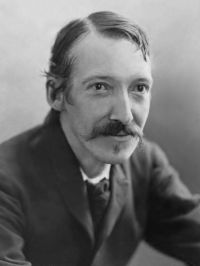
Robert Louis Stevenson,
The Works of Robert Louis Stevenson - Swanston Edition…
“ Taheia, heavy of hair, leaped through the dark to his arms;Taheia leaped to his clasp, and was folded in from alarms.“Rua, beloved, here, see what your love has brought;Coming—alas! returning—swift as the shuttle of thought;Returning, alas! for to-night, with the beaten drum and the voice,In the shine of many torches must the sleepless clan rejoice;And Taheia the well-descended, the daughter of chief and priest,Taheia must sit in her place in the crowded bench of the feast.” ”
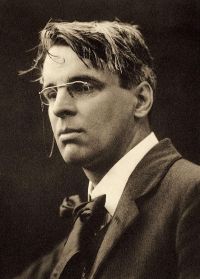
W. B. Yeats,
The Yellow Book, Volume 13 — The Blessed
“ To gather the half of your blessedness And learn the prayers that you say. "I can bring you salmon out of the streams And heron out of the skies." But Dathi folded his hands and smiled With the secrets of God in his eyes. And Cumhal saw like a drifting smoke All manner of blessedest souls, Children and women and tonsured young men, And old men with croziers and stoles. "Praise God and God's Mother," Dathi said, "For God and God's Mother have sent The blessedest souls that walk in the world To fill your heart with content." ”
J. B. Lightfoot,
Essays on the work entitled "Supernatural Religion"
“ Moreover Victor himself, who knew Greek, says ex quatuor, which requires Diatessaron, and the work which he identifies with Tatian's Harmony is made up of passages from our Four Gospels alone. Therefore he can hardly have written Diapente himself; and the curious reading is probably due to the blundering or the officiousness of some later scribe [287:2] .Thus we way safely acquiesce in the universal tradition, or as our author, [Greek: ouk oid' hopôs] , prefers to call it, the 'ecclesiastical theory,' respecting the character and composition of Tatian's Diatessaron [287:3] . ”
Various, The Aldine, Vol. 5, No. 1., January…
“ Thus unconsciously the daisy undergoes a metempsychosis; its soul is transferred at will from meadow to book and from book to meadow, without losing a particle of its vitality.To premise with the daisy historically: Among the Romans it was called Bellis, or "pretty one;" in modern Greece, it is star-flower. In France, Spain, and Italy, it was named "Marguerita," or pearl, a term which, being of Greek origin, doubtless was brought from Constantinople by the Franks. From the word "Marguerita," poems in praise of the daisy were termed "Bargerets." ”
Susan Warner,
Melbourne House, Volume 1
“ Daisy looked, a little wondering but entirely respectful; the whole aspect of Juanita commanded that."Does my little lady know, that the presence of the King makes a poor house fine?""I don't quite know what you mean," said Daisy humbly."Does my little lady know that the Lord Jesus loves his people?""Yes," said Daisy,—"I know it.""But she know not much. When a poor heart say any time, 'Lord, I am all thine!'—then the Lord comes to that heart and he makes it the house of a King—for he comes there himself. And where Jesus is,—all is glory! Do not my little lady read that in the Bible?" ”
Tatian, Ante-Nicene Fathers Vol. IX, The Diatessaron of Tatian… (1885)
“ We shall begin, with the help of God most high, the writing of the pure gospel, the blooming garden, called Diatessaron (a word meaning “fourfold”) , the work compiled by Titianus the Greek out of the four evangelists—Matthew the elect, whose symbol is M, Mark the chosen, whose symbol is R, Luke the approved, whose symbol is K, and John the beloved, whose symbol is H. The work was translated from Syriac into Arabic by the excellent and learned priest Abu’l Faraj ‘Abdulla ibn-at-Tayyib, [1] may God grant him his favour. ”
The Great Events by Famous Historians…
“ Datis embarked his forces in the fleet that awaited them, and coasting along the shores of Asia Minor till he was off Samos, he thence sailed due westward through the Ægean Sea for Greece, taking the islands in his way. The Naxians had, ten years before, successfully stood a siege against a Persian armament, but they now were too terrified to offer any resistance, and fled to the mountain tops, while the enemy burned their town and laid waste their lands. Thence Datis, compelling the Greek islanders to join him with their ships and men, sailed onward to the coast of Eubœa. ”
Arthur Thomas Malkin, Historical Parallels, vol. 2 of 3…
“ Darius accusing us and the Eretrians of the attack on Sardis, on that pretext sent five hundred thousand men in long ships and transports, and three hundred long ships, and ordered Datis, their general, as he would save his head, to bring the Athenians and Eretrians back with him. Datis sailed to Eretria, against men reputed then among the most warlike of the Greeks, not few in number, and overcame them in three days, and carefully [22] searched their whole land, that none should escape. ”
“ As one goes who has often been there; who has many a time proved it a sure Refuge; who knows it sure and safe and unfailing. So she prayed; while Daisy's sobs at first were excessive, and then by degrees calmed and quieted and ceased. They were quite still before Juanita finished; and when they rose up from their knees Daisy's face was composed again. Then she came and stood with her hand on Juanita's shoulder, both of them silent; till Daisy put her lips to the fine olive-dark cheek of the old woman and kissed it. Juanita drew her into her arms, and Daisy sat there, nestling and tired. ”
Anatole France,
Thaïs
(1909)
“ The monk rose, and continued in solemn tones — "Know then, O Nicias, that, with the aid of God, I will snatch this woman Thaïs from the unclean affections of the world, and give her as a spouse to Jesus Christ. If the Holy Spirit does not forsake me, Thaïs will leave this city and enter a nunnery." "Beware of offending Venus," replied Nicias. "She is a powerful goddess; she will be angry with you if you take away her chief minister." "God will protect me," said Paphnutius. "May He also illumine thy heart, O Nicias, and draw thee out of the abyss in which thou art plunged." ”
“ So far Daisy's power of composure went, and no further. With that last word her voice failed. She threw her arms around Juanita, and hiding her face in her gown, burst into such tears as Daisy rarely shed at all; very rarely under any one's observation. Juanita, very much startled, sat down and drew the child into her arms, so far as she could; for Daisy had sunk on her knees, and with her face in Juanita's lap was weeping all her heart out. Mrs. Benoit hardly knew how to ask questions."Why must not Miss Daisy see her papa?" ”
Robert Louis Stevenson,
Ballads
“ Taheia the undissuaded will hurry true as the dove.”p. 73“Taheia, the pit of the night crawls with treacherous things, Spirits of ultimate air and the evil souls of things; The souls of the dead, the stranglers, that perch in the trees of the wood, Waiters for all things human, haters of evil and good.”“Rua, behold me, kiss me, look in my eyes and read; Are these the eyes of a maid that would leave her lover in need? Brave in the eye of day, my father ruled in the fight; The child of his loins, Taheia, will play the man in the night.” ”
“ Daisy first smiled at her; then the little pale face grew grave, the eyelids fell, and the black woman saw tears gathering beneath them. She stood looking somewhat anxiously down at the child; till, after a few minutes, the eyelids were raised again, and the eyes gave her a most meek and loving response, while Daisy said faintly, "Yes, Juanita.""Bless the Lord!" said Juanita, with all her heart. "Then my love can bear it, the hot day and the pain and all. When His little child trust Him, Jesus not stay far off. And when He giveth quietness, then who can make trouble?" ”
Josephine Preston Peabody,
Old Greek Folk Stories Told Anew
“ Among all those mortals who grew so wise that they learned the secrets of the gods, none was more cunning than Daedalus. He once built, for King Minos of Crete, a wonderful Labyrinth of winding ways so cunningly tangled up and twisted around that, once inside, you could never find your way out again without a magic clue. But the king's favor veered with the wind, and one day he had his master architect imprisoned in a tower. Daedalus managed to escape from his cell; but it seemed impossible to leave the island, since every ship that came or went was well guarded by order of the king. ”
Joanna H. Mathews, Daisy's Work: The Third Commandment
“ The little brother, whom Daisy remembered so well, had gone to a home beyond the sky, but a few weeks before her father and mother came to Glenwood.And so the Daisy blossom, which had been parted from its parent stem and cast by the wayside, where stranger hands had gathered and lovingly tended it, was planted once more in the soil where it belonged, after it had done the Master's work, [222] and scattered the good seed which budded for His glory; proving well, that those who "honor" the Lord He will "delight to honor." ”
Edmund Yates,
Dr. Wainwright's Patient: A Novel
“ Whose fault is it that you are compelled to obey Madame Clarisse, and to dance attendance on her infernal customers? Not mine, you must allow that. You know what is the dearest wish of my heart--you know how often I have proposed that----""Stop, sir," said Daisy, laying her ungloved hand upon his mouth; "you know how often I have forbidden you to touch upon that subject, and now you dare to disobey merely because I was foolish enough to be off my guard for a moment, and to let some grumbling escape my lips. No, no, Paul, let us be sensible; it is very well as it is. ”
George Rawlinson,
The Seven Great Monarchies Of The Ancient Eastern World…
“ The failure of Datis had proved that such an expedition as could be conveyed by sea across the Egean would be insufficient to secure the object sought, and that the only safe road for a conqueror whose land force constituted his real strength was along the shores of the European continent. But if a large army took this long and circuitous route, it must be supported by a powerful fleet ”
Cornelius Mathews,
The Indian Fairy Book: From the Original Legends
“ It was evidently the giant's intention to drown Dais-Imid; in which he was mistaken, for by means of his magic shell, little Dais, in less than a second's time, bailed the water to the bottom, leaped from the kettle, and ran away unharmed.He returned to his sister and related his rovings and adventures. He finished his story by addressing her thus:"My sister there is a manito at each of the four corners of the earth. There is also one above them, far in the sky, a Great Being who assigns to you, and [Pg 214] to me, and to all of us, where we must go. ”
[various: leave blank, and specify contributor per section], Egyptian Literature (1901)
“ Now when Tahutia came near to Joppa, with all the footmen of Pharaoh, he sent unto the Foe in Joppa, and said, “Behold now his Majesty, King Men-kheper-ra, has sent all this great army against thee; but what is that if my heart is as thy heart? Do thou come, and let us talk in the field, and see each other face to face.” So Tahutia came with certain of his men; and the Foe in Joppa came likewise, but his charioteer that was with him was true of heart unto the King of Egypt. And they spoke with one another in his great tent, which Tahutia had placed far off from the soldiers. ”
Robert Graves,
Lars Porsena; or, the future of swearing and improper language
(1927)
“ Daedalus, who makes his living by schoolmastering in an old-fashioned school, is philosophically inclined to the obscene life because Bloom and Mulligan, who live it seriously, are in this respect at least superior to the priests, the schoolmasters and the little Celtic-Twilight poets (Joyce himself began as one) whose lives have no such absorption in a ruling idea. Yet as a sensitive person Daedalus is utterly repelled by the badness and rankness which obscenity exudes ”