“ The Florentine school proposed to itself the perfect expression of human emotion—the showing of the effects of passion in the human face and gesture. I call this the Florentine school, because, whether you take Raphael for the culminating master of expressional art in Italy, or Leonardo, or Michael Angelo, you will find that the whole energy of the national effort which produced those masters had its root in Florence; not at Urbino or Milan. I say, then, this Florentine or leading Italian school proposed to itself human expression for its aim in natural truth ”
Florentine school
Definition and stakes
The theme of “Florentine school” has been addressed by authors such as Pasquale Villari, Ellwood Patterson Cubberley, Edmund G. Gardner, Bernard Berenson and Frank Jewett Mather. It is often associated with terms like Florence, Renaissance, art, Medici and Florentines.
Quotes about “Florentine school”
 Luigi Lanzi,
The History of Painting in Italy…
“ The name of this artist brings to a fair conclusion the series of Florentine painters, which has been continued for little less than six centuries, in an uninterrupted succession of native artists, without the intervention of one foreign master in this school, at least one so eminent as to mark an era. With the exception of the last years, in which art was on the decline throughout Italy, the Florentine school, with all its merit, and that is undoubtedly very great, owes its progress to native genius. ”
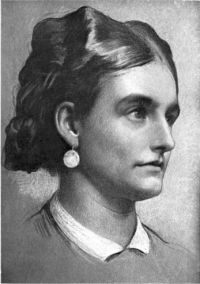 Janet Ross,
Florentine palaces & their stories
(1905)
“ I shall not, however, utter my own sentiments, but shall recapitulate what our most virtuous school of Florence says about it.... Well then, this virtuous school says that if one were to shave the hair of your Hercules, there would not be skull enough left to hold his brain; it says that it is impossible to distinguish whether his features are those of a man or of something between a lion and an ox; the face too is turned away from the action of the figure, and is so badly set upon the neck, with such poverty of art and so ill a grace, that nothing worse was ever seen ”
Related terms
Authors who wrote about “Florentine school”
 Pasquale VillariEllwood Patterson CubberleyEdmund G. Gardner
 Bernard BerensonFrank Jewett MatherLuigi Lanzi
 Dante AlighieriArthur John ButlerJanet RossVarious
 John Ruskin
 Augusta Theodosia Drane
 Walter Pater
 Henry Adams
 George EliotShearjashub SpoonerJames De MilleBaron Edward Bulwer Lytton Lytton
 Thomas Adolphus TrollopeMarie Conway Oemler
