“ Then François rose to the height of his greatness."I am a Frenchman, even if I am not of thy party. Had not the country needed thee, that day had been thy last. Citizen, as a man thou wouldst set me free; as a patriot thou wilt bow to the law of the republic. I am willing to die rather than soil the record of one to whom France owes so much." An overwhelming solemnity of aspect came upon this comedian's face as it met the gaze of the commissioner. "Alas! the country has few such citizens." ”
François I of France
Definition and stakes
Quotes about “François I of France”
H. Noel Williams, The love-affairs of the Condés (1912)
“ Never had the internal condition of France been more critical, never had she stood more in need of a strong and wise government, than at the moment when the imaginary majority of François II. was succeeded by the real minority of Charles IX. The danger which threatened her was no longer, as in the time of the last Sovereign of that name, a struggle between individual ambitions; private ambitions had now identified themselves with the living forces of the nation ”
King of France consort of Henry IV Queen Marguerite, Memoirs of Marguerite de Valois…
“ The two monarchs, however, distrusted one another; and Charles V., anxious about Germany, sent to Francois proposals for peace from Crespy Couvrant, near Laon, where he had halted his army; Francois, almost in despair, gladly made terms with him. The King gave up his claims on Flanders and Artois, the Emperor his on the duchy of Burgundy; the King abandoned his old Neapolitan ambition, and Charles promised one of the Princesses of the House of Austria, with Milan as her dower, to the Duc d’Orleans, second son of Francois. ”
King of France consort of Henry IV Queen Marguerite, Memoirs of Marguerite de Valois…
“ The years which followed this brilliantly disastrous opening brought little good to France. In 1516 the death of Ferdinand the Catholic placed Charles on the throne of Spain; in 1519 the death of Maximilian threw open to the young Princes the most dazzling prize of human ambition,—the headship of the Holy Roman Empire. Francois I., Charles, and Henry VIII. were all candidates for the votes of the seven electors, though the last never seriously entered the lists. ”
François Guizot,
A Popular History of France from the Earliest Times…
“ There is nothing more demoralizing than to be an idol. The first acts of his government were sensible and of good omen. He confirmed or renewed the treaties or truces which Louis XII., at the close of his reign, had concluded with the Venetians, the Swiss, the pope, the King of England, the Archduke Charles, and the Emperor Maximilian, in order to restore peace to his kingdom. At home Francis I. maintained at his council the principal and most tried servants of his predecessor, amongst others the finance-minister, Florimond Robertet ”
François Guizot,
A Popular History of France from the Earliest Times…
“ Outside of the political arena, in quite a different field of ideas and facts, that is, in the intellectual field, Francis I. did better and succeeded better. In this region he exhibited an instinct and a taste for the grand and the beautiful; he had a sincere love for literature, science, and art; he honored and protected, and effectually too, their works and their representatives. And therein it is that more than one sovereign and more than one age have found their purest glory to consist. ”
King of France consort of Henry IV Queen Marguerite, Memoirs of Marguerite de Valois…
“ From his day till the Revolution the French army was largely composed of bodies of men tempted out of other countries, chiefly from Switzerland or Germany. While the Emperor strove to appease the Protestant Princes of Germany by the Peace of Kadan (1534) , Francois strengthened himself with a definite alliance with Soliman; and when, on the death of Francesco Sforza, Duke of Milan, who left no heirs, Charles seized the duchy as its overlord, Francois, after some bootless negotiation, declared war on his great rival (1536) . ”
1911 Encyclopædia Britannica (1911)
“ Jean Paul François (1739-1824) , the fifth duke, was in the army, but his tastes were scientific, and for his eminence as a chemist he was elected a member of the Academy of Sciences in 1777. He became duc d'Ayen in 1766 on his grandfather's death, and duc de Noailles on his father's in 1793. Having emigrated in 1792, he lived in Switzerland until the Restoration in 1814, when he took his seat as a peer of France. ”
King of France consort of Henry IV Queen Marguerite, Memoirs of Marguerite de Valois…
“ He refused to return to Spain, and made alliances wherever he could, with the Pope, with Venice, Milan, and England. The next year saw the ruin of this league in the discomfiture of Clement VII., and the sack of Rome by the German mercenaries under Bourbon, who was killed in the assault. The war went on till 1529, when Francois, having lost two armies in it, and gained nothing but loss and harm, was willing for peace; Charles V., alarmed at the progress of the Turks, was not less willing ”
François Guizot,
A Popular History of France from the Earliest Times…
“ In France itself he had quite enough of questions to be solved and perils to be surmounted to absorb and satisfy the most vigilant and most active of men. Four princes of very unequal power, but all eager for independence and preponderance, viz., Charles, Duke of Berry, his brother; Francis II., Duke of Brittany; Philip the Good, Duke of Burgundy, his uncle; and John, Duke of Bourbon, his brother-in-law, were vassals whom he found very troublesome, and ever on the point of becoming dangerous. ”
The Jesuit Relations and Allied Documents…
“ De plus si ces Contrées se peuplent de nos François, non seulement on affoiblit les forces de l'Estranger, qui tient dans ses vaisseaux, dans ses villes, & dans ses armées, grand nombre de François à ses gages: Non seulement on bannit la famine des maisons 12 d'vne infinité de pauures artisans, mais encore fortifie-on la France; car ceux qui naistront en la Nouuelle France, seront François, & qui pourront dans les besoins rendre de bons seruices à leur Roy, ce qu'on ne doit pas attendre de ceux qui s'habituent chez nos voisins, & hors la domination de leur Prince. ”
Mary Platt Parmele, The Evolution of an Empire: A Brief Historical Sketch of France
“ The germs of heresy, long slumbering, were everywhere stirred into life. Francis I. was King; sumptuous in tastes, suave and elegant in manners, as handsome as an Apollo, gay, pleasure-loving, as vicious as he was false, and if need be with a cruelty which matched his ambition, such was the man who held the destinies of France at this time. A rival claimant for the throne of Germany, he was destined to spend his life in fruitless contest with the more able, wily, and astute Henry V., the possession of that Empire the ignis-fatuus ever luring him on ”
Jean Paul Hippolyte Emmanuel Adhémar Esmein, 1911 Encyclopædia Britannica (1911)
“ Unable in the days of his youth to make Italy French, when age began to come upon him, Francis tried to make France Italian. In his château at Blois he drank greedily of the cup of Renaissance art; but he found the exciting draughts of diplomacy which he imbibed Royal absolutism under Francis I. from Machiavelli’s Prince even more intoxicating, and he headed the ship of state straight for the rock of absolutism. ”
J. N. Larned, History for ready reference, Volume 2…
“ Francis, who intended to become a candidate for the Imperial crown, intreated the Pope not to commit himself by such an act; and while these negociations were pending, Maximilian died at Wels, in Upper Austria, January 12th 1519. ... Three candidates for the Imperial crown appeared in the field: the Kings of Spain, France, and England. {1458} Francis I. [of France] was now at the height of his reputation. His enterprises had hitherto been crowned with success, the popular test of ability, and the world accordingly gave him credit for a political wisdom which he was far from possessing. ”
Agnes Mary Frances Duclaux,
Margaret of Angoulême, Queen of Navarre
(1886)
“ King Francis, on his succession, might, however, have annulled this dangerous favour. No wise sovereign would permit a prince, young, popular, of a great race, and immensely rich, to remain Constable of France An office so powerful, if occupied at all, should only be filled, as a compliment to bygone valour, by some decrepit general too old to mutiny. ”
Jules Isaac, 1911 Encyclopædia Britannica, Volume 10… (1911)
“ The struggle against the emperor Charles V. filled the greater part of the reign. In reality, the policy of Francis, save for some flashes of sagacity, was irresolute and vacillating. Attracted at first by Italy, dreaming of fair feats of prowess, he led the triumphal Marignano expedition, which gained him reputation as a knightly king and as the most powerful prince in Europe. ”
The Great Events by Famous Historians…
“ Much is forgiven a youthful king if he be but brave and jovial and hearty in his manner. His blunders, his excesses of fury, are put down to his inexperience. Nations are ever yearning for a hero-ruler.In France a monarch of twenty years, Francis I, ascended [Pg xvi] the throne in 1515, five years older then than the century. Henry of England had descended from a family of simple Welsh gentlemen, far indeed at one time from the crown; Francis I was also of a new line of kings, only a distant cousin of the childless Louis XII, whom he succeeded. ”
William Pitt the Younger,
Overtures of Peace with France
(1800)
“ But, Sir, there are some gentlemen in the House who seem to consider it already certain that the ultimate success to which I am looking is unattainable: they suppose us contending only for the restoration of the French monarchy, which they believe to be impracticable, and deny to be desirable for this country. We have been asked in the course of this debate, do you think you can impose monarchy upon France, against the will of the nation? ”
Jules Isaac, 1911 Encyclopædia Britannica, Volume 10… (1911)
“ His government had the vices of his foreign policy. It was uncertain, irregular and disorderly. The finances were squandered in gratifying the king’s unbridled prodigality, and the treasury was drained by his luxurious habits, by the innumerable gifts and pensions he distributed among his mistresses and courtiers, by his war expenses and by his magnificent buildings. His government, too, weighed heavily upon the people, and the king was less popular than is sometimes imagined. Francis owes the greater measure of his glory to the artists and men of letters who vied in celebrating his praises. ”
Mary Platt Parmele, A Short History of France
“ But with the seven princes known as electors, with whom rested choice of the successor, hereditary claim had great weight. Europe saw with dismay the imminent creation of an empire greater than that of Charlemagne—an empire which would cover a large part of the map of Europe and of America. For none was this so alarming as for France, which would in fact be enveloped upon almost every side by this giant among the nations. A French king would indeed have been dull and spiritless not to realize the magnitude of the danger, and Francis was neither. ”
Various, Encyclopaedia Britannica, 11th Edition…
“ The middle ages had been dominated by four great problems. The first of these had been to determine whether there should be a universal empire exercising tutelage over the nations; and if so, to whom this empire should Philip IV. the Fair (1285-1314) . belong, to pope or emperor. The second had been the extension to the East of that Catholic unity which reigned in the West. Again, for more than a century, the question had also been debated whether the English kings were to preserve and increase their power over the soil of France. ”
A. Mary F. Robinson,
The End of the Middle Ages: Essays and Questions in History
“ This was the King of France! This was the all-potent power which, at different moments of history had stretched its invited and benevolent ægis over Asti, Genoa, Savona, nay, even over Naples and haughty Florence, to shelter them from the cruelty of a tyrannic neighbour. But instead of the dread magnificent symbolic monarch they had expected to behold, lo, a benevolent, rather grotesque little youth, with the most shining and enthusiastic eyes, a kind ugly face, engaging rather timid manners, and a total lack of that anti-human splendour which these enslaved republicans had expected in a king. ”
Various, Encyclopaedia Britannica, 11th Edition…
“ His political ideal for France was that of the monarchy, rescued from all association with the abuses of the old régime and “broad-based upon the people’s will”; his practical counsel was that the king should frankly proclaim this ideal to the people as his own, should compete with the Assembly for popular favour, while at the same time using every means to win over those by whom his authority was flouted. ”
A British officer, The Powers of Europe and Fall of Sebastopol
“ Foreign affairs became daily more menacing; the young Emperor, Francis II. of Austria, was gathering his armies, and soon demanded the reëstablishment of the monarchy on its ancient footing. All classes in France now anxiously desired war; the aristocracy hoped to regain their lost privileges with the assistance of Germany; the democracy hoped, amid the tumult of victorious campaigns, to establish their principles. ”
1911 Encyclopædia Britannica (1911)
“ Passionately enamoured of the princess of Condé, he set out reluctantly to Warsaw, but, on the death of his brother Charles IX. in 1574, he escaped from his Polish subjects, who endeavoured to retain him by force, came back to France and assumed the crown. He returned to a wretched kingdom, torn with civil war. In spite of his good intentions, he was incapable of governing, and abandoned the power to his mother and his favourites. Yet he was no dullard. He was a man of keen intelligence and cultivated mind, and deserves as much as Francis I. the title of patron of letters and art. ”
comte de Emmanuel-Auguste-Dieudonné Las Cases, Memoirs of the life, exile, and conversations of the Emperor Napoleon…
“ The French Revolution was not produced by the jarring interests of two families disputing the possession of the throne; it was a general rising of the mass of the nation against the privileged classes. The French nobility, like that of every country in Europe, dates its origin from the incursion of the barbarians, who divided the Roman Empire among them. In France, nobles represented the Franks, and the Burgundians, and the rest of the nation, the Gauls. The feudal system which was introduced established the principle that all land should have a lord. ”
Various, Encyclopaedia Britannica, 11th Edition…
“ Charles V. and Louis XI., possessed neither their political sense nor even their good common sense; they cost France the loss of her great advantage over all other countries. During this century and a half France passed through two very severe crises; under the first five Valois the Hundred Years’ War imperilled the kingdom’s independence; and under Louis XI. the struggle against the house of Burgundy endangered the territorial unity of the monarchy that had been established with such pains upon the ruins of feudalism. ”
Martin A. S. Hume,
The Wives of Henry the Eighth and the Parts They Played in History
“ To enlist Francis personally on the side of the divorce, and against the clerical influence, was good policy; for the Emperor could not afford to quarrel both with France and England for his aunt, and especially as the meeting arranged between Francis and the Pope at Nice for the betrothal of the Duke of Orleans with Katharine de Medici was already in contemplation, and threatened the Emperor with a combination of France, England, and perhaps the Papacy, which would be powerful enough to defy him. ”
Various, Encyclopaedia Britannica, 11th Edition…
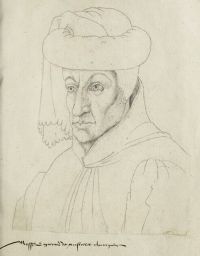
“ FRANCIS I. (1494-1547) , king of France, son of Charles of Valois, count of Angoulême, and Louise of Savoy, was born at Cognac on the 12th of September 1494. The count of Angoulême, who was the great-grandson of King Charles V., died in 1496, and Louise watched over her son with passionate tenderness. On the accession of Louis XII. in 1498, Francis became heir-presumptive. Louis invested him with the duchy of Valois, and gave him as tutor Marshal de Gié, and, after Gié’s disgrace in 1503, the sieur de Boisy, Artus Gouffier. ”
Washington Irving,
The Crayon Papers
“ The French nation had been so accustomed to attach an idea of everything noble, lofty, and magnificent to the royal name and person, especially during the stately and sumptuous reign of Louis XIV., that they could not at first tolerate the idea of royalty being in any degree mingled with matters of traffic and finance, and the king being in a manner a banker. It was one of the downward steps, however, by which royalty lost its illusive splendor in France, and became gradually cheapened in the public mind. ”