Fujiwara clan

Definition and stakes

Captain F. Brinkley,  Japan: Its History, Arts, and Literature (1902)

“ The Fujiwara clan, taking all the civil offices, resided in the capital, whereas the military posts fell to the lot of the Taira and the Minamoto, who, settling in the provinces, and being thus required to guard the outlying districts and to quell rebellions, found it expedient to surround themselves with men who made soldiering a profession. ”
Source: Wikisource

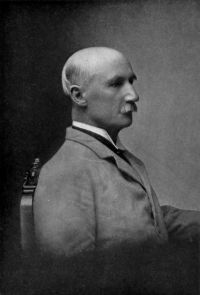
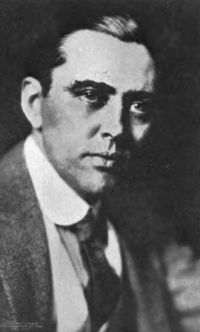
Portrait of Lafcadio Hearn Lafcadio Hearn,  Japan: An Attempt at Interpretation

“ At a certain period in the development of each we find the same thing happening,—the withdrawal of all political authority from the Priest-King, who is suffered, nevertheless, to retain the religious dignity. It may be a mistake to judge the policy of the Fujiwara as a policy of mere ambition and usurpation. The Fujiwara were a religious aristocracy, claiming divine origin,—clan-chiefs of a society in which religion and government were identical, and holding to that society much the same relation as that of the [264] Eupatridae to the ancient Attic society. ”
Source: Gutenberg

Captain F. Brinkley,  Japan: Its History, Arts, and Literature… (1901)

“ These two men, Michizane and Tokihira, became the central figures in a very unequal struggle, the forces on the one side being the whole Fujiwara clan headed by the unscrupulously daring and ambitious Tokihira; those on the other, a few scholars, the love and respect of the lower orders and the benevolent tolerance of the self-effacing Michizane. The end was inevitable. Michizane, falsely accused of conspiring to obtain the Throne for his grandson—an Imperial prince had married his daughter—was banished to Dazaifu, and his family and friends were either killed or reduced to serfdom. ”
Source: Wikisource

Get perspective with Kwize: daily news enlightened by great literature