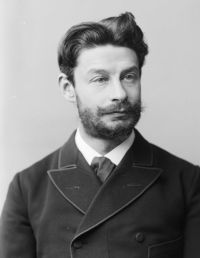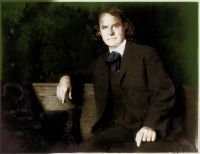
Georg Brandes

Definition and stakes

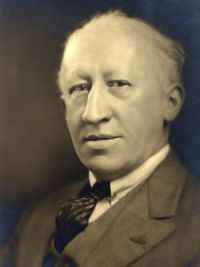
Portrait of Elbert Hubbard Elbert Hubbard The philosophy of Elbert Hubbard (1916)

He would have us live lives of simplicity, truth, honesty and gentleness ❦ He would have us work for harmony and love, instead of for place and power. Georg Brandes is an individualist and a symbolist. He thinks all of our belongings should mean much to us, and that great care should be exercised in selection. We need only a few things, but each of these things should suggest utility, strength, harmony and truth. All of our actions must be suggestive of [60] peace and right ❦ Not only must we speak truth, but we must live it.
Source: Gutenberg

Edmund William Gosse 1911 Encyclopædia Britannica (1911)

But about the latter date he came under the influence of Georg Brandes, and, without abandoning art, he began to give himself more and more to literature. At various periods he travelled very extensively in England, Scotland, France, Spain and Italy, and his literary career began by his sending letters about his journeys to the Danish newspapers. After returning home, he settled for some time in the island of Bornholm, painting seascapes.
Source: Wikisource

Library of the World's Best Literature…

For examples of the man of letters considered primarily as critic, we must then look to our own century, and we find the type best illustrated by such men as Sainte-Beuve, Taine, Brunetière, and the subject of the present sketch.
It is indeed a rather remarkable fact that the most conspicuous figure in literary Denmark at the present time should be not a poet or a novelist, but a critic pure and simple; for that is the title which must be given to Georg Brandes.
Source: Gutenberg

Get perspective with Kwize: daily news enlightened by great literature