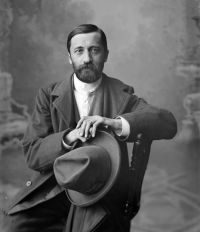
Giovanni Battista Tiraboschi

Definition and stakes

1911 Encyclopædia Britannica, Volume 26… (1911)

“ This vast work, in which Italian literature from the time of the Etruscans to the end of the 17th century is traced in detail, occupied eleven years, 1771–1782, and the thirteen quarto volumes embodying it appeared successively at Modena during that period. A second enlarged edition (16 vols.) was issued from 1787 to 1794, and was succeeded by many others, besides abridgments in German, French and English. Tiraboschi died at Modena on the 3rd of June 1794, leaving a high reputation for virtue, learning and piety. ”
Source: Wikisource

George Ticknor,  History of Spanish Literature, vol…

“ To the Letters of Serrano rejoinders appeared at once from Clement Vannetti, the person to whom Serrano had addressed them, and from Alessandro Zorzi, a friend of Tiraboschi;—and to the Dissertation of Father Andres, Tiraboschi himself [p. 429] replied, with much gentleness, in the notes to subsequent editions of his “Storia della Letteratura.” (See Angelo Ant. Scotti, Elogio Storico del Padre Giovanni Andres, Napoli, 1817, 8vo, pp. 13, 143, Tiraboschi, Storia, ed. Roma, 1782, Tom. II. p. 23.) ”
Source: Gutenberg

James Dennistoun,  Memoirs of the Dukes of Urbino…

“ He sought audiences in many cities of Italy and Provence for his prelections in grammar and philosophy, as well as for his improvisations of Latin or Italian verse; and among the numerous patrons he thus courted was the good King René, who bestowed on him the laurel crown, a guerdon which his rude numbers ill-deserved at the hands of that graceful troubadour. Tiraboschi makes no allusion to his intercourse with Duke Federigo, whereof we know little beyond two works which he inscribed to that Prince, and which remain unedited in the Vatican Urbino Library. ”
Source: Gutenberg

Get perspective with Kwize: daily news enlightened by great literature