“ Thus even on the most cautious reckoning, there is an interval of thirteen centuries between the close of Greek history and our own times, and the great age of Greek history—the time when Ancient Greek society was in its prime, when it was shaping its own destiny and deflecting the destiny of its neighbours—is separated from our generation by more than two thousand years. What legacy has come down, through these great periods of time, from Ancient Greek society to the contemporary world? ”
Greek history
Definition and stakes
The theme of “Greek history” has been addressed by authors such as J. P. Mahaffy, Philip Lake, James D. Bourchier, Edward M. Walker, Maximilian O. B. Caspari, Dorothy Mills, Gilbert Murray and John Stephen Horn. It is often associated with terms like Greece, Greeks, Athens, philosophy and Hellenism.
Quotes about “Greek history”
“ If we take utility to mean intellectual and not practical utility—and as humanists and scientists we do—we may claim without paradox that the study of Greek civilization is valuable just because it is not our own.These, then, are four points in favour of Greek history: we possess the whole tragedy, it is a magnificent expression of the plot, and it has a peculiar emotional value and a peculiar intellectual value which the drama in which we ourselves are actors cannot have for us. ”
Dorothy Mills, The book of the ancient Greeks (1925)
“ The Greek people were lovers of freedom, truth, self-control and beauty. It is in their political history, their literature and their architecture that we shall see some of the outward and visible signs of the spirit that inspired them, and the land of Greece is the setting in which they played their part in the history of civilization. ”
“ And Greek, not Latin, was still the language in which most of the greatest literature of the Imperial period was written. One need only mention works which are still widely read and which have influenced our own civilization—Plutarch’s Lives, Marcus Aurelius’ Meditations, and the New Testament. They are all written in Greek, and who will venture to assert that the age in which they were written falls outside Greek history, or that the social experience which produced them was not an act in the tragedy of Hellenic civilization? Even statistically the Empire was more Greek than anything else. ”
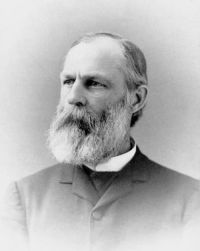 Crawford Howell Toy,
Introduction to the History of Religions
“ The Greeks, with their rich imagination and artistic feeling, filled the world with divine figures, well-defined types of Greek character, ideals of Greek thought. Greece alone has constructed a true pantheon, a community of gods all individualized, but all compacted into a family or a body of government. ”
 Ralph Waldo Emerson,
History
(1841)
“ What is the foundation of that interest all men feel in Greek history, letters, art, and poetry, in all its periods, from the Heroic or Homeric age down to the domestic life of the Athenians and Spartans, four or five centuries later? What but this, that every man passes personally through a Grecian period. ”
Various, The International Monthly Magazine…
“ But the history of Greece is finished. Athens and Sparta, the two great antagonistic types of Greek society, politics, and education, have attained their full development, passed their allotted hour of trial, and touched upon their doom. The shades of night are gathering on the bright day of Hellas. The momentous work of that wonderful people is accomplished; the interest of the great intellectual and moral contest has centred in one man; the last scene of the Phædo has been enacted, and Socrates has died.The history of Greece is written, and the character of the historian is decided. ”
Dorothy Mills, The book of the ancient Greeks (1925)
“ The history of Greek civilization may be divided into two periods. The first lasted until the days of Alexander; it included the early experiments made by Greek states in the art of governing themselves, the repulse of the Barbarian, the great days of Athens, the disastrous Peloponnesian War. Through all this period Greece was learning how to do things. She was in the making and was creating what was to live as long as men should love what was great, but she was living for herself. ”
Charles Morris, Historic Tales: The Romance of Reality…
“ Thus died the first and one of the greatest of ethical philosophers, and a man without a parallel, in his peculiar field, in all the history of mankind. Greece produced none like him, and this homely and humble personage, who wrote not a line, has been unsurpassed in fame and influence upon mankind by any of the host of illustrious writers who have made famous the Hellenic lands. ”
Marcius Willson, Mosaics of Grecian History
“ The natural causes which tended to unite the Greeks as a people were a common descent, a common language, and a common religion. Greek genius led the nation to trace its origin, where historical memory failed, to fabulous persons sprung from the earth or the gods; and under the legends of primitive and heroic ancestors lie the actual migrations and conquests of rude bands sprung from related or allied tribes. These poetical tales, accepted throughout Hellas as historical, convinced the people of a common origin. ”
Nevill Forbes, The Balkans: A History of Bulgaria…
“ In the middle of the fifth century B.C., Ancient Greek civilization seemed triumphantly vigorous and secure. A generation before, it had flung back the onset of a political power which combined all the momentum of all the other contemporary civilizations in the world; and the victory had proved not merely the superiority of Greek arms—the Spartan spearman and the Athenian galley—but the superior vitality of Greek politics—the self-governing, self-sufficing city-state. ”
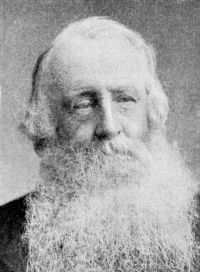 Edward A. Freeman,
The Chief Periods of European History
“ I remember well the saying of one in this place with whom geographical insight is an instinct, that neither the Greeks in any other land nor any other people in Greece could have been what the Greeks in Greece actually were. The mission of the Greek race was to be the teachers, the lights, the beacons, of mankind, but not their rulers. ”
J. N. Larned, History for ready reference, Volume 1…
“ It reveals to us the Greek as everywhere lord of the barbarian, as foundling kingdoms and federal systems, as the instructor of all mankind in art and science, and the spreader of civil and civilized life over the known world. ”
Charles Morris, Historic Tales: The Romance of Reality…
“ In the whole history of mankind there is nothing elsewhere to compare with the achievements of the Greek intellect during the few centuries in which freedom and thought flourished on that rocky peninsula, and the names and works handed down to us are among the noblest in the grand republic of thought. ”
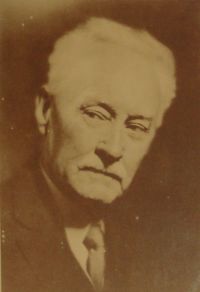 William Benjamin Smith,
The Color Line: A Brief in Behalf of the Unborn
“ Accordingly, we should not say that the Greek civilization with its language, its art, its science, its philosophy, its eloquence, its literature, its civil and military life, was the outgrowth of the Greek genius, the native faculty of the Hellenic race, but rather that this genius, this spiritual faculty, this unrivalled intellectual-artistic endowment of the Greeks, was the continuous resultant at each moment in the history of the race of the collective culture-experiences through which, up to that moment, it had passed. ”
J. P. Mahaffy, Problems in Greek history
“ As the Greek language has lasted in that wonderful country in spite of long domination by Romans, of huge invasion by Celts and Slavs, of feudal occupation by Frankish knights, of raid and rapine by Catalans and Venetians, ending with the cruel tyranny of the Turk, so the Greek spirit has lasted through all manner of metamorphose and modification, till the return wave has in our day made it the highest aspiration of our worldly perfection. ”
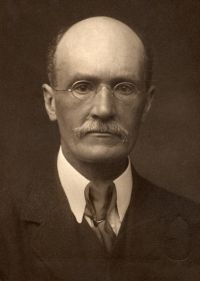 Gilbert Murray,
Euripides and His Age
“ The greatest change that has come over our study of Greek civilization and literature in the last two generations is this: that we now try to approach it historically, as a thing that moves and grows and has its place in the whole life-history of man. ”
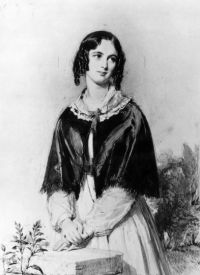 Charlotte M. Yonge,
History of Christian names
(1884)
“ Modern Greece has the most direct inheritance from the ancient, classical, and old Christian names. True, her population has undergone changes which leave but little of the proud old Ionian or Dorian blood; but her language has been victorious over the barbarous speech of her conquerors, and Latins and Bulgarians became Greek beneath her influence. ”
J. N. Larned, History for ready reference, Volume 1…
“ The Greek Empire, with all its evils and weaknesses, was yet in its time the only existing image in the world of a civilised state. ... The lives of great men profoundly and permanently influence national character; and the great men of later Greek memory are saints. They belong to the people more than emperors and warriors; for the Church is of the people. ... The mark which such men left on Greek society and Greek character has not been effaced to this day, even by the melancholy examples of many degenerate successors. ”
James Augustus St. John, The History of the Manners and Customs of Ancient Greece… (1842)
“ To a Greek, on the contrary, or to a man with a Greek’s soul, a thousand sweet reminiscences, a thousand legends, a thousand dim but cherished associations appear clustering round them. Every time they flash upon him, he lives his youth over again. The briery nook, the dewy lanes, the dim religious forests, the pebbly or wave-fretted shore, where the poetry of Greece first opened its eyes upon him in boyhood, sweep in procession over his 296fancy. ”
 George Grote,
History of Greece, Volume 01 (of 12…
“ To every god and every hero it was consistent with Grecian ideas to ascribe great diversity of human motive and attribute: each indeed has his own peculiar type of character, more or less strictly defined; but in all there was a wide foundation for animated narrative and for romantic incident. The gods and heroes of the land and the tribe belonged, in the conception of a Greek, alike to the present and to the past: he worshipped in their groves and at their festivals ”
J. P. Mahaffy, Problems in Greek history
“ It is indeed difficult to overrate the amount and the variety of the many hidden threads that unite our modern culture to that of ancient Greece, not to speak of the conscious return of our own century to the golden age of Hellenic life as the only human epoch in art, literature, and eloquence which ever approached perfection. ”
George Grote,
History of Greece, Volume 01 (of 12…
“ The extensive and multiform personifications, here faintly sketched, pervaded in every direction the mental system of the Greeks, and were identified intimately both with their conception and with their description of phenomena, present as well as past. That which to us is interesting as the mere creation of an exuberant fancy, was to the Greek genuine and venerated reality. Both the earth and the solid heaven (Gæa and Uranos) were both conceived and spoken of by him as endowed with appetite, feeling, sex, and most of the various attributes of humanity. ”
 Karl Otfried Müller,
History of the Literature of Ancient Greece
(1847)
“ The Greek mind, however, even in this the earliest of its productions, appears richer and more various in its forms, and at the same time to take a loftier and a wider range, than is the case in the religion of the oriental neighbours of the Greeks, the Phrygians, Lydians, and Syrians. ”
George Grote,
History of Greece, Volume 01 (of 12…
“ Still less ought we to consent to break up and disenchant in a similar manner the mythes of ancient Greece,—partly because they possess the mythical beauties and characteristics in far higher perfection, partly because they sank deeper into the mind of a Greek, and pervaded both the public and private sentiment of the country to a much greater degree than the British fables in England. ”
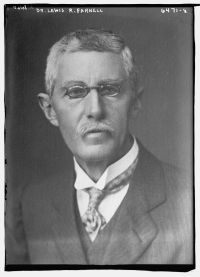 Lewis Richard Farnell,
Outline-history of Greek religion
(1921)
“ It is convenient for the purposes of religious study to mark off the period between the ninth and the sixth centuries as the second period of Greek religion, in which we can observe the working of new forces and the development of older germs into new life. By the beginning of this period the fusion of the Northerners and the Mediterranean population was mainly complete, and the Hellenic spirit had acquired its definite instincts and bias. ”
George Grote,
History of Greece, Volume 01 (of 12…
“ Yet I cannot but fear that my first two volumes will suffer in the estimation of many readers by coming out alone,—and that men who value the Greeks for their philosophy, their politics, and their oratory, may treat the early legends as not worth attention. And it must be confessed that the sentimental attributes of the Greek mind—its religious and poetical vein—here appear in disproportionate relief, as compared with its more vigorous and masculine capacities,—with those powers of acting, organizing, judging, and speculating, which will be revealed in the forthcoming volumes. ”
Gilbert Murray,
A History of Ancient Greek Literature
(1901)
“ Of the literature produced by the Greeks in the fifth century B.C., we possess about a twentieth part; of that produced in the seventh, sixth, fourth, and third, not nearly so large a proportion. All that has reached us has passed a severe and far from discriminating ordeal. It has secured its life by never going out of fashion for long at a time; by appealing steadily to the book-trade throughout a number of successive epochs of taste—fourth-century Greece, pre-Christian Alexandria, Augustan Rome, the great Hellenic revival of the Antonines, the narrower Attic revival of the later sophists. ”
James Augustus St. John, The History of the Manners and Customs of Ancient Greece… (1842)
“ Most of the flowers cultivated, moreover, suggested poetical or mythological associations; for the religion of Greece combined itself with nearly every object in nature, more particularly with the beautiful, so that the Greek, as he strolled through his garden, had perpetually before his fancy a succession of fables connected with nymphs and goddesses and the old hereditary traditions of his county. ”
Gilbert Murray,
A History of Ancient Greek Literature
(1901)
“ In attempting to understand the scope and development of Greek literature, our greatest difficulty comes from the fragmentary and one-sided nature of our tradition. There has perhaps never been any society in history so near to the highest side of our own as the Athens of Euripides and Plato. ”
John Lord, Beacon Lights of History, Volume 01…
“ Even our present civilization delights in the masterpieces of the classical poets, historians, orators, and essayists, and seeks to rival them. Long before Christianity became a power the great literary artists of Greece had reached perfection in style and language, especially in Athens, to which city youths were sent to be educated, as to a sort of university town where the highest culture was known. Educated Romans were as familiar with the Greek classics as they were with those of their own country, and could talk Greek as the modern cultivated Germans talk French. ”
Lewis Richard Farnell,
Outline-history of Greek religion
(1921)
“ It is its higher achievement that makes any particular religion of importance in the history of civilisation; and we are now aware that Greek religion can claim this importance. Nor can the lower elements as a whole be shown to be the germs of the higher within the Hellenic period proper. We cannot show the evolution of the personal anthropomorphic deities of Greece from magic ritual or totemism or theriomorphism without transcending the chronologic limits of the period within which it is allowable to speak of a Hellenic people at all. ”
 H. G. Wells,
The Outline of History: Being a Plain History of Life and Mankind
“ From a new angle and with a fresh vigour it took up that systematic development of positive knowledge which the Greeks had begun and relinquished. It revived the human pursuit of science. If the Greek was the father, then the Arab was the foster-father of the scientific method of dealing with reality, that is to say, by absolute frankness, the utmost simplicity of statement and explanation, exact record, and exhaustive criticism. Through the Arabs it was and not by the Latin route that the modern world received that gift of light and power. ”
 Bill Clinton,
Proclamation 6979
“ On this day, it is fitting that we reflect on the enormous contributions the Greek people have made to the modern world. The legacy of the ancient Greeks, in the fields of philosophy, literature, drama, sculpture, and architecture, continues to influence our beliefs, our values, and our concept of art. And, after more than 2,000 years, the ideology of Greece-as embodied in the concept of democracy-is still the ideal that guides us in charting our course for the future. ”
John Stephen Horn, Greek Independence Day: A National Day of Celebration
“ Speaker, more than 2,500 years ago the people of Greece began to formulate the ideas that now serve as the foundation for our system of government, science, philosophy, law, literature, and art. The gift of Greek culture to the world, and the special debt this nation owes to Greece, is priceless. The Greek tradition that began in the mists of time with Homer led to the Golden Age and later to the intellectual and aesthetic enrichment of the Roman Republic and Empire, the European Renaissance, and our own nation's founding principles. ”
Related terms
Authors who wrote about “Greek history”
J. P. MahaffyPhilip Lake, James D. Bourchier…Dorothy MillsGilbert MurrayJohn Stephen HornM. GoldenLewis Richard FarnellJames Augustus St. JohnVariousNevill ForbesKarl Otfried Müller F. Max MüllerMarcius Willson
 Jesse Benedict Carter
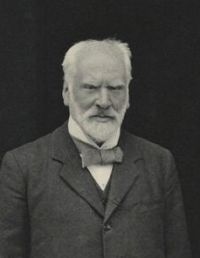 Edwin Pears
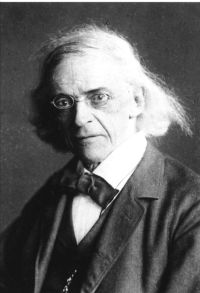 Theodor MommsenJohn LordEdward A. FreemanChautauqua InstitutionEdwyn Robert Bevan and Margaret Bryant
Gilbert MurrayJohn Stephen HornM. GoldenLewis Richard FarnellJames Augustus St. JohnVariousNevill ForbesKarl Otfried MüllerF. Max MüllerMarcius WillsonJesse Benedict CarterEdwin PearsTheodor MommsenJohn LordEdward A. FreemanChautauqua InstitutionEdwyn Robert Bevan and Margaret Bryant