
“ Hannah More was a brilliant wit, a femme d’esprit, passionately fond of society, and loved by society in return. When the serious-minded little country girl, who at the age of eight had covered a whole quire of paper with letters seeking to reform imaginary depraved characters, and with return epistles full of contrition and promises of amendment, paid her first visit to London, she became at once the intimate friend of Johnson, Burke, Sir Joshua Reynolds, Garrick, and most of the distinguished people of the day, delighting them by her charm, and grace, and wit. ”
Hannah More
Definition and stakes
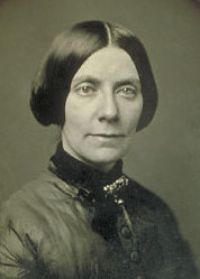
Hannah More (1745–1833) was an English writer, philanthropist, and moralist renowned for her evangelical works, anti-slavery advocacy, and educational writings. Initially a playwright in London’s literary circles, she later turned to moral and religious themes, notably through the Cheap Repository Tracts.
Authors such as Charlotte Mary Yonge emphasized her lasting influence and charitable contributions, while Oscar Wilde praised her wit and social connections. Kate Sanborn contrasted her youthful energy with her later gravity, and Winston Churchill depicted her aged frailty. These varied portrayals highlight her complex legacy as both a literary figure and a reformer, whose works connected moral guidance with social change.
Quotes about “Hannah More”
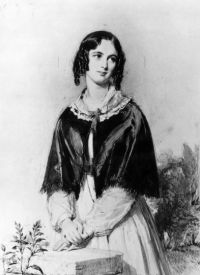 Charlotte Mary Yonge,
Hannah More
(1888)
“ Hannah More's life had been an unusually long and brilliant one, scarcely broken by death or change, and the five sisters were all on the verge of old age. Still together, still with perfect oneness in heart and life, and the younger pair still active and effective, though delicate and often suffering. ”
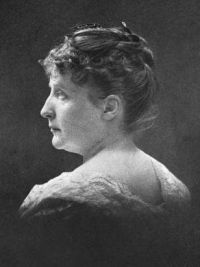 Kate Sanborn,
The Wit of Women
“ There were many literary Englishwomen who had undoubted humor. Hannah More did get unendurably poky, narrow, and solemn in her last days, and not a little sanctimonious; and we naturally think of her as an aged spinster with black mitts, corkscrew curls, and a mob cap, always writing or presenting a tedious tract, forgetting her brilliant youth, when she was quite good enough, and lively, too. ”
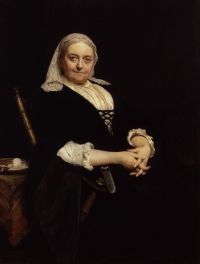 Dinah Maria Mulock Craik,
Stories of Romance
“ He had seen Hannah every day,——at the fireside,——at work,——in the kirk,——on holidays,——at prayers,——bringing supper to his aged parents,——smiling and singing about the house from morning till night. She had often brought his own meal to him among the hills; and he now found that though he had never talked to her about love, except smilingly and playfully, he loved her beyond father or mother, or his own soul. “I will save thee, Hannah,” he cried, with a loud sob, “or lie down beside thee in the snow; and we will die together in our youth.” ”

“ I began to wonder if, after all, I had chosen the right girl. Suppose Hannah was not all I thought her! What a terrible thing it would be for Josiah. What data, sufficient to reason upon, had I possessed? How did I know that Hannah was not a lazy, ill-tempered girl, a continual thorn in the side of her poor, overworked mother, and a perpetual blister to her younger brothers and sisters? How did I know she had been well brought up? Her father might be a precious old fraud: most seemingly pious men are. She may have learned from him only hypocrisy. ”
Winston Churchill, The Dwelling Place of Light — Complete
“ Streaks of grease smoke floated fantastically beneath the low ceiling, and Hannah, with the frying-pan in one hand and a fork in the other, was bending over the stove. Wisps of her scant, whitening hair escaped from the ridiculous, tightly drawn knot at the back of her head; in the light of the flickering gas-jet she looked so old and worn that a sudden pity smote Janet and made her dumb—pity for her mother, pity for herself, pity for Lise; pity that lent a staggering insight into life itself. Hannah had once been young, desirable, perhaps, swayed by those forces which had swayed her. ”
Charlotte Mary Yonge,
Hannah More
(1888)
“ There were persons who were far from any profanity, and only desired truth and piety to prevail, who convulsed a private circle with laughter by turning into ridicule the priggishness unavoidable in imaginary models of male excellence, especially when drawn by female hands, and those, so utterly unable to construct an interesting story as Hannah More had always been. ”
Charlotte Mary Yonge,
Hannah More
(1888)
“ The old man went home to die content. He had bequeathed one hundred pounds to Hannah More, and, after the fashion of the time, she dedicated to his memory a plantation at Barley Wood, putting up an inscription, as she had done in the case of other much-loved friends. She must have missed the approval of one who had so warmly appreciated her works, one after the other, when, in the winter, she made a new venture, a religious tale or novel for the upper classes, entitled Cœlebs in Search of a Wife. ”
Selina A. Bower, The Childhood of Distinguished Women
“ Hannah's other great talent, as a writer, was also early and fully indicated. As a mere child, she would scribble poems and prim essays upon every scrap of available paper, and a story is told of her, that she had one grand ambition constantly before her young life, and that was to be old enough to "possess a whole quire of paper!" As a schoolgirl, Dr. Johnson, the elder Sheridan, and the astronomer Ferguson, seem to have been on terms of some intimacy, and exercised a talented influence upon the strong sense and mental capacity of Hannah More. ”
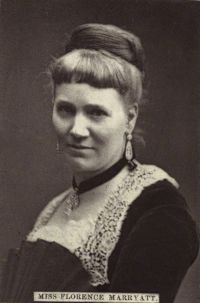 Florence Marryat,
The Hampstead mystery: a novel…
(1894)
“ Hannah! it is useless to ignore the fact. My doom is fixed! If it is not the gallows, it is public and utter disgrace.’All the woman rose in Hannah’s breast at these words, and the man before her was one to be protected and solaced and thought for.‘It shall be neither, my dearest,’ she answered firmly; ‘only trust to me. I have pondered over the difficulties that might happen in your case, Henry, and I think I have found a way out of them. You are tired and worn out with misery and suspense, my poor love. Let me think for you. You must go to your room now, and try to rest. ”
Charles J. Abbey, The English Church in the Eighteenth Century
“ If we were to judge of Hannah More's writings by their popularity, and the undoubted effects which they produced, or by the testimony which men of approved talents and discernment have borne to their value, we should place her in the very first rank of eighteenth century writers. 'Her style and manner are confessedly superior to those of any moral writer of the age.' She is 'one of the most illustrious females that ever was in the world. ”
 Emma Dorothy Eliza Nevitte Southworth,
Ishmael; Or, In the Depths
“ No, Hannah, no; people will soon forget he ever had a mother. He will only be known as Hannah Worth's nephew, and she is everywhere respected. Promise me, Hannah.""Nora, I dare not.""Sister, I am dying; you cannot refuse the prayer of the dying." ”
“ It was a perilous thing for a young woman like Hannah More, with her enthusiasm, talents, and general attractiveness, to be suddenly launched in the turbid though fascinating current of London society. But the admirable training in strict moral principles with which she had been privileged furnished weapons of defence against the more specious temptations which presented themselves ”
“ BIOGRAPHY. Hannah More has been long conspicuous among the lights of the world. She was the youngest but one of five sisters, and was born on the 2nd of February, 1745, at Stapleton, near Bristol. Jacob More and Mary Grace educated all their daughters with a view to their future occupation as schoolmistresses. They had all strong minds, sagacious intellects, and superior capabilities for the acquisition of knowledge; but Hannah seems to have combined in herself the chief excellencies of all their characters. ”
Florence Marryat,
The Hampstead mystery: a novel…
(1894)
“ The tears were running fast down Hannah’s cheeks by this time. The man she held in her arms was no longer the one she had feared and shrunk from, and almost loathed in her contempt, for months past, but the lover of her girlhood—the husband of her youth—the father of her children—and her heart went out with a mighty compassion towards him, notwithstanding his weakness and his sin. ”
“ With an ugly furrow of discontent between her heavy brows, Hannah obeyed, and as she renewed the fire smouldering in the dining-room, she slowly shook her grizzled head: "Many a time I have heard my father say, 'Mystery breeds misery,' and take my word for it, there is always something wrong when a woman shuns women-folks, and hunts sympathy and advice from men.""Hush, Hannah! Charity,—charity; don't forget that you live in a parsonage, where 'sounding brass or tinkling cymbals' are not tolerated. All kinds of sorrow come here to be cured, and I fear that lady is in distress. ”
Charlotte Mary Yonge,
Hannah More
(1888)
“ Hannah More, and speedily was rendered home-like by receiving her cherished possessions, while she was able to enjoy with thankfulness the beautiful view from the windows, and so many visitors poured in on her that she was persuaded to restrict them to two days in the week. ”
 Mrs. George de Horne Vaizey,
A College Girl
“ Now Hannah was the only member of the family who was limited to one cognomen, so she answered unthinkingly, “Hannah; plain Hannah!” and instantly descrying the twinkling appreciation in that stranger’s eyes, she twinkled herself, and henceforth led the adoption of the title. Long use had almost deadened its meaning in the ears of the family, but strangers still suffered at the hearing.Plain Hannah’s face peered cheerily out of the cab window, her little eyes twinkled merrily, her preposterous eyebrows arched in derision of the melancholy group upon the doorsteps. ”
Charlotte Mary Yonge,
Hannah More
(1888)
“ The room where he taught is now used for parish purposes and absorbed into Fisherton itself, almost a suburb of Bristol, and well known as containing—very appropriately—a Training School for Mistresses, who ought to look back to Hannah More as one of the very first in the path they are to tread. Between the years 1736 and 1747, five daughters were born to Mr. and Mrs. More—Mary, Elizabeth, Sarah, Hannah, and Martha. Good abilities seem to have been the family heritage; but Hannah was soon acknowledged as the cleverest of the five. ”
Emma Dorothy Eliza Nevitte Southworth,
Ishmael; Or, In the Depths
“ But, ah! do you think they make a woman happy?""No, madam.""Listen, Hannah! My poor father was an apostate to his faith. My nation cast me off for being his daughter and for marrying a Christian. My parents are dead. My people are estranged. My husband alienated. But still I have one comfort and one hope! My comfort is—the—the simple existence of my husband! Yes, Hannah! alienated as he is, it is a comfort to me to know that he lives. If it were not for that, I myself should die! Oh, Hannah! it is common enough to talk of being willing to die for one we love! ”
Mary E. Wilkins, A New England Nun and Other Stories… (1920)
“ Not one Sunday had she missed of stepping modestly up the aisle in her humble Sunday best, and seating herself with gentle gravity. The pew was a conspicuous one beside the pulpit, at right angles with the others. Hannah was in full view of the whole congregation. She sat erect and composed in her pretty dress. The delicate color in her cheeks was the same as ever; her soft eyes were as steady. She found the hymns and sang; she listened to the preaching. Women looked at her, then at one another. Hannah knew it. ”

“ I cannot even get a word sent to my Julia, my wife that ought to be. Only think of the affront they have made me put on her I love better, ten times better, than myself. Why, she must have been waiting for me; humiliated perhaps by my absence. What will she think of me? The rogues will tell her a thousand lies: she is very high spirited, Hannah, impetuous like myself, only so gentle and so good. Oh, my angel, my angel; I shall lose you for ever.” Hannah clasped her hands, with tears in her eyes: “No, no,” she cried; “it is a burning shame to part true lovers like you and her. ”
Katharine Ellis Barrett, The Wide Awake Girls in Winsted
“ I’m not in the least afraid that any one could be dearer to Hannah than I am, and she is such a bundle of contradictions, of sweet impulses and rebelliousness, that I’m heartily glad of all the help I can get in bringing her up. ”
Mrs. W. K. Clifford, Margaret Vincent: A Novel
“ Hannah almost screamed. "You that have no religion now want to be an actress; where do you think it will all end?""I am not going to discuss it with you," Margaret answered, loftily, "it was very kind of you to come, but if you won't have any tea you had better go home again. I have written to father, and I know that my mother will trust me. I have not got any of the religion that makes you narrow and hard; you have made me afraid of even thinking about that; and I'm going to be an actress. But I won't do anything wrong—""We are all weak—" Hannah began, in consternation. ”
“ There was an air of distinction about her that other young women lacked—an air that had brought men to her side and kept them there even in the city where she had been spending a few weeks with her uncle’s family, and though she was rather sparely built, on the model of the moorwoman, she had none of Hannah’s angularities to destroy the symmetry of her figure, and her black hair and clear black eyes together with a straight, fine nose and expressive lips would have made her noticeable in any company and aroused admiration in most. Few women ever had their features in better control than she ”
John Lord, Beacon Lights of History, Volume 07…
“ I might have selected some great woman nearer home and our own time, more intimately connected with the profession of educating young ladies; but I prefer to speak of one who is universally conceded to have rendered great service to her age and country. It is doubly pleasant to present Hannah More, because she had none of those defects and blemishes which have often detracted from the dignity of great benefactors. ”
Various, The book of Scottish story: historical… (1876)
“ Much is forgiven to the human heart by Him who so fearfully framed it; and God is not slow to pardon the love which one human being bears to another, in his frailty—even though that love forget or arraign His own unsleeping providence. His voice has told us to love one another—and William loved Hannah in simplicity, innocence, and truth. That she should perish was a thought so dreadful, that, in its agony, God seemed a ruthless being. “Blow—blow—blow—and drift us up for ever—we cannot be far asunder—Oh, Hannah—Hannah, think ye not that the fearful God has forsaken us?” ”
active 19th century Lady of distinction, The Mirror of the Graces (1831)
“ For my entertainment, the beauty had, all that morning, been improving her charms: the beau had put on lace, and the young doctor a big wig, merely to please me. But quite different were the sentiments of cousin Hannah: she regarded every well-dressed woman as a victorious rival; hated every face that seemed dressed in good humor, or wore the appearance of greater happiness than her own. ”
Charlotte Mary Yonge,
Hannah More
(1888)
“ Tuesday evening we drank tea at Sir Joshua's with Dr. Johnson. Hannah is certainly a great favourite. She was placed next to him, and they had the entire conversation to themselves. They were both in remarkably high spirits: it was certainly her lucky night. I never heard her say so many good things. The Old Genius was extremely jocular, and the young one very pleasant. ”
 Agnes Repplier,
A happy half-century and other essays
(1908)
“ The injustice of the thing stings us to the soul. Yet it was the unhesitating assumption of Heaven's co-partnership which gave to Hannah More the best part of her earthly prestige, and made her verdicts a little like Protestant Bulls. ”
Emma Dorothy Eliza Nevitte Southworth,
Ishmael; Or, In the Depths
“ Well, no, Miss Hannah; me and my ole 'oman must see what we can do for you. She aint as young as she used to be, and she mustn't work so hard. She must part with some of her own spinning and weaving to you. ”
Madeline Leslie, Good for evil (1868)
“ Though ignorant and unaccomplished, Hannah had carefully taught her the sacred truths revealed in the word of God. She knew that man alienated from his Maker, could never experience perfect joy. She knew that the love of the Father had provided a way whereby his sinful children might secure, not only temporal, but eternal good. ”
 Patrick Augustine Sheehan,
My New Curate
“ Will the time come when the laughter and the wit, grown rampant, will rudely jostle aside all the reverential elements in our nature, and mount upwards to those fatal heights which other nations have scaled like Satan,—and thence have been flung into the abyss?I was curious to know what Hannah thought of it all. Hannah too is versatile; and leaps from adoration to envy with wonderful facility."Father Letheby's furniture, I suppose?" I said, when she brought in the dinner."I believe so," she replied, in a tone of ineffable scorn,—"a parcel of gimcracks and kimmeens." ”
