“ At the ordinary pace of those great social changes which are not effected by physical violence, we have before us an interval of about a generation, on the due employment of which it depends whether the accommodation of social institutions to the altered state of human society, shall be the work of wise foresight, or of a conflict of opposite prejudices. The future of mankind will be gravely imperilled, if great questions are left to be fought over between ignorant change and ignorant opposition to change. ”
Social change
Definition and stakes
Social change refers to significant transformations in societal structures, behaviors, or relationships, often influenced by cultural, economic, or technological factors. Authors like John Stuart Mill emphasized the tension between vision and conflict in adjusting institutions to evolving societies, while Werner Sombart associated social development with ongoing economic shifts.
Scott Nearing underscored the dynamic interaction between forces that maintain status and those that drive transformation, observing that changes in social equilibrium inevitably lead to resistance or adaptation. These viewpoints collectively highlight social change as a complex, multifaceted process shaped by both structural pressures and human initiative, reflecting persistent struggles between continuity and renewal.
Quotes about “social change”
 Werner Sombart,
Socialism and the Social Movement in the 19th Century
Werner Sombart,
Socialism and the Social Movement in the 19th Century
“ Social evolution, and the conception of the social movement as such an evolution, rest upon the thought that we find ourselves in a continued condition of economic and thus social change, and that specific social interests and the necessary relations of mastery are connected with each change ”
 Scott Nearing,
Civilization and Beyond: Learning from History
(1975)
Scott Nearing,
Civilization and Beyond: Learning from History
(1975)
“ Whether social change is major or minor, local or general, it shifts the social balance. Any shift in the social balance involves reactionaries, conservatives, liberals, radicals, some of whom will gain, while others will lose in the course of each social transformation. ”
Scott Nearing,
Civilization and Beyond: Learning from History
(1975)
“ They are influenced by deep running political, economic and social forces and trends.Each civilization matures into forms and develops functions and institutions that tend to consolidate and crystallize in well defined social patterns and habit grooves in which two forces oppose each other: one force is status--preserving that which is; the other force is change--that which tends to become or is becoming.Status and change confront each other at all social levels. During periods of rapid social change they take the center of the stage and dominate the drama. ”
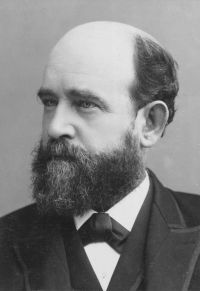 Henry George,
Progress and Poverty, Volumes I and II
Henry George,
Progress and Poverty, Volumes I and II
“ Consider how by a thousand actions and interactions the members of every community are linked together, and how in the present condition of things even the fortunate few who stand upon the apex of the social pyramid must suffer, though they know it not, from the want, ignorance, and degradation that are underneath. Consider these things and then say whether the change I propose would not be for the benefit of every one—even the greatest land holder? ”
Henry George,
Progress and Poverty (George)…
(1879)
“ It is not possible without too much elaboration to notice all the changes that would be wrought, or would become possible, by a change that would readjust the very foundation of society. Among these is the great simplicity that would become possible in government. ”
 John Stuart Mill,
Autobiography
John Stuart Mill,
Autobiography
“ We saw clearly that to render any such social transformation either possible or desirable, an equivalent change of character must take place both in the uncultivated herd who now compose the labouring masses, and in the immense majority of their employers. ”
Walter A. Wyckoff, A Day with a Tramp, and Other Days
“ The needed change was not in men, they agreed, but in social conditions; and from every phase of Socialism and Anarchy, I had heard the propaganda of widely varying changes, all alike, however, prophesying a regenerated society, the vision of which alone remained the hope and faith of many lives. ”
Scott Nearing,
Civilization and Beyond: Learning from History
(1975)
“ Since political change involves some alteration in the balance of social forces, it behooves those who advocate and those who oppose social change to maximize acceptance and minimize opposition in order to take advantage of the gains and cut down the losses incident to all change. ”
 Enrico Ferri,
Socialism and Modern Science (Darwin…
Enrico Ferri,
Socialism and Modern Science (Darwin…
“ But it is infinitely easier to change the political envelope of a social organization,—because such a change has little effect on the economic foundation of the social life,—than to completely revolutionize this social life in its economic constitution.The processes of social transformation, as well as—under various names—those of every sort of transformation in living organisms are: evolution,—revolution,—rebellion,—individual violence. ”
 Eugene V. Debs,
Debs: His Life, Writings and Speeches…
Eugene V. Debs,
Debs: His Life, Writings and Speeches…
“ The times were fruitful of industrial and social unrest and the many schemes and plans that were proposed, utopian, impractical, impossible though they undoubtedly were, were at the same time the signs and symptoms of social gestation, the fore-runners of the mighty change that was laying hold of governments and institutions and destined to revolutionize them all and level the human race upward to the plane of an all-embracing civilization. ”
 Eben Moglen,
Free and Open Software: Paradigm for a New Intellectual Commons
(2009)
Eben Moglen,
Free and Open Software: Paradigm for a New Intellectual Commons
(2009)
“ So what we are doing is demonstrating that, under certain political economic conditions, it is favorable to produce precisely the kind of social change which the 20th century by and large thought you might be able to produce in a very wealthy society if you had a lot of political commitment and worked very hard. ”
Roscoe Burdette Tobias, Women As Sex Vendors (1918)
“ The only answer that can be given is that it must advance as society advances, and change as society changes, even as it has done in the past. It is the creature of the social system and will reflect its culture. ”
 Antonio Labriola,
Essays on the Materialistic Conception of History
Antonio Labriola,
Essays on the Materialistic Conception of History
“ The variations of the underlying (economic) structure of society which, at first sight, show themselves intuitively in the agitation of the passions, develop consciously in the struggles against law and for law, and become realized in the shaking and in the ruin of a definite political organization, have in reality their adequate expression only in the change in the relations which exist between the different social classes. ”
John Foster, An Essay on the Evils of Popular Ignorance
“ But whatever may be assigned as the true and sufficient explanation of its origin, we have to look on the mighty operation of its progress, forcing a restlessness, instability, and tendency to change, into almost every part of the social economy. In the whole compass of time there has been no train of events, that has within so short a period stirred to the very bottom the mind of so vast a portion of the race. ”
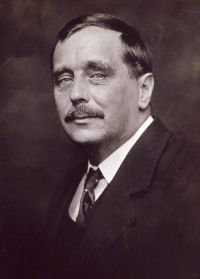 H. G. Wells,
The Wonderful Visit
H. G. Wells,
The Wonderful Visit
“ The air is full of Social Movements, of Economic change, the Woman Movement, Rational Dress, The Reunion of Christendom, Socialism, Individualism—all the great and moving Questions of the Hour! Surely, we who follow the Great Reformer.... ”
Scott Nearing,
Civilization and Beyond: Learning from History
(1975)
“ A time of troubles such as that through which western civilization is now passing offers individuals and social groups unique opportunities to play significant roles in shaping the course of events. In every human population there are individuals who are dissatisfied with the status quo and prefer change to status. ”
 Hilaire Belloc,
The Servile State
Hilaire Belloc,
The Servile State
“ It is this third factor alone which need be seriously considered to-day, when we ask ourselves how far the material upon which social reform is working, that is, the masses of the people, may be ready to accept the change. ”
 Goldwin Smith,
Popular Science Monthly
(1882)
Goldwin Smith,
Popular Science Monthly
(1882)
“ For the signs of change we must look rather to the scenes on which men struggle for wealth or power, and the social regions in which the common vices prevail. We must look to the multitudes, who, being now told that they have no hope beyond this world, are apparently making up their minds to have as large a share of the goods and pleasures of this world as their force will give them. ”
R. H. Tawney, The Agrarian Problem in the Sixteenth Century
“ The occurrence of rapid changes in the structure of an old and stable society implies either some radical revolution in the basis of economic life, or some great change in men’s conception of social expediency, or, what is most likely, an economic and a spiritual change occurring together. ”
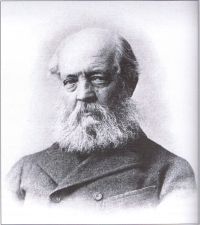 Frederick Law Olmsted,
The Cotton Kingdom, volume 2 (of 2…
(1861)
Frederick Law Olmsted,
The Cotton Kingdom, volume 2 (of 2…
(1861)
“ If the elementary social condition be different in regard to religion, government, arts, science, industry, the resulting movements of society will be different. Hence, when we have ascertained by accurate observation upon and record of the social phenomena, that the social movement is uniformly in a certain direction, and that certain results uniformly follow, we shall know in what elements the conditions of society must be changed, in order to change the results. ”
 Carl Schurz,
Speeches, correspondence and political papers of Carl Schurz
(1913)
Carl Schurz,
Speeches, correspondence and political papers of Carl Schurz
(1913)
“ They may improve economic and social conditions somewhat in and around the places where they go, but they will not change the general character and the political capabilities of the population at large in any essential degree. ”
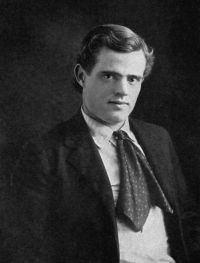 Jack London,
The Iron Heel
(1917)
Jack London,
The Iron Heel
(1917)
“ The swift changes in our industrial system are causing equally swift changes in our religious, political, and social structures. An unseen and fearful revolution is taking place in the fibre and structure of society. ”
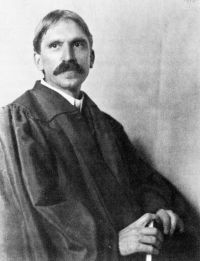 John Dewey,
Democracy and Education
(1916)
John Dewey,
Democracy and Education
(1916)
“ The second means not only freer interaction between social groups (once isolated so far as intention could keep up a separation) but change in social habit—its continuous readjustment through meeting the new situations produced by varied intercourse. ”
James Cantine, Ahmad Shah, J. H. Colpais Purdon, and George F. Herrick, The Moslem World (1912)
“ In our day the attempt is made to reform society by civilisation, by education, by material progress, by change of policies and organisations. No! the change needed is vital. It is the change from moral death to moral life. ”
 Henry David Thoreau,
A Week on the Concord and Merrimack Rivers
(1849)
Henry David Thoreau,
A Week on the Concord and Merrimack Rivers
(1849)
“ As in geology, so in social institutions, we may discover the causes of all past change in the present invariable order of society. ”
 François Guizot,
Memoirs to Illustrate the History of My Time…
François Guizot,
Memoirs to Illustrate the History of My Time…
“ But let political questions and the positive interests of life once more spring up,—let us be called upon, not merely to assemble for enjoyment or recreation, but to assume each his part in the rights, the affairs, the honours, the advantages, and the burdens of the social system,—on the instant, all dissensions re-appear; all pretences, prejudices, susceptibilities, and oppositions revive; and that society which had seemed so single and united, resumes all its former divisions and differences. ”
Josiah Strong, Inaugural Address of the American Institute of Social Service (1903)
“ They have radically changed the methods of agriculture, of manufacture, of commerce, of travel, and of business; and they are radically changing the methods of charity, of philanthropy, of religion, of reform, and of education. Indeed, it is difficult to name a single field of human activity which has not been profoundly influenced by one or both of these two revolutions. ”
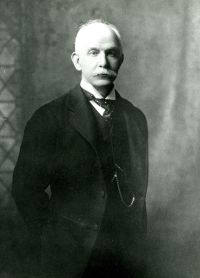 Brooks Adams,
The Theory of Social Revolutions
Brooks Adams,
The Theory of Social Revolutions
“ About a century ago, after, the American and French Revolutions and the Napoleonic wars, the present industrial era opened, and brought with it a new governing class, as every considerable change in human environment must bring with it a governing class to give it expression. Perhaps, for lack of a recognized name, I may describe this class as the industrial capitalistic class, composed in the main of administrators and bankers. ”
 T. S. Arthur,
Grappling with the Monster; Or…
T. S. Arthur,
Grappling with the Monster; Or…
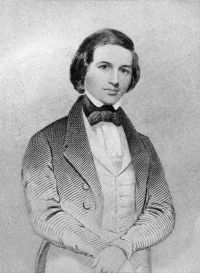
“ This society now publishes books and tracts upon the moral, economical, physiological, political, financial, religious, medical and social phases of the reform. We have the writings of over two hundred different persons in almost every walk and station in life. We already have a literature of no mean character. Its influence is not only felt in every State and Territory in the land, but in every country on the globe. ”
 Franklin Henry Giddings,
Popular Science Monthly
(1909)
Franklin Henry Giddings,
Popular Science Monthly
(1909)
“ Here a word must be said about the subjective aspect of society, which, in its objective aspect, as we have seen, is merely the struggle and process of adjustment. What is the relation of adjustment to sympathy and to understanding, to communication and to concerted purpose, to the evolution of a social constraint through which the community controls and shapes the individual, to cooperation and to social organization? ”
H. G. Wells,
Social Forces in England and America
“ If that is so, then the new ways of living may not simply impose themselves in a growing proportion upon the Normal Social Life, but they may even oust it and replace it altogether. Or they may oust it and fail to replace it. ”
 William Graham Sumner,
Earth-Hunger and Other Essays
(1913)
William Graham Sumner,
Earth-Hunger and Other Essays
(1913)
“ We should also probably better understand the conditions of successful growth or reform, and have less toleration for schemes of social reconstruction. Civilization has been of slow and painful growth. ”
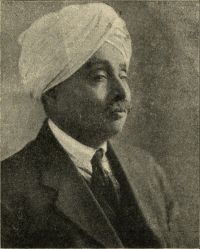 Lala Lajpat Rai,
Young India
(1916)
Lala Lajpat Rai,
Young India
(1916)
“ We shall have, of course, to enlarge our family and social life, not in the petty spirit of present day Social Reform, hammering at small details and belittling our immediate past, but with a larger idea and more generous impulses. ”
 Alice Henry,
The Trade Union Woman
Alice Henry,
The Trade Union Woman
“ Hence it was that so many plans for general reform produced so little definite result, except on the one hand setting before the then rising generation a higher standard of social responsibility which was destined deeply to tinge the after conduct and social activities of that generation, and on the other hand much social experimenting upon a small scale which stored up information and experience for the future. ”
 August Bebel,
Woman and Socialism
August Bebel,
Woman and Socialism
“ The Social Revolution. 1.—The Transformation of Society.The tide rises and undermines the foundation of state and society. Every one feels that the pillars are swaying and that only powerful props can support them. ”
Henry M. Field, From the Lakes of Killarney to the Golden Horn
“ Some think it must come by political instrumentality, by changes in the laws; others have no hope but in a social regeneration, or reconstruction of society, others still rely only on moral and religious influences. ”
H. G. Wells,
Social Forces in England and America
“ On the whole, they are prepared for the gradual disentanglement of men from the Normal Social Life altogether, and they look for new ways of living and new methods of human association with a certain adventurous hopefulness. ”
 Olive Schreiner,
Woman and Labour
Olive Schreiner,
Woman and Labour
“ The society, once so homogeneous and co-ordinated in all its parts, would become at once a society rent by moral and social problems; and endless suffering must arise to individuals in the attempt to co-ordinate the ideals, manners, and institutions of the society to the new conditions! ”
William Graham Sumner,
Folkways
“ Our age presents us the incredible spectacle that the dependence of the higher social culture on the economic development is not only clearly recognized by social science, but is proclaimed as the ideal. ”
Thomas Anstey Guthrie, Baboo Hurry Bungsho Jabberjee, B.A. (1897)
“ The industrial transformations of the world for the past hundred years seem to assure for the next hundred a mutation in social conditions commensurately radical. The tendency is undoubtedly toward human unity, social solidarity. ”
John Stuart Mill,
Auguste Comte and Positivism
“ The modification of men's moral natures, caused by the continuous discipline of social life, which adapts them more and more to social relations, is therefore the chief proximate cause of social progress. ”
 James Bronterre O'Brien,
The rise, progress, and phases of human slavery
James Bronterre O'Brien,
The rise, progress, and phases of human slavery
“ The amazing revolution which has lately taken place in the arts and sciences, as applicable to the purposes of human economy, ought naturally to give birth to another revolution of a kindred quality in the political and social mechanism of society. ”
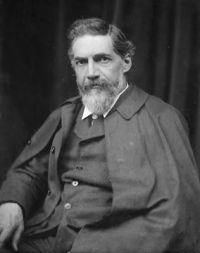 W. M. Flinders Petrie,
Janus in Modern Life
W. M. Flinders Petrie,
Janus in Modern Life
“ We have now seen in many directions how great are the changes in the constitution of society, which are brought about by a succession of small movements, each of which imperceptibly bears its share in the change. ”
 William English Walling,
Socialism as it is
William English Walling,
Socialism as it is
“ Advanced and radical reformers of the new type all over the world, those who put forward a general plan of reform and wish to go to the common roots of our social evils, demand, first of all, reorganization. ”
John Stuart Mill,
Utilitarianism
(1863)
“ The entire history of social improvement has been a series of transitions, by which one custom or institution after another, from being a supposed primary necessity of social existence, has passed into the rank of an universally stigmatized injustice and tyranny. ”
Helen Campbell, Prisoners of Poverty Abroad
“ It is plain that even the most conservative begin to feel this, and [Pg 154] effort constantly takes more practical form; but this is but the beginning of what must be,—the inauguration of a social revolution in ideas, and one to which all civilization must come. ”
Related terms
Authors who wrote about “social change”
Parke GodwinScott NearingJohn Stuart MillH. G. WellsWilliam Graham SumnerHenry GeorgeHerbert CrolyHenry K. RoweOlive SchreinerBrooks Adams John Humphrey Noyes
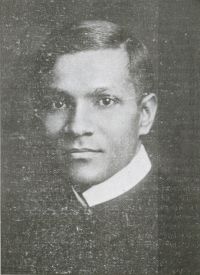 Benoy Kumar SarkarGeorge Spring Merriam
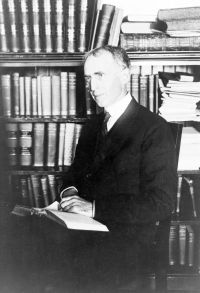 Charles A. Beard
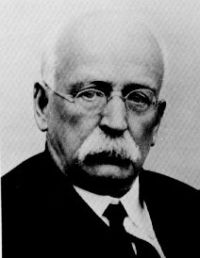 Sir Ebenezer HowardEdward Winslow GilliamMrs. S. A. BarnettMoulavi Gerágh AliHelen Campbell
 Patrick Geddes
Scott NearingJohn Stuart MillH. G. WellsWilliam Graham SumnerHenry GeorgeHerbert CrolyHenry K. RoweOlive SchreinerBrooks AdamsJohn Humphrey NoyesBenoy Kumar SarkarGeorge Spring MerriamCharles A. BeardSir Ebenezer HowardEdward Winslow GilliamMrs. S. A. BarnettMoulavi Gerágh AliHelen CampbellPatrick Geddes