Hebrew grammar

Definition and stakes

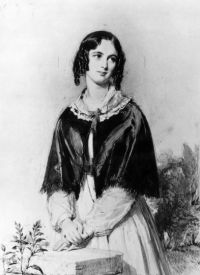
Portrait of Charlotte M. Yonge Charlotte M. Yonge,  Life of John Coleridge Patteson…

“ I believe it to be quite true that the mode of thought of a South Sea islander resembles very closely that of a Semitic man. And their state of mental knowledge or ignorance, too. It is certainly a mistake to make the Hebrew language do the work of one of our elaborated European languages, the products of thoughts and education and literary knowledge which the Hebrew knew nothing of. A Hebrew grammar constructed on the principle of a Greek or a Latin grammar is simply a huge anachronism. ”

Source: Gutenberg

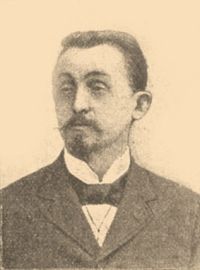
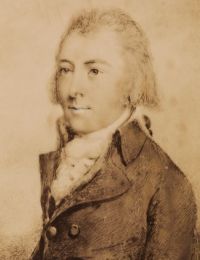
Portrait of John Fletcher John Fletcher,  Studies on Slavery, in Easy Lessons

“ The fact is, the verb of existence, called the verb “to be,” and the verb substantive, in Hebrew, as in all other languages, is often not expressed, but understood. This circumstance is well explained in Gessenius’ Hebrew Grammar, revised by Rodiger, and translated by Conant, p. 225, thus, “When a personal pronoun is the subject of a sentence, like a noun in the same position, it does not require for its union with the predicate a distinct word for the copula, when this consists simply in the verb ‘to be,’ אָֽנֹכִ֣י הָֽרֹאֶ֔הʾānōkî hārōʾe ‘I (am) the seer,’ 1 Sam. ”
Source: Gutenberg

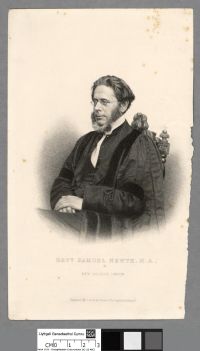
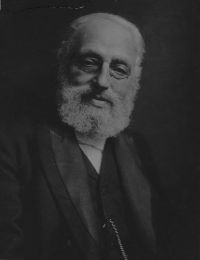
Portrait of Samuel Newth Samuel Newth,  Lectures on Bible Revision

“ The progress made in the knowledge of Greek and Hebrew during the last two centuries has, in fact, been such as the revisers of 1611 could have little anticipated. A long list might easily be drawn up of eminent scholars who have given themselves to the investigation of the grammar of the two sacred languages, and of others who have laboured in illustrating [Pg 62] the meaning of their terms. In the case of Hebrew, large additions to our knowledge, both of its grammar and its vocabulary, have been won from a source almost entirely unexplored in former times ”
Source: Gutenberg

Get perspective with Kwize: daily news enlightened by great literature