Hesse-Darmstadt

Definition and stakes

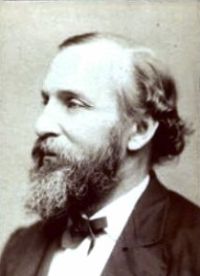
Portrait of Carl Schurz Carl Schurz U. S. Senate Speeches and Remarks of Carl Schurz

It is perfectly evident from the receipts last year that Hesse-Darmstadt ought not to be stricken out.
Mr. SUMNER. Is not Hesse-Darmstadt the center of a great wine district?
Mr. SCHURZ. The facts of the case are these: formerly all the business that is now transacted at Hesse-Darmstadt was transacted at another point. I think Hesse-Darmstadt is the center of a great wine district; but if we preserve the consulate at Carlsruhe we accommodate a large tract of country, from which there has been lately a great deal of immigration coming to this country.
Source: Wikisource

Various Encyclopaedia Britannica, 11th Edition…

DARMSTADT, a city of Germany, capital of the grand-duchy of Hesse-Darmstadt, on a plain gently sloping from the Odenwald to the Rhine, 21 m. by rail S.E. from Mainz and 17 m. S. from Frankfort-on-Main. Pop. (1905) 83,000. It is the residence of the grand-duke and the seat of government of the duchy. Darmstadt consists of an old and a new town, the streets of the former being narrow and gloomy and presenting no attractive features. The new town, however, which includes the greater part of the city, contains broad streets and several fine squares.
Source: Gutenberg

1911 Encyclopædia Britannica (1911)

HESSE (Lat. Hessia, Ger. Hessen) , a grand duchy forming a state of the German empire. It was known until 1866 as Hesse-Darmstadt, the history of which is given under a separate heading below. It consists of two main parts, separated from each other by a narrow strip of Prussian territory. The northern part is the province of Oberhessen; the southern consists of the contiguous provinces of Starkenburg and Rheinhessen. There are also eleven very small exclaves, mostly grouped about Homburg to the south-west of Oberhessen; but the largest is Wimpfen on the north-west frontier of Württemberg.
Source: Wikisource

Get perspective with Kwize: daily news enlightened by great literature