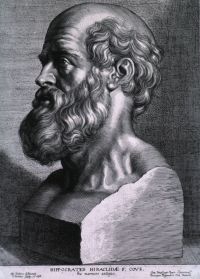
Hippocratic Corpus

Definition and stakes

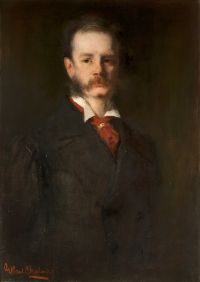
John Young,  The Oath of Hippocrates (1900)

“ The Oath of Hippocrates is a document of high antiquity, probably of pre-Hippocratic age. It contains reference to some similar formula pre-existent which exercised restraint on intrants to the profession, to the Art, τέχνη, which we have no equivalent, since the Greeks did not then cut the profession into two—theoretical and practical. The phrase from Aristophanes cited by Littré, Adams, and others indicates that the formula was even popularly familiar. ”
Source: Wikisource

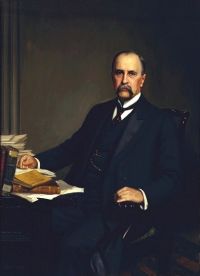
Portrait of William Osler William Osler,  The Evolution of Modern Medicine

“ But the high-water mark of professional morality is reached in the famous Hippocratic oath, which Gomperz calls "a monument of the highest rank in the history of civilization." It is of small matter whether this is of Hippocratic date or not, or whether it has in it Egyptian or Indian elements: its importance lies in the accuracy with which it represents the Greek spirit. For twenty-five centuries it has been the "credo" of the profession, and in many universities it is still the formula with which men are admitted to the doctorate. ”
Source: Gutenberg

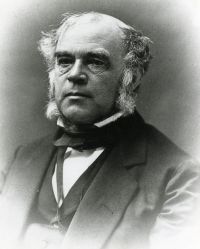
Richard M. Pearce,  Popular Science Monthly (1912)

“ Hippocratic medicine, Hippocratic doctrine, Hippocratic oath, are current phrases, and the admonition "Back to Hippocrates" is an admonition to beware of theory and seek the solid ground of observation and experiment.
Between Hippocrates and Galen lie nearly five hundred years without progress in medicine, except as the brilliant Alexandrian school, sheltering Euclid, Archimedes and Ptolemy developed, under Herophilus and Erasistratus, a school of anatomy (ca. 300 B.C.) which established many new anatomical facts.
”
Source: Wikisource

Get perspective with Kwize: daily news enlightened by great literature