Summary

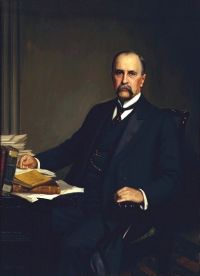
Portrait of William Osler William Osler The Old Humanities and the New Science

One of the marvels, so commonplace that it has ceased to be marvellous, is the deep rooting of our civilization in the soil of Greece and Rome—much of our dogmatic religion, practically all the philosophies, the models of our literature, the ideals of our democratic freedom, the fine and the technical arts, the fundamentals of science, and the basis of our law. The Humanities bring the student into contact with the master minds who gave us these things—with the dead who never die, with those immortal [pg 29] lives "not of now nor of yesterday, but which always were."
Source: Gutenberg

Portrait of William Osler William Osler The Old Humanities and the New Science

By such the child grows in knowledge, and in its daily exercise an adult lives and moves. Only a quantitative difference makes observation scientific—accuracy; in that way alone do we discover things as they really are. This is the essence of Plato's definition of science as "the discovery of things as they really are," whether in the heavens above, in the earth beneath, or in the observer himself.
Source: Gutenberg

Portrait of William Osler William Osler The Old Humanities and the New Science

Enough to say that war blasts the soul, and in this great conflict the finer sense of humanity has been shocked to paralysis by the helplessness of our civilization and the futility of our religion to stem a wave of primitive barbarism. Black as are the written and unwritten pages of history, the concentrated and prolonged martyrdom surpasses anything man has yet had to endure.
Source: Gutenberg

Get perspective with Kwize: daily news enlightened by great literature