Indo-European languages

Definition and stakes

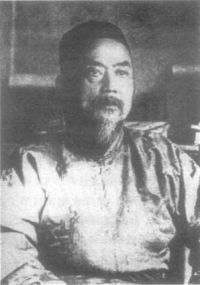
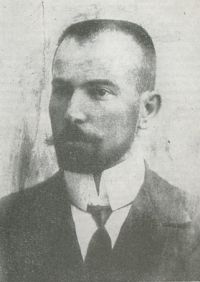
Portrait of Krste Misirkov Krste Misirkov,  On Macedonian Matters

“ There was a time when all Indo-Europeans made up one people and spoke one common language, as has now been established by linguists through a comparison of the old and new Indo-European languages. But the old situation, in which all Indo-Europeans understood one another, gradually broke down and disappeared and a new set of circumstances arose in which there came about a splitting of the language, of the common national awareness, the common language, into various languages, beliefs, attitudes, traditions, etc. ”
Source: Wikisource

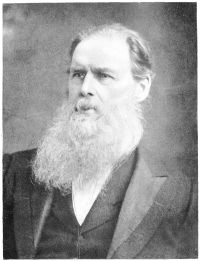
Peter Giles,  1911 Encyclopædia Britannica, Volume 14… (1911)

“ But even when a word is found very widely diffused over the area of the Indo-European languages, it is not justifiable to conclude that therefore the word must have belonged to the original language. The dispersion of the Indo-European people over the areas they now inhabit, or inhabited in the earliest times known to history, must have been gradual, and commerce or communication between different branches must have always existed to some extent ”
Source: Wikisource

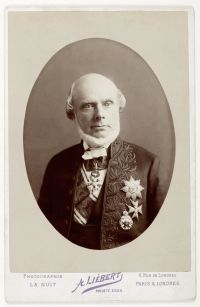
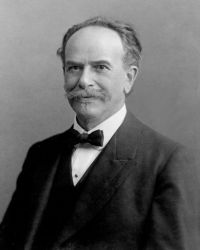
Portrait of Franz Boas Franz Boas,  The classification of American languages (1920)

“ It is true enough that in a comparison of modern Indo-European languages, without any knowledge of their previous history, it might be very difficult to prove relationship let us say, between Armenian and English and we might be compelled to adopt a similar conclusion as the one suggested here. Partially this inference would be correct, because our modern Indo-European languages contain much material that is not Indo-European by origin. ”
Source: Wikisource

Get perspective with Kwize: daily news enlightened by great literature