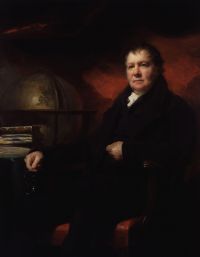
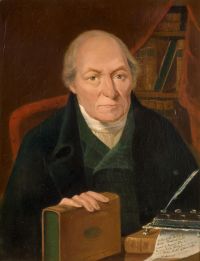
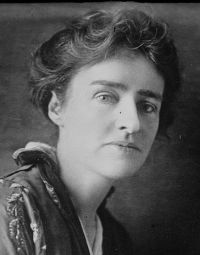
John Hutton

Definition and stakes

1911 Encyclopædia Britannica (1911)

“ There is reason to believe, on the evidence of two pay-bills, that for a short time in 1755 and 1756 Hutton worked in Old Long Benton colliery; at any rate, on Ivison’s promotion to a living, Hutton succeeded to the Jesmond school, whence, in consequence of increasing pupils, he removed to Stote’s Hall. While he taught during the day at Stote’s Hall, he studied mathematics in the evening at a school in Newcastle. In 1760 he married, and began tuition on a larger scale in Newcastle, where he had among his pupils John Scott, afterwards Lord Eldon, chancellor of England. ”
Source: Wikisource

P. Martin Duncan,  Heroes of science (1882)

“ Certain it is that he returned to Edinburgh, and in the summer of 1750 he abandoned his intention of practising, and resolved to apply himself to agriculture. He had as a friend Sir John Hall, of Dunglass, a man of ingenuity and taste for science, and also an agriculturist. As he was never destined to do anything by halves, Hutton determined to study farming in the school which was then reckoned the best, and the manner which is undoubtedly the most effectual. ”
Source: Gutenberg

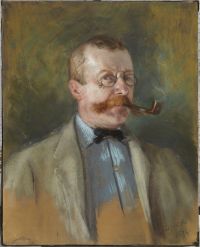
Portrait of Laurence Hutton Laurence Hutton,  A Boy I Knew and Four Dogs

“ He knows that the Williamsons themselves do not want too much of him, no matter how John and Sarah and Miss Burns may feel on the subject; and he knows, too, that his own family wishes him to stay more at home; but, for all that, he runs away. He slips off at every opportunity. He pretends that he is only going down to the road to see what time it is, or that he is simply setting out for a blackberry or the afternoon’s mail ”
Source: Gutenberg

Get perspective with Kwize: daily news enlightened by great literature