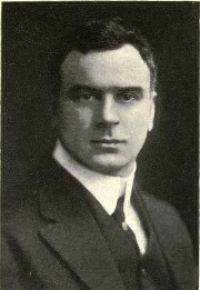
John Pym

Definition and stakes

Philip Chesney Yorke,  1911 Encyclopædia Britannica, Volume 22… (1911)

“ Pym himself was directly interested in the colonies, being patentee of Connecticut and Providence, and of the latter company also treasurer, and there can be little doubt that like other leaders of the opposition during this period, he regarded America as a possible refuge. On the assembly of the Short Parliament on the 13th of April 1640, Pym was the acknowledged leader. “Whilst men gazed upon each other,” says Clarendon (Hist. ii. 68) , “looking who should begin (much the greater part having never before sat in parliament) , Mr Pym, a man of good reputation . ”
Source: Wikisource

Philip Chesney Yorke,  1911 Encyclopædia Britannica, Volume 22… (1911)

“ This construction, he believed, in the spirit of genuine conservatism, must always be progress along the lines of natural development, and not by the methods of revolutionary or extraneous innovation. It was Pym’s chief charge against Charles, Strafford and Laud that they had arrested this progress, and were thus leading the nation to ruin and dissolution. Such was the theory and conviction, inherited from Bacon and passed on to Halifax and Burke, which underlay and inspired Pym’s policy. ”
Source: Wikisource

Get perspective with Kwize: daily news enlightened by great literature