Nitria

Definition and stakes

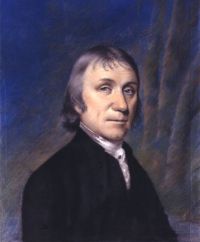
Portrait of Thomas Greenhill Thomas Greenhill,  ΝΕΚΡΟΚΗΔΕΙΑ; Or, the Art of Embalming…

“ It grows very plentifully in the Eastern Countries, and is much us’d in Dying Silk and Wool. Serapio also confounds Borax, which the Goldsmiths use, with Nitre; but Nitre is truly made by the benefit of the Soil and the force of the hot Sun, wherefore ’tis call’d by some of the Greeks Halmirhaga, |Halmirhaga.| deriving its Name partly from its bitterish Taste, and partly from its being got out of the Earth at Nitria, a City of Egypt, so call’d from Nitre. At Naucratis and Memphis there are places where Nitre grows, and where the Water is pour’d into it like Sea-Water into Salt-Pits. ”

Source: Gutenberg

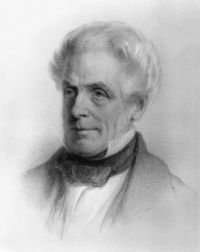
Portrait of Thomas Greenhill Thomas Greenhill,  ΝΕΚΡΟΚΗΔΕΙΑ; Or, the Art of Embalming…

“ The Nature of the Soil is what breeds Nitre, as is apparent, in that where it is wanting, neither Salts nor Showers avail any thing. This is also very wonderful, that tho’ the Spring be always seen to flow, yet neither does it increase the Lake nor run over; but if it Rains in those Days in which it is bred, the Nitre will become more Salt, and worse if the North-Winds happen to blow, for they violently stir up the Mud: In this place indeed ’tis produc’d, but more plentifully in Egypt, |Egyptian Nitre.| tho’ a worser sort, for ’tis of a dark colour and stony. ”
Source: Gutenberg

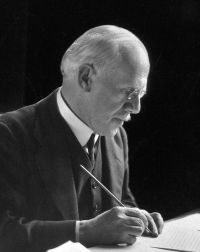
Portrait of Harvey Washington Wiley Harvey Washington Wiley,  Principles and practices of agricultural analysis (1894)

“ In the present state of our knowledge, moreover, we can hardly regard the presence of nitrites as an obstacle to complete nitrification. On the other hand, it seems to be well established that the production of nitrites or ammonia is a necessary step between organic nitrogen and nitric acid.
421. Occurrence of Nitrifying Organisms.—According to the observations of Schloesing and Müntz the nitrifying organisms are widely distributed. [279] Arable soil containing considerable humus seems to be the medium in which they grow most freely and in which they accomplish their most important functions.
”
Source: Gutenberg

Get perspective with Kwize: daily news enlightened by great literature