Old High German

Definition and stakes

Friedrich Kluge,  An Etymological Dictionary of the German Language (1891)

“ Nothing can be adduced in favour of the assumption that the world was borrowed from Upper German eifern. An older German adjective, eifer, ‘sharp, bitter’ (as late as Logan) , Old High German eivar, eibar, ‘sharp, bitter,’ Anglo-Saxon âfor, ‘sharp, bitter,’ might perhaps be cognate with Modern High German Eifer.
eigen, adjective, ‘own, pertinent, peculiar, odd,’ from the equivalent Modern High German eigen, Old High German eigan; an adjective common to Teutonic; compare Old Saxon êgan, Dutch eigen, Anglo-Saxon âgen, English own, Old Icelandic eiginn; Gothic used swês for *aigans.
”
Source: Wikisource

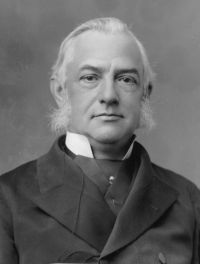
Portrait of F. Max Müller F. Max Müller,  Chips from a German Workshop, Volume 3

“ There are here and there a few enthusiastic champions of dialects, particularly of Low-German, who still cherish a hope that High-German may be thrown back, and Low-German restored to its rights and former dominion. Yet, whatever may be thought of the relative excellences of High and Low German,—and in several points, no doubt, Low-German has the advantage of High-German,—yet, practically, the battle between the two is decided, and cannot now be renewed. The national language of Germany, whether in the South or the North, will always be the German of Luther, Lessing, Schiller, and Goethe. ”
Source: Gutenberg

Get perspective with Kwize: daily news enlightened by great literature