Palaeotherium

Definition and stakes

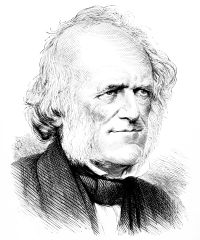
Portrait of Thomas Henry Huxley Thomas Henry Huxley,  Lectures and Essays

“ And, hence, I have ever since held that these facts afford evidence of the occurrence of evolution, which, in the sense already defined, may be termed demonstrative.
All who have occupied themselves with the structure of Anchitherium, from Cuvier onwards, have acknowledged its many points of likeness to a well-known genus of extinct Eocene mammals, Palæotherium. Indeed, as we have seen, Cuvier regarded his remains of Anchitherium as those of a species of Palæotherium.
”
Source: Gutenberg

Gideon Algernon Mantell,  The Medals of Creation, Volumes 1 and 2

“ Lign. 111) ; man alone has the teeth arranged in the same manner. I subjoin figures of molar teeth of Palæotherium and Anoplotherium (Lign. 256) .
Lign. 256. Teeth of Palæotherium and Anoplotherium.
Upper Eocene. Isle of Wight and Montmartre.
There are also sub-genera, as for example, Xiphodon and Dichobune, characterized by peculiarities of dental and osteological structure; and Anthracotherium (so named from two species having been found in a bed of Anthracite or Lignite, near Savone) , a genus intermediate between the Palæotheria and Hogs.
”
Source: Gutenberg

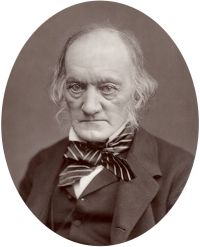
Portrait of Thomas Henry Huxley Thomas Henry Huxley,  Critiques and Addresses

“ A species of Anchitherium was referred by Cuvier to the Palaeotheria under the name of P. aurelianense. The grinding-teeth are in fact very similar in shape and in pattern, and in the absence of any thick layer of cement, to those of some species of Palaeotherium, especially Cuvier's Palaeotherium minus, which has been formed into a separate genus, Plagiolophus, by Pomel. But in the fact that there are only six full-sized grinders in the lower jaw, the first premolar being very small; that the anterior grinders are as large as, or rather larger than, the posterior ones ”
Source: Gutenberg

Get perspective with Kwize: daily news enlightened by great literature