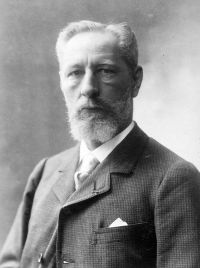
Paul I of Russia

Definition and stakes

Portrait of Oscar Wilde Oscar Wilde Vera; or, The Nihilists (1880)

Russia is well rid of such men as these. They are the jackals that follow in the lion's track. They have no courage themselves except to pillage and rob. But for these men and for Prince Paul my father would have been a good king, would not have died so horribly as he did die. How strange it is, the most real parts of one's life always seem to be a dream! The council, the fearful law which was to kill the people, the arrest, the cry in the court-yard, the pistol-shot, my father's bloody hands, and then the crown!
Source: Wikisource

1911 Encyclopædia Britannica, Volume 20… (1911)

He began by repealing Catherine’s law which exempted the free classes of the population of Russia from corporal punishment and mutilation. Nobody could feel himself safe from exile or brutal ill-treatment at any moment. If Russia had possessed any political institution except the tsardom he would have been put under restraint. But the country was not sufficiently civilized to deal with Paul as the Portuguese had dealt with Alphonso VI., a very similar person, in 1667. In Russia as in medieval Europe there was no safe prison for a deposed ruler.
Source: Wikisource

Various Blackwood's Edinburgh Magazine…

England was the old ally of Russia,—France was the new enemy. The nation hated the arrogance and the atheism of France, and resolved on the overthrow of the Czar. In Russia the monarch is so far removed from his people, that he has no refuge among them in case of disaster. Paul was believed to be mad, and madness, on a despotic throne, justly startles a nation. A band of conspirators broke into his palace at midnight, strangled the master of fifty millions of men, and the nation, at morning, was in a tumult of joy.
His son, Alexander, ascended the throne amid universal acclamation.
Source: Gutenberg

Get perspective with Kwize: daily news enlightened by great literature