Pilsen

Definition and stakes

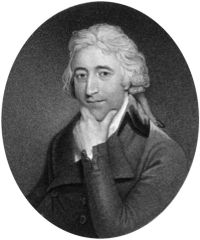
Portrait of Johann Christoph Friedrich von Schiller Johann Christoph Friedrich von Schiller,  Wallenstein (1800)

“ Because the Duke
Believes he has secur'd us—means to lure us
Still further on by splendid promises.
To me he portions forth the princedoms, Glatz
And Sagan; and too plain I see the angel
With which he doubts not but to catch thee.
MAX.
No! no!
I tell thee—no!
OCTAVIO.
O open yet thine eyes!
And to what purpose think'st thou he has call'd us
Hither to Pilsen?—To avail himself
Of our advice?—O when did Friedland ever
Need our advice?—Be calm, and listen to me.
To sell ourselves are we call'd hither, and
Decline we that—to be his hostages.
”
Source: Wikisource

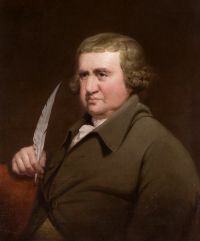
Portrait of Maxwell T. Masters Maxwell T. Masters,  Vegetable Teratology

“ It is of interest, as it sometimes serves to illustrate the morphological nature of the pistil. Of this the double-flowering cherry is a well-known illustration, the pistil being here represented by two small foliar laminæ, whose midribs are prolonged with a short style, terminated by an imperfect stigma. It is usually the basal portion of the pistil, the ovary, which is thus specially affected, the margins being also often disunited so as to expose the ovules. These latter organs may be absent or they may themselves be the subjects of foliaceous development. ”
Source: Gutenberg

Frederick Leroy Sargent,  Through a Microscope

“ Commencing in the centre we find in both a pistil, consisting of an ovary at the base and a stigma at the top and a style between. In the Dandelion the stigma is split in halves, while in the morning-glory it is not split but has three little knobs. Around the pistil come the stamens in each case. Each stamen is composed of two parts: a slender stem (the filament) and a little sac at the end (the anther) which is filled with pollen dust. In both cases the filaments grow out of the sides of the corolla. ”
Source: Gutenberg

Get perspective with Kwize: daily news enlightened by great literature