Senegambia

Definition and stakes

Anna B. Badlam,  The World and Its People, Book VII: Views in Africa

“ In the Soudan they are very zealous advocates of the Mohammedan faith.
NATIVES OF SENEGAMBIA.
The western portion of Senegambia is very flat. The Great Desert, its near neighbor, affects it by the dry, hot winds; hence the atmosphere is often loaded with fine sand, and dark with clouds of locusts.
The eastern portion of the country is diversified by hills and elevated land. There are a great many rivers, the Senegal, Gambia, and Rio Grande being the most important. [Pg 280]
In the heat of its climate Senegambia ranks with Egypt and Nubia. During the rainy season the heat is most oppressive.
”

Source: Gutenberg

Anna B. Badlam,  The World and Its People, Book VII: Views in Africa

“ In the interior the plateau rises from the coast plains in a series of mountainous terraces, and finally loses itself in the Kong Mountains. The loftiest elevations of the soil are only a little more than three thousand feet.
Strictly speaking, the country is divided into three sections, High, Middle, and Low Senegambia. High Senegambia lies to the north of the Senegal and is inhabited chiefly by the Moors. Middle Senegambia is the section along the borders of the Senegal. It is inhabited chiefly by negroes, who divide themselves into numerous tribes.
”
Source: Gutenberg

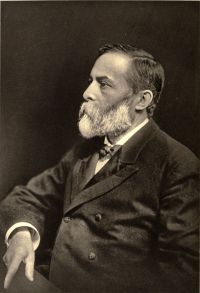
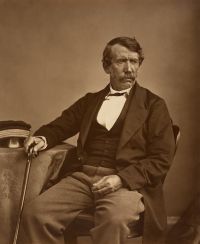
Portrait of Élisée Reclus Élisée Reclus,  Africa by Élisée Reclus/Volume 3 (1892)

“ A certain geographical unity is given to Senegambia by the massive Futa-Jallon highlands, where rise the headstreams of the Senegal, Gambia, Casamanza, Geba, E/io-Grande, Nunez, Pongo, Scarcies, which diverge thence in various directions coastwards. These uplands thus constitute one of the salient features in the formation of West Africa, and it is not perhaps surprising that their size and importance were exaggerated by the early explorers. ”
Source: Wikisource

Get perspective with Kwize: daily news enlightened by great literature