Sphenodon

Definition and stakes

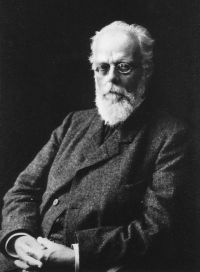
Portrait of Samuel Wendell Williston Samuel Wendell Williston,  Water Reptiles of the Past and Present (1914)

“ Sphenodon, on the contrary, has the quadrate bone firmly fixed to its adjacent bones at both ends, and is quite immovable. The vertebrae are biconcave like those of all early reptiles, not concavo-convex as are the vertebrae of most other living reptiles. The intercentra or hypocentra, little wedge-shaped bones [Pg 177] between the centra below, are more persistent in Sphenodon than in any other living land animals except the gecko lizards. Upon the whole the tuatera is the most old-fashioned of living reptiles, and in consequence it has nearly lost out in competition with new things. ”

Source: Gutenberg

Hans F. Gadow, with supplementary section on Historyby Albert C. L. G. Günther and Arthur S. Woodward,  1911 Encyclopædia Britannica (1911)

“ The whole organ is best developed in Sphenodon, even in the adult; but whether it is still functional, and what its function is, remain unknown. The throwing of a beam of light upon this eye, by means of a lens, produces no effect. Whilst in Sphenodon the “lens” is rather dull and the efferent nerve is still present, in various lizards the “lens” is more perfect, but the nerve is degenerated. We conclude that the whole organ is now without the least visual function, whilst in various extinct groups of reptiles and Stegocephali it was fully developed. ”
Source: Wikisource

Portrait of Samuel Wendell Williston Samuel Wendell Williston,  The Osteology of the Reptiles (1925)

“ Two genera only, the living Sphenodon and the Jurassic Homœosaurus, can be located with certainty in this suborder. Sphenodon has long enjoyed the reputation of being the most primitive of living reptiles, as evidenced by the persistent dorsal intercentra, deeply amphicoelous vertebrae, and the single-headed ribs of primitive type. So far as known Homœosaurus agrees closely, except that it has no uncinate process on the ribs, a character in which Sphenodon is almost unique among reptiles. ”
Source: Wikisource

Get perspective with Kwize: daily news enlightened by great literature