Textus Receptus

Definition and stakes

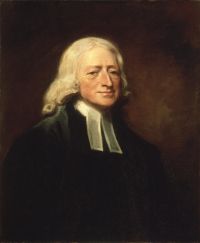
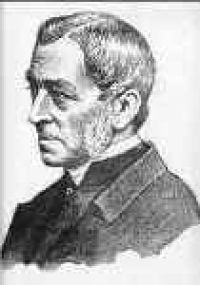
Portrait of John William Burgon John William Burgon,  The Revision Revised

“ Let no one at all events obscure the one question at issue, by asking,—“Whether we consider the Textus Receptus infallible?” The merit or demerit of the Received Text has absolutely nothing whatever to do with the question. We care nothing about it. Any Text would equally suit our present purpose. Any Text would show the “old uncials” perpetually at discord among themselves. ”
Source: Gutenberg

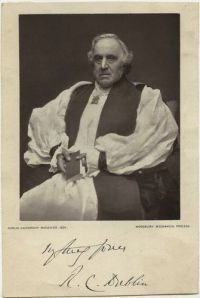
Portrait of John William Burgon John William Burgon,  The Revision Revised

“ Not the Quarterly Reviewer certainly. “The honour which is given to the Textus Receptus by the Quarterly Reviewer” is no other than the honour which it has enjoyed at the hands of scholars, by universal consent, for the last three centuries. That is to say, he uses it as a standard of comparison, and employs it for habitual reference. So do you. You did so, at least, in the year 1870. You did more; for you proposed “to proceed with the work of Revision, whether of text or translation, making the current ‘Textus Receptus’ the standard.”880 We are perfectly agreed therefore. ”
Source: Gutenberg

Cuthbert H. Turner, Francis C. Burkitt , George B. Gray, John F. Stenning, Kirsopp Lake, Samuel R. Driver & William Sanday,  1911 Encyclopædia Britannica (1910)

“ S. P. Tregelles, an English scholar, like Tischendorf, spent almost his whole life in the collection of material, and published a critical edition, based on the earliest authorities, at intervals between 1857 and 1872. His work was eclipsed by Tischendorf’s, and his critical principles were almost the same as the German scholar’s, so that his work has obtained less recognition than would otherwise have been the case. Tischendorf and Tregelles finished the work which Lachmann began. They finally exploded the pretensions of the Textus Receptus to be the original text ”
Source: Wikisource

Get perspective with Kwize: daily news enlightened by great literature