“ It is otherwise with the uncritical faculties and greedy apprehension of boyhood. For them there is no poetical revelation like the Faerie Queene, no pleasure equal to that of floating for the first time along that ever-buoyant stream of verse, by those shores and forests of enchantment, glades and wildernesses alive with glancing figures of knight and lady, oppressor and champion, mage and Saracen,—with masque and combat, pursuit and rescue, the chivalrous shapes and hazards of the woodland, and beauty triumphant or in distress. ”
The Faerie Queene
Definition and stakes
The Faerie Queene, an English epic poem by Edmund Spenser, is a monumental work of allegory and chivalric imagination, first published in 1590 and expanded in 1596. Spanning over 36,000 lines, it explores virtues such as holiness, temperance, and justice through knights’ quests, while subtly extolling Queen Elizabeth I. Spenser’s invention of the Spenserian stanza and his complex narratives invite multiple interpretations.
Authors like Sidney Colvin praised its enchanting charm, while Spenser himself underscored its didactic purpose: to “fashion a gentleman or noble person in virtuous and gentle discipline.” The poem’s enduring resonance lies in its fusion of moral allegory, poetic innovation, and the cultural spirit of Elizabethan England.
Quotes about “The Faerie Queene”
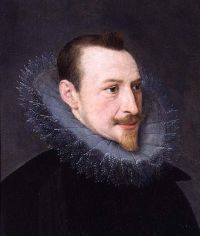 Edmund Spenser,
The Faerie Queene — Volume 01
Edmund Spenser,
The Faerie Queene — Volume 01
“ If your interest has been now been aroused, I suggest you read the Letter to Raleigh before venturing on your journey through the landscape of The Faerie Queene.You will find there a spacious playground for the mind. Its knights and ladies, dragons and satyrs, forests and castles, seem at first to be those of fantasy. Yet the FQ is by no means an exercise in escapism. Even incomplete, it triumphantly succeeds in Spenser's declared intention of fashioning a "noble person in vertuous and gentle discipline". ”
Edmund Spenser,
Spenser's Faerie Queene, Vol 1…
(1909)
“ There are many such in the Faerie Queene. (1) There are mistakes of fact, of literary allusion, of quantity in classical names, hardly to be avoided by a poet writing far from libraries. (2) There are confusions of personages, or of names of personages, within the poem itself. Sir Guyon is confused with the Redcrosse Knight in III. ii. 4, and with Prince Arthur in II. viii. 48 (but not in 1609) ; Æmylia with Pœana in IV. ix. Arg.; Calepine with Calidore in VI. vi. 17; while over Serena Spenser’s confusion becomes comical—he calls her Crispina in VI. iii. 23, [1] and Matilda in VI. v. Arg. ”