University of Jena

Definition and stakes

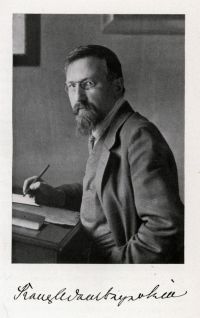
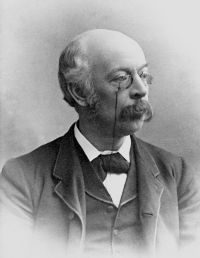
Portrait of Robert Adamson Robert Adamson Fichte — Chapter III. The Jena Professorship (1881)

Altogether, the University of Jena, at the close of the eighteenth century, exhibited a degree of life and activity which raised it to the first place among the academies of Germany. The history of German philosophy, in its brightest period, is in a great measure the history of the Jena University. For there as teachers we find Fichte, Schelling, Hegel, Fries, Krause, and Schlegel; as scholars, Herbart, Schubert, Steffens, Solger, Hülsen, Hölderlin, Von Berger, and Oersted. Among the students the fame of their teachers was reflected in a peculiarly open and vigorous university life.
Source: Wikisource

Various Lippincott's Magazine of Popular Literature and Science…

As Germany is now constituted, it would be impossible to found a new university in a small town. Such places as Jena, Erlangen, Greifswald, Rostock, Marburg and Giessen barely hold their own against the strong movement in favor of concentration.
The wholesome influence of large surroundings upon students is perhaps even more marked than upon professors. History teaches us with singular clearness that small towns are precisely the ones in which student character is distorted out of all proportion. No better example can be found than the University of Jena.
Source: Gutenberg

Portrait of Ernst Haeckel Ernst Haeckel Freedom in Science and Teaching

Faithful to the glorious traditions of a past extending over three centuries, the little Thuringian university of Jena will find a way to preserve her perfect and unlimited freedom. She will ever bear in mind that she is the first Protestant university of Germany, protesting against every strait-waistcoat which hierarchical obstinacy would force upon human reason, against every dogma by which the arrogance of the learned may try to suppress all freedom of teaching.
Source: Gutenberg

Get perspective with Kwize: daily news enlightened by great literature