Alliterative verse

Definition and stakes

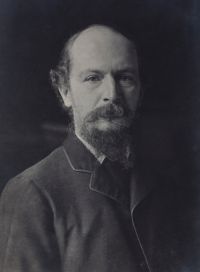
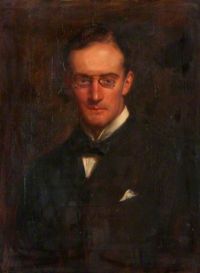
Portrait of W. P. Ker W. P. Ker,  Medieval English Literature

“ What is the explanation of this revival, and this sudden great vogue of alliterative poetry? It cannot have been a new invention, or a reconstruction; it would not in that case have copied, as it sometimes does, the rhythm of the old English verse in a way which is unlike the ordinary rhythms of the fourteenth century. The only reasonable explanation is that somewhere in England there was a tradition of alliterative verse, keeping in the main to the old rules of rhythm as it kept something of the old vocabulary, and escaping the disease which affected the old verse elsewhere. ”
Source: Gutenberg

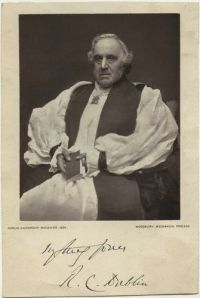
J. Schipper,  A History of English Versification

“ THE ALLITERATIVE VERSE IN OLD ENGLISH
§ 14. General remarks. It is highly probable that alliteration was the earliest kind of poetic form employed by the English people. There is no trace in the extant monuments of the language of any more primitive or simpler system. A predilection for alliteration existed even in prose, as in the names of heroes and families like Scyld and Sceaf, Hengist and Horsa, Finn and Folcwald, pairs that alliterate in the same way as the family names of other Teutonic nations: the names of the three sons of Mannus, Ingo, Isto, Irmino, conform to this type.
”
Source: Gutenberg

J. Schipper,  A History of English Versification

“ But the examples given will suffice to show that here, as in the two passages from the Saxon Chronicle quoted above, we have four different kinds of verse distinguished by the different use of rhyme and alliteration, viz.:
1. Regular alliterative lines, which are very numerous, and at least in the first half of Layamon’s Brut, possibly throughout the poem, form the bulk, e.g. Prov. xv. 247–8, Layamon, 13847–8, 13851–2, 13855–6, 13859–60, 13867–8, 13881–2, or
Búte if he béo | in bóke iléred.Prov.
”
Source: Gutenberg

Get perspective with Kwize: daily news enlightened by great literature