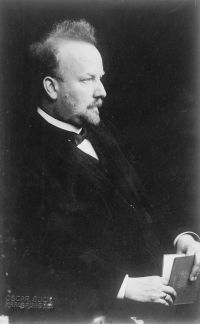
“ But the ancient philosophy had spent itself. The naïve interplay of nature and spirit, that ingenuous trust in external reality which had been the expression of a youthful vigour in the Mediterranean peoples, from which indeed the ancient civilisation was derived, now was shattered. To the eyes of men at that time Nature and Spirit stood opposed as hostile and irreconcilable facts. ”
Ancient philosophy
Definition and stakes
The theme of “ancient philosophy” has been addressed by authors such as Friedrich von Schlegel, Francis Bacon, Plato, W. T. Stace and William James. It is often associated with terms like philosopher, universe, science, Greek and history.
Quotes about “ancient philosophy”
“ There are other questions familiar to the moderns, which have no place in ancient philosophy. The world has grown older in two thousand years, and has enlarged its stock of ideas and methods of reasoning. Yet the germ of modern thought is found in ancient, and we may claim to have inherited, notwithstanding many accidents of time and place, the spirit of Greek philosophy. ”
“ Ancient philosophy had attempted until now in vain to overcome the contradiction between the sense-world and the world of ideas, and to destroy the uncertainty of human thought and life which results from this contradiction. ”
Sarah Sheppard, Characteristics of The Genius and Writings of L. E. L. (1841)
“ But not more likely were the uninitiated to understand the refined mysteries and subtle distinctions of the inner doctrines of ancient philosophy, than are now the frivolous, worldly-minded and cold-hearted of our species to comprehend the lofty thoughts and deep feelings of superior natures. ”
 Manly Palmer Hall,
The Secret Teachings of All Ages…
(1928)
Manly Palmer Hall,
The Secret Teachings of All Ages…
(1928)
“ It appears that all the perfection of civilization, and all the advancement made in philosophy, science, and art among the ancients are due to those institutions which, under the veil of mystery, sought to illustrate the sublimest truths of religion, morality, and virtue, and impress them on the hearts of their disciples.* * * Their chief object was to teach the doctrine of one God, the resurrection of man to eternal life, the dignity of the human soul, and to lead the people to see the shadow of the deity, in the beauty, magnificence, and splendor of the universe. ”
 Ralph Barton Perry,
The Harvard Classics Vol. 51
(1914)
Ralph Barton Perry,
The Harvard Classics Vol. 51
(1914)
“ This turn of thought back to the originals and roots of things, this general freshening up by the admixture of new experiences, had its effects upon every interest and work of man. So there was, among other things, a Renaissance philosophy, which meant chiefly a new study of some ancient philosophy. ”
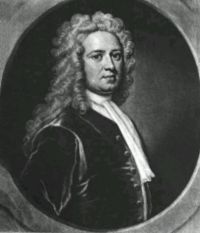 William Stukeley,
Itinerarium Curiosum (Centuria I)
(1776)
William Stukeley,
Itinerarium Curiosum (Centuria I)
(1776)
“ To my Lord PEMBROKE. I Have sometimes in travelling been apt, within my own mind, to make a comparison between the excellence of the study of Philosophy, and that commonly called Antiquity, that is, ancient history. ”
Various, Popular Science Monthly (1893)
“ THE more closely we study the works of the ancient Greeks, and penetrate the secret of the thought which they loved to conceal under the veil of symbol and myth, the more plainly we recognize that their wise men half-saw by a kind of rapid divination many of the truths which have been demonstrated to modern philosophy only by series of methodically connected observations and experiments. ”
 Plato,
Apology, Crito, and Phaedo of Socrates
Plato,
Apology, Crito, and Phaedo of Socrates
“ What Homer was to Epic poetry, what Cicero and Demosthenes were to oratory, and what Shakespeare was to the drama of England, Plato was to ancient philosophy, not unapproachable nor unapproached, but possessing an inexplicable but unquestioned supremacy. ”
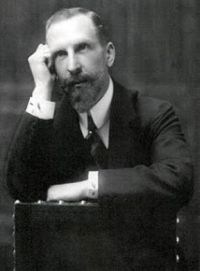 Franz Cumont,
The Oriental Religions in Roman Paganism
Franz Cumont,
The Oriental Religions in Roman Paganism
“ The few specialists in ancient religions may indeed sail smoothly in the current of his thought; but the very nature of a subject which ramifies so extensively and so intricately into the whole of ancient life, concerning itself with practically all the manifestations of ancient [vii] civilization—philosophy, religion, astrology, magic, mythology, literature, art, war, commerce, government—will of necessity afford some obstacle to readers unfamiliar with the study of religion. ”
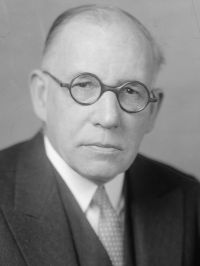 Carlton J. H. Hayes,
A Political and Social History of Modern Europe V.1
Carlton J. H. Hayes,
A Political and Social History of Modern Europe V.1
“ In the first place, the humanists encouraged a critical spirit in comparing and contrasting ancient manuscripts and in investigating the history of the distant past; and their discovery and application of pagan writings served to bring clearly and abruptly before the educated people of the sixteenth century all that the Greeks and Romans had done in astronomy, physics, mathematics, and medicine, as well as in philosophy, art, and literature. ”
 Clifford Herschel Moore,
The Religious Thought of the Greeks…
Clifford Herschel Moore,
The Religious Thought of the Greeks…
“ In short they attributed to it all the characteristics of reason and intelligence, so that in spite of their argument that the active principle was no less material than the passive, that it was the element of fire or vapor or both, it was inevitable that in practice their philosophy should ultimately tend toward a dualism and that the ancient conflict of matter and mind, of body and soul, should have its place in their teaching. ”
 Friedrich Nietzsche,
Beyond Good and Evil
(1886)
Friedrich Nietzsche,
Beyond Good and Evil
(1886)
“ There is a point in every philosophy at which the "conviction" of the philosopher appears on the scene; or, to put it in the words of an ancient mystery: Adventavit asinus, Pulcher et fortissimus. ”
 John Caius,
The Epidemics of the Middle Ages
John Caius,
The Epidemics of the Middle Ages
“ Foremost among these, is the idea of the general life which diffuses itself throughout the whole universe, expressed by the greatest Greek sages, and transmitted to the middle ages, through the new Platonic natural philosophy. ”
 Victor Hugo,
Cromwell
(1909)
Victor Hugo,
Cromwell
(1909)
“ Behold, then, a new religion, a new society; upon this twofold foundation there must inevitably spring up a new poetry. Previously—we beg pardon for setting forth a result which the reader has probably already foreseen from what has been said above—previously, following therein the course pursued by the ancient polytheism and philosophy, the purely epic muse of the ancients had studied nature in only a single aspect, casting aside without pity almost everything in art which, in the world subjected to its imitation, had not relation to a certain type of beauty. ”
Benj. N. Martin, Choice Specimens of American Literature…
“ Very many of the errors of antiquity have re-appeared in our times. If the Greek schools were infected with materialism, pantheism, and atheism, the later progress of philosophy has shown the same characters. ”
Anonymous, The Senses and the Mind
“ The wisest of the heathens of Greece or Rome lived in doubt, entangled in the mazes of a vain system of philosophy; and though they might believe in a god, or in gods, deducing their arguments as to the existence of an all-powerful Being from the works of nature, and from that internal conviction which seems common to the human race—they knew nothing of His attributes, of his laws, of his requirements, of man's fallen nature, of the intrinsic sinfulness of the heart, of the means of grace, of a hope of glory. ”
 Charles Rollin,
The Ancient History of the Egyptians…
Charles Rollin,
The Ancient History of the Egyptians…
“ Such were the source and origin of the religion of the ancients; truly worthy of man, had he been capable of persisting in the purity and simplicity of these first principles: but the errors of the mind, and the vices of the heart, those sad effects of the corruption of human nature, have strangely disfigured their original beauty. ”
 Guglielmo Ferrero,
Ancient Rome and Modern America…
Guglielmo Ferrero,
Ancient Rome and Modern America…
“ Was the world then greater and man more powerful than the ancients had thought, and had the ancients been wrong in seeking to limit the efforts of human genius so strictly? Gradually, during the seventeenth and eighteenth centuries, the effort of the human spirit to free itself from the ancient limits continued, increased, and became bolder and more methodical. Subtle and ingenious philosophies delivered masked but clear attacks on the limits which marked the bounds of Good and Evil, Truth and Error; on tradition, on century-old institutions, on authority in all its forms. ”
 Origen,
The writings of Origen, Vol. 2…
(1872)
Origen,
The writings of Origen, Vol. 2…
(1872)
“ Is it indeed permissible for you, O Greeks, to call youths and slaves and foolish persons to the study of philosophy, but if we do so, we do not act from philanthropic motives in wishing to heal every rational nature with the medicine of reason, and to bring them into fellowship with God, the Creator of all things? ”
New York State Historical Association. Meeting, Proceedings of the New York Historical Association…
“ The ancients, dimly apprehending this sublime truth, conceived of the universe as a gigantic animal, a cosmic leviathan, whole, complete and harmonious in all its parts, while philosophy has ever striven, though in vain, to demonstrate by processes of reason what the higher authority of intuition has proclaimed in all generations. ”
Various, Popular Science Monthly (1886)
“ THERE was a time when philosophy might have been defined as the science of human activity, so all-comprehensive was it. The ambitious Greek who would attach his name to a philosophical system must include in his scheme all that could be known, done, and speculated about God, the world, and man. ”
Lawrence Clement Johnson, Popular Science Monthly (1874)
“ In the dawn of science as we know it—that is to say, in the rise of the Greek philosophy—no other view of creation was thought of than that which modern induction now demands, because, happily for them, there was not in their possession any supposed revelation on the subject, and there was no school which thought of any other solution of the problem than one which could be deduced from observation and speculation. ”
Lawrence Thomas Cole, The Basis of Early Christian Theism
“ A vague, fanciful first cause of physical phenomena, a general idea, abstracted out of all content, so as to leave no meaning for the human mind—whatever the imagination might make of it—a mechanical, magnetic force, to which all motion might conveniently be referred; a deified principle of order—and these held in conjunction with the popular polytheism, and impregnated with the national pantheistic conceptions—was all that Greek philosophy could offer to the higher religious aspirations of the educated man. ”
 Henry James Sumner Maine,
Ancient Law
(1861)
Henry James Sumner Maine,
Ancient Law
(1861)
“ The oldest Greek philosophers had been accustomed to explain the fabric of creation as the manifestation of some single principle which they variously asserted to be movement, force, fire, moisture, or generation. In its simplest and most ancient sense, Nature is precisely the physical universe looked upon in this way as the manifestation of a principle. Afterwards, the later Greek sects, returning to a path from which the greatest intellects of Greece had meanwhile strayed, added the moral to the physical world in the conception of Nature. ”
 Thomas Henry Huxley,
The Lights of the Church and the Light of Science
Thomas Henry Huxley,
The Lights of the Church and the Light of Science
“ Even those venerable works which bear the names of some of the greatest of ancient Greek and Roman writers, and which have been accepted by generation after generation, down to modern times, as stories of unquestionable truth, have been compelled by scientific criticism, after a long battle, to descend to the common level, and to confession to a large admixture of error. ”
Various, The History Teacher's Magazine…
“ The chapters on philosophy and theology are necessarily deep, but of supreme importance. For in them we are reminded of how by pure thinking the Greeks anticipated the best and latest of our modern thought. ”
 Thomas Taylor,
Iamblichus on the Mysteries of the Egyptians…
(1895)
Thomas Taylor,
Iamblichus on the Mysteries of the Egyptians…
(1895)
“ For it would not be becoming, that Pythagoras and Plato, Democritus and Eudoxus, and many other of the ancient Greeks, should have obtained appropriate instruction from the sacred scribes of their time, but that you who are our contemporary, and think conformably to those ancients, should be frustrated of your wish by those who are now living, and who are called common preceptors. ”
G. G. Zerffi, A Manual of the Historical Development of Art
“ The reformation in art-forms, and the revival of the antique spirit in poetry, was soon followed by a revival in science and ethics. Philosophy began to299 unravel the mysteries of nature, and to make natural forces subservient to man’s wants and happiness. Ethics, based on freedom of thought, grew day by day more powerful, and Greek forms were used in the purified spirit of Christ, divested of strange and unintelligible dogmas. ”
Lux Mundi: A Series of Studies in the Religion of the Incarnation…
“ But in the lines which they follow and the hopes which they frame there is neither likeness nor compatibility. 'The Greeks seek after wisdom [189] .' The intellect, and those who are distinctively men of the intellect, can hardly imagine human advance {177} otherwise than in terms of the intellect. Philosophy conceives of it as a conquest of philosophical result, or even as an increase of philosophical material. ”
 Friedrich von Schlegel,
The Philosophy of History, Vol…
Friedrich von Schlegel,
The Philosophy of History, Vol…
“ Lastly, Grecian science may be denominated a natural science, because philosophy, founded on the old basis of poetry and classical culture, allied to history, and the language and symbols of tradition, assumed in general a form clear, beautiful, animated, and eminently conformable to Nature and the mind of man ”
Thomas Huxley, Evolution and Ethics (1893)
“ The contemporary Greek philosophy takes an analogous direction. According to Heracleitus, the universe was made neither by Gods nor men; but, from all eternity, has been, and to all eternity, will be, immortal fire, glowing and fading in due measure. ”
Samuel Dill, Roman Society from Nero to Marcus Aurelius
“ The vision closes with a scene which criticism has long recognised as irreconcilable with the eschatology of Greek legend hitherto followed by the poet, but which is drawn from a philosophy destined to govern men’s thoughts of immortality for many ages. ”
Saint of Alexandria Clement, The writings of Clement of Alexandria… (1869)
“ Now those are called philosophers, among us, who love Wisdom, the Creator and Teacher of all things, that is, the knowledge of the Son of God; and among the Greeks, those who undertake arguments on virtue. Philosophy, then, consists of such dogmas found in each sect (I mean those of [336] philosophy) as cannot be impugned, with a corresponding life, collected into one selection; and these, stolen from the Barbarian God-given grace, have been adorned by Greek speech. For some they have borrowed, and others they have misunderstood. ”
 Minot J. Savage,
Our Unitarian Gospel
Minot J. Savage,
Our Unitarian Gospel
“ All these ideas, you see, are perfectly natural in certain stages of human development, logically reasoned out in view of their thought of the gods and of their relations to them and of what these gods must desire at their hands. It is not only among the very early beliefs that you find these ideas controlling the thought and action of men. Study the ancient classical times as they are reflected in the Iliad, in the Odyssey, or in Virgil's Aeneid, and you will find that the gods were very human in all their feelings, their thoughts, their passions. ”
 Aeschylus,
Dramas of Aeschylus
(1886)
Aeschylus,
Dramas of Aeschylus
(1886)
“ In order to appreciate the poetry of antiquity, it is necessary to take into consideration the religious ideas which lie at its root, which also in the course of their development have determined the character alike of ancient literature and art ”
Friedrich von Schlegel,
The philosophy of life, and philosophy of language…
“ Otherwise it was the general belief, both of Greeks and Romans, that every man has his guardian spirit or genius. Now this hypothesis being once admitted to be possible, let us inquire in what light were these ancients accustomed to regard, and what ought we to conceive of the peculiar nature of these spiritual beings in conformity with the representation of so universal a tradition? ”
Thomas Huxley, Evolution and Ethics (1893)
“ There is no snare in which the feet of a modern student of ancient lore, are more easily entangled, than that which is spread by the similarity of the language of antiquity to modern modes of expression. I do not presume to interpret the obscurest of Greek philosophers; all I wish is to point out, that his words, in the sense accepted by competent interpreters, fit modern ideas singularly well. ”
George Ticknor Curtis, Creation or Evolution? A Philosophical Inquiry
“ Some of the speculations of Greek philosophers adverted to in a previous chapter may serve to show us what comes of the omission to conceive of power as abstracted from substance or its properties. The philosophy which first attained to this conception led the way to that conception of an Infinite Being, without whose existence and attributes all speculation upon the phenomena of nature leads to nothing. A belief in his existence and attributes must undoubtedly be attained by an examination of his works, if we set aside the teachings of revealed religion. ”
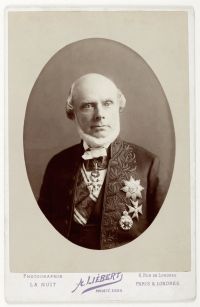 A. de Quatrefages,
The human species
(1879)
A. de Quatrefages,
The human species
(1879)
“ Reviving the methods of the Greek philosophers, they have thought it possible to explain living nature and the entire universe, by connecting certain facts with conceptions, which are almost entirely intellectual. ”
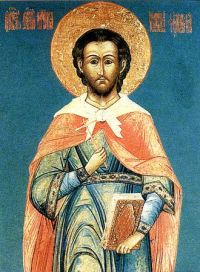 Justin Martyr,
Hortatory Address to the Greeks
(1867)
Justin Martyr,
Hortatory Address to the Greeks
(1867)
“ But possibly those who are unwilling to give up the ancient and inveterate error, maintain that they have received the doctrine of their religion not from those who have now been mentioned, but from those who are esteemed among them as the most renowned and finished philosophers, Plato and Aristotle. ”
Related terms
Authors who wrote about “ancient philosophy”
Friedrich von Schlegel Francis BaconPlatoW. T. StaceWilliam JamesRalph Barton PerryManly Palmer HallLawrence Thomas Cole
 Georg Wilhelm Friedrich HegelVariousSamuel DillSaint of Alexandria ClementThomas Huxley
 Walter PaterClifford Herschel Moore
 Samuel Taylor Coleridge
 Miguel de Unamuno
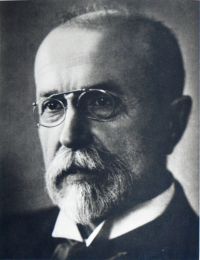 Tomáš Garrigue MasarykFriedrich Nietzsche
 Arthur Schopenhauer