“ Why should they stop to think when they are not very good at thinking? Why should they hunt for a common quality in all objects that move them in a particular way when they can linger over the many delicious and peculiar charms of each as it comes? So, if they write criticism and call it aesthetics, if they imagine that they are talking about Art when they are talking about particular works of art or even about the technique of painting, if, loving particular works they find tedious the consideration of art in general, perhaps they have chosen the better part. ”
Art criticism
Definition and stakes
Art criticism, a literary form focused on assessing visual art through aesthetics and the philosophy of beauty, connects personal experience with analytical rigor. Traditionally split into historical and modern approaches, it adapts to evolving socio-political landscapes while utilizing a range of frameworks—from formalist to relativist perspectives.
Clive Bell emphasized "significant form" as the core of art, while Oscar Wilde regarded criticism as a creative endeavor, comparable to art itself. George Jean Nathan highlighted the independence of critical discourse, and Arthur Ransome saw it as a force for inspiring new artistic directions. These differing viewpoints highlight art criticism's dual function: interpreting artistic works and influencing their cultural impact.
Quotes about “art criticism”
Various, The Little Review, March 1915…
“ Indeed it is the business of art critics to experience this curve in themselves and to apply it to all works of art. So far as I know it has never been applied. When it is it will transform art criticism. For it will enable the critic to judge whether a work is an inevitable growth of a movement inherent in the artist,—and to value it rightly and fully in its relation to this movement,—or whether it is merely a bit of clever brain juggling. ”
“ You have told me that the highest criticism deals with art, not as expressive, but as impressive purely, and is consequently both creative and independent, is in fact an art by itself, occupying the same relation to creative work that creative work does to the visible world of form and colour, or the unseen world of passion and of thought. Well, now, tell me, will not the critic be sometimes a real interpreter? ”
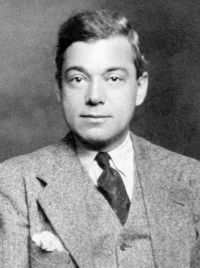 George Jean Nathan,
The Critic and the Drama
George Jean Nathan,
The Critic and the Drama
“ To say that art must be criticized only after this formula or after that, is to say that art must be contrived only out of this formula or out of that. As every work of art is an entity, a thing in itself, so is every piece of criticism an entity, a thing in itself. ”
“ The rather sterile literature of art criticism has been seriously enriched by a brilliant if wilful manifesto. The refreshing absence of obscurity common to art criticism will be particularly welcome. ”
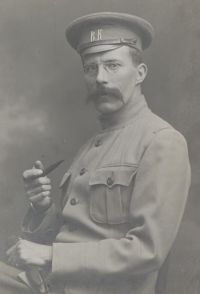 Arthur Ransome,
Oscar Wilde, a Critical Study
Arthur Ransome,
Oscar Wilde, a Critical Study
“ The highest criticism "criticizes not merely the individual work of art, but Beauty itself, and fills with wonder a form which the artist may have left void, or not understood, or understood incompletely." A work of art is to the critic a suggestion for a new work of his own. ”
Arthur Ransome,
Oscar Wilde, a Critical Study
“ They were free to do all this, and for a creed he taught them that criticism is itself a creative art, perhaps the most creative of the arts, certainly an art to be practised with no less delicate care than that of the maker of poems, the teller of stories, the painter of pictures, the man who captures a melody, or the man who shapes a dream in stone. ”
“ It is sometimes said by those who understand neither the nature of the highest Criticism nor the charm of the highest Art, that the pictures that the critic loves most to write about are those that belong to the anecdotage of painting, and that deal with scenes taken out of literature or history. ”
 Oscar Wilde,
Selected Prose of Oscar Wilde
Oscar Wilde,
Selected Prose of Oscar Wilde
“ And it is for this very reason that the criticism which I have quoted is criticism of the highest kind. It treats the work of art simply as a starting-point for a new creation. It does not confine itself—let us at least suppose so for the moment—to discovering the real intention of the artist and accepting that as final. ”
“ The objects that provoke aesthetic emotion vary with each individual. Aesthetic judgments are, as the saying goes, matters of taste; and about tastes, as everyone is proud to admit, there is no disputing. A good critic may be able to make me see in a picture that had left me cold things that I had overlooked, till at last, receiving the aesthetic emotion, I recognise it as a work of art. To be continually pointing out those parts, the sum, or rather the combination, of which unite to produce significant form, is the function of criticism. ”
“ Art criticism, in the present state of society, seems to me a respectable and possibly a useful occupation. The prejudice against critics, like most prejudices, lives on fear and ignorance. It is quite unnecessary and rather provincial, for, in fact, critics are not very formidable. ”
 Victor Hugo,
William Shakespeare
Victor Hugo,
William Shakespeare
“ Each thing put in its place and spoken with its own word. On the only condition that a certain latent equilibrium is maintained and a certain mysterious proportion preserved, simplicity may be found in the most stupendous complication, either in the style, or in the ensemble. These are the arcana of great art. Lofty criticism alone, which takes its starting-point from enthusiasm, penetrates and comprehends these learned laws. ”
George Jean Nathan,
The Critic and the Drama
“ Yet criticism is itself an art. It might, [5] indeed, be well defined as an art within an art, since every work of art is the result of a struggle between the heart that is the artist himself and his mind that is the critic. ”
William Hazlitt, The Collected Works of William Hazlitt…
“ Let any one look well at this portrait, and if he then sees nothing in it, or in the portraits of this painter in general, let him give up virtù and criticism in despair.This room is rich in valuable gems, which might serve as a test of a real taste for the art, depending for their value on intrinsic qualities, and not on imposing subjects, or mechanical arrangement or quantity. As where ‘the still, small voice of reason’ is wanting, we judge of actions by noisy success and popularity; so where there is no true moral sense in art, nothing goes down but pomp, and bustle, and pretension. ”
George Jean Nathan,
The Critic and the Drama
“ The most general fault of criticism lies in a confusion of its own internal processes with those of art: it is in the habit of regarding the business of art as a reduction of life to its essence of beauty, and the business of criticism as an expansion of that essence to its fullest flow. The opposite is more reasonable. Art is a beautiful, swollen lie; criticism, a cold compress. The concern of art is with beauty; the concern of criticism is with truth. And truth and beauty, despite the Sunday School, are often strangers. ”
Henry Albert Phillips, The photodrama (1914)
“ All new and unfamiliar forms of art, therefore, are subject to superficial criticism, if not ridicule, on the part of the uninitiated, who either fail, or refuse, to see the underlying truth interpreted by a work of art. ”
Carleton Eldredge Noyes, The Gate of Appreciation: Studies in the Relation of Art to Life
“ Recognizing that art is organic, that an art-form, as religious painting or Gothic architecture or the novel, is born, develops, comes to maturity, lapses, and dies, that an individual work is the product of "race, environment, and the moment," that it is the expression also of the personality of the artist himself, criticism no longer regards the single work as an isolated phenomenon, but tries to see it in its relation to its total background. ”
De Witt H. Parker, The Principles of Aesthetics
“ Now, on its normative side, aesthetics is ideally the complete rationale of criticism, the systematic achievement, for its own sake, of what the thoughtful critic attempts with less exactness and for the direct purpose of appreciation. It is beyond the province of aesthetics to criticize any particular work of art, except by way of illustration. ”
A. J. Finberg, Turner's Sketches and Drawings
“ The ultimate aim of art criticism, as I understand it, is to grasp and render intelligible the whole region of artistic activity, and I cannot but think that it will facilitate our grasp of the wider laws of artistic phenomena, as well as help to consolidate or disprove the results of our detailed observations, if I make an attempt to render explicit what has only been implied in our remarks upon particular concrete instances. ”
 Georg Wilhelm Friedrich Hegel,
The Philosophy of Fine Art, volume 3…
Georg Wilhelm Friedrich Hegel,
The Philosophy of Fine Art, volume 3…
“ To be thus brought into personal community of insight and critical acumen with the artist is for most people a flattering concession; and our reader or audience, and very possibly the spectator of plastic art, with even more readiness wonder at their poet, musician, or painter or sculptor respectively; and the vanity of such is all the better satisfied in proportion as the work invites them to this personal criticism, and supplies them openly with hints of such designs and points of view. In the severe style, on the contrary, no such confidences are made over to the spectator at all. ”
“ The essay simply represents an artistic standpoint, and in aesthetic criticism attitude is everything. For in art there is no such thing as a universal truth. A Truth in art is that whose contradictory is also true. ”
| editor, Aesthetic Papers (1849)
“ The progress of criticism is the reverse of that of art. In the creative age, appreciation is simple, intuitive, passionate, of which the delight of the people in national songs, the passionate enthusiasm with which the Florentines welcomed Cimabue's Madonna, are examples. When criticism springs up, it is first in the form of taste. The individual subjects the productions of art to his own personality. ”
A. J. Finberg, Turner's Sketches and Drawings
“ Aesthetic without close con{137}versance with the concrete subject-matter of art criticism is necessarily loose and empty, while art criticism without a firm grasp of the broad principles of beauty easily degenerates into casuistry or a useless and rather despicable form of self-assertion. And however much we try to keep questions of principle apart from our estimation and study of particular works of art, we are bound inevitably to fail. ”
George Jean Nathan,
The Critic and the Drama
“ Criticism is the windows and chandeliers of art: it illuminates the enveloping darkness in which art might otherwise rest only vaguely discernible, and perhaps altogether unseen. ”
Various, Graham's Magazine, Vol. XLI, No…
“ But we are willing to admit, that criticism may advance a step beyond this, and after conceding the power and genuineness of a work of art, can still question the excellence of the spirit by which it is animated; can, in short, doubt the validity, denounce the character, and attempt to weaken the influence, of the kind of genius its analysis lays open. ”
Ethel D. Puffer, Psychology of Beauty
“ There are stories nowadays, but few novels, and plenty of spectacles, but no plays; and how should we know the difference, never having heard what a novel ought to be? But let the aesthetic critic give us a firm foundation for criticism, a real understanding of the conditions of literary art ”
Oscar Wilde,
The Picture of Dorian Gray
“ THE PREFACE The artist is the creator of beautiful things. To reveal art and conceal the artist is art's aim. The critic is he who can translate into another manner or a new material his impression of beautiful things. The highest, as the lowest, form of criticism is a mode of autobiography. Those who find ugly meanings in beautiful things are corrupt without being charming. ”
graf Leo Tolstoy, The Kingdom of God is Within You…
“ Criticism, in which the lovers of art used to find support for their opinions, has latterly become so self-contradictory, that, if we exclude from the domain of art all that to which the critics of various schools themselves deny the title, there is scarcely any art left. ”
Henry James, Partial Portraits
“ Nothing, of course, will ever take the place of the good old fashion of “liking” a work of art or not{396} liking it: the most improved criticism will not abolish that primitive, that ultimate test. ”
Oscar Wilde,
Essays and Lectures
“ And criticism—what place is that to have in our culture? Well, I think that the first duty of an art critic is to hold his tongue at all times, and upon all subjects: C’est un grand avantage de n’avoir rien fait, mais il ne faut pas en abuser.It is only through the mystery of creation that one can gain any knowledge of the quality of created things. You have listened to Patience for a hundred nights and you have heard me for one only. It will make, no doubt, that satire more piquant by knowing something about the subject of it, but you must not judge of æstheticism by the satire of Mr. ”
Various, The Atlantic Monthly (1858)
“ What with the oracular dicta of self-constituted arbiters of taste, the discrepancies of popular writers on Art, the jargon of connoisseurship, the vagaries of fashion, the endless theories about color, style, chiaro 'scuro, composition, design, imitation, nature, schools, etc., painting has become rather a subject for the gratification of vanity and the exercise of pedantic dogmatism, than a genuine source of enjoyment and culture, of sympathy and satisfaction,—like music, literature, scenery, and other recognized intellectual recreations. ”
 Agnes Repplier,
Essays in Miniature
(1892)
Agnes Repplier,
Essays in Miniature
(1892)
“ Out of the midst of the gloom, out of the confusion and depression of conflicting forms of seriousness, rises from London a voice, clear, languid, musical, shaken with laughter, and speaking in strange, sweet tones of art and beauty, and of that finer criticism which is one with art and beauty, and claims them forever as its own. ”
“ You see, then, how it is that the aesthetic critic rejects these obvious modes of art that have but one message to deliver, and having delivered it become dumb and sterile, and seeks rather for such modes as suggest reverie and mood, and by their imaginative beauty make all interpretations true, and no interpretation final. ”
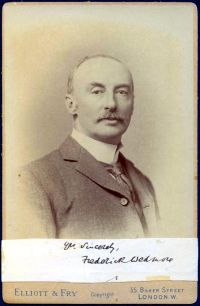 Sir Frederick Wedmore,
Fine prints
(1905)
Sir Frederick Wedmore,
Fine prints
(1905)
“ And the thing that his first critics blamed him for doing—the composition of a subject, the rejection of this, the choice of that, the bestowal of fire and life upon matter dead to the common eye—is a thing which artists in all arts have always done, and for this most simple reason, that the doing of it is Art. ”
 John Galsworthy,
Another Sheaf
John Galsworthy,
Another Sheaf
“ Let the artist then, by all means, make his work impeccable, clothe his ideas, feelings, visions, in just such garments as can withstand the winds of criticism. He himself must be his cruellest critic. ”
William Hazlitt, The Collected Works of William Hazlitt…
“ The fault, then, that I should find with this Collection of Pictures is, that it is equally defective in the imitation of nature, which belongs to painting in general; or in giving the soul of nature-expression, which belongs more particularly to history-painting. Their style of art is false from beginning to end, nor is it redeemed even by the vices of genius, originality, and splendour of appearance. It is at once tame and extravagant, laboured and without effect, repulsive to the senses and cold to the heart. ”
 Walter Pater,
The Renaissance: Studies in Art and Poetry
Walter Pater,
The Renaissance: Studies in Art and Poetry
“ The aesthetic critic, then, regards all the objects with which he has to do, all works of art, and the fairer forms of nature and human life, as powers or forces producing pleasurable sensations, each of a more or less peculiar or unique kind. ”
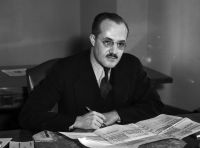 Willard Huntington Wright,
Modern Painting, Its Tendency and Meaning
Willard Huntington Wright,
Modern Painting, Its Tendency and Meaning
“ We are slaves to accuracy of delineation, to prettiness of design, to the whole suite of material considerations which are deputies to the organic and intellectual qualities of a work of art. It is the common thing to find criticisms—ever from the highest sources—which praise or condemn a picture according to the nearness of its approach to the reality of its subject. Such observations are confusing and irrelevant. Were realism the object of art, painting would always be infinitely inferior to life—a mere simulacrum of our daily existence, ever inadequate in its illusion. ”
J. S. Memes, History of Sculpture, Painting…
“ It not unfrequently has led artists into irregular, and even unnatural compositions; but its greatest evils do daily arise from those, whose previous habits and attainments by no means qualify them for judges, confidently pronouncing upon works of art, from what they are pleased to term a natural taste. ”
 Henry Rankin Poore,
Pictorial Composition and the Critical Judgment of Pictures
Henry Rankin Poore,
Pictorial Composition and the Critical Judgment of Pictures
“ Let the musician and him who knows literature challenge the work of art for a violation of any of these and the judgment which results may be accepted seriously; and yet the essence lies beyond—with nature herself. ”
Willard Huntington Wright,
Modern Painting, Its Tendency and Meaning
“ THROUGHOUT the entire history of the fine arts, no period of æsthetic innovation and endeavour has suffered from public malignity, ridicule and ignorance as has painting during the last century. The reasons for this are many and, to the serious student of art history, obvious. ”
Sir Joshua Reynolds, Fifteen Discourses
“ Shall reason stand in the way, and tell us that we ought not to like what we know we do like, and prevent us from feeling the full effect of this complicated exertion of art? This is what I would understand by poets and painters being allowed to dare everything; for what can be more daring, than accomplishing the purpose and end of art, by a complication of means, none of which have their archetypes in actual nature? ”
Related terms
Authors who wrote about “art criticism”
Oscar Wilde Clive Bell
 John RuskinGeorge Jean Nathangraf Leo Tolstoy
 Vernon LeeCarleton Eldredge NoyesWillard Huntington WrightSir Joshua ReynoldsArthur RansomeA. J. Finberg
 Benedetto Croce
 Wassily Kandinsky
 William Holman HuntDe Witt H. Parker
 John McLure HamiltonHenry Rankin Poore
 Arthur SymonsJoseph DrewWalter Pater