Astronomical observation

Definition and stakes

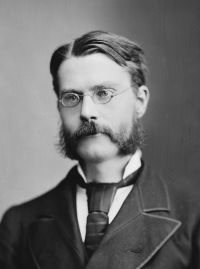
Portrait of Richard A. Proctor Richard A. Proctor,  Half-hours with the Telescope (1873)

“ The examination of mere peculiarities of physical condition is, after all, but barren labour, if it lead to no discovery of physical variation. The principal charm of astronomy, as indeed of all observational science, lies in the study of change—of progress, development, and decay, and specially of systematic variations taking place in regularly-recurring cycles. And it is in this relation that the moon has been so disappointing an object of astronomical observation. ”
Source: Gutenberg

Arthur Berry,  A Short History of Astronomy (1898)

“ But all that we can really observe is the motion of one body relative to one or more others. Astronomical observation tells us, for example, of a certain motion relative to one another of the earth and sun; and this motion was expressed in two quite different ways by Ptolemy and by Coppernicus. From a modern standpoint the question ultimately involved was whether the motions of the various bodies of the solar system relatively to the earth or relatively to the sun were the simpler to express. ”
Source: Wikisource

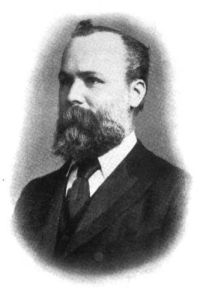
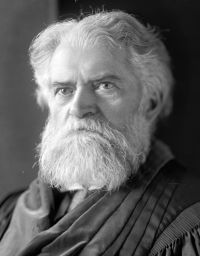
Portrait of Simon Newcomb Simon Newcomb,  Side-Lights on Astronomy and Kindred Fields of Popular Science

“ But the practical astronomer being able to determine his latitude and longitude within fifty yards, the positions of the principal points in all great cities of the country are known, and can be laid down on maps.
The world has always had to depend on astronomy for all its knowledge concerning times and seasons. The changes of the moon gave us the first month, and the year completes its round as the earth travels in its orbit. The results of astronomical observation are for us condensed into almanacs, which are now in such universal use that we never think of their astronomical origin.
”
Source: Gutenberg

Get perspective with Kwize: daily news enlightened by great literature