Attitude (psychology)

Definition and stakes

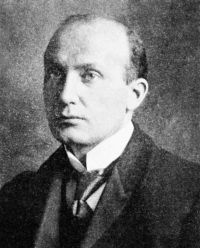
Portrait of Joseph Jastrow Joseph Jastrow,  Fact and Fable in Psychology

“ Among the more tangible tendencies that in various ways lead to the occult there is distinguishable what may be termed the intensely personal temperament,—the mental attitude that absorbs knowledge only when dissolved in an all-pervading personal medium; the attitude that finds a paramount significance in the personal interpretation of experiences, and reacts to massive and extensive generalizations most vaguely and impotently ”
Source: Gutenberg

William Henry Pyle,  The Science of Human Nature: A Psychology for Beginners

“ One of the tasks of education is to build up sets or attitudes, permanent prejudices, to be constant factors in guiding association and, consequently, action. We wish to build up permanent attitudes toward truth, honesty, industry, sympathy, zeal, persistence, etc. It is evident that attitude is merely an aspect of habit. It is an habitual way of reacting to a definite and typical situation. This habitual way is strengthened by repetition, so that set or attitude finally, after years of repetition, becomes a part of our nature. ”
Source: Gutenberg

William James,  Talks To Teachers On Psychology…

“ The uses of his intellect for practical affairs are therefore subordinate matters. 'The theoretic life' is his soul's genuine concern." Nothing can be more different in its results for our personal attitude than to take sides with one or the other of these views, and emphasize the practical or the theoretical ideal. In the latter case, abstraction from the emotions and passions and withdrawal from the strife of human affairs would be not only pardonable, but praiseworthy; and all that makes for quiet and contemplation should be regarded as conducive to the highest human perfection. ”
Source: Gutenberg

Get perspective with Kwize: daily news enlightened by great literature