“ Morphology and physiology alike were profoundly transformed by the introduction into biological studies of the genetic or historical point of view by Darwin, who did more than any other to establish the fact, suspected by many earlier naturalists, that existing vital phenomena are the outcome of a definite process of evolution; and it was he who first fully brought home to us how defective and one-sided is our view of the organism so long as we do not consider it as a product of the past. ”
Biological evolution
Definition and stakes
The theme of “biological evolution” has been addressed by authors such as Herbert Spencer, J. Arthur Thomson, Thomas Henry Huxley, George John Romanes and John Arthur Thomson. It is often associated with terms like biology, organism, species, selection and natural.
Quotes about “biological evolution”
 Ernst Haeckel,
The Wonders of Life: A Popular Study of Biological Philosophy
Ernst Haeckel,
The Wonders of Life: A Popular Study of Biological Philosophy
“ The development of organisms is a physiological process, depending on mechanical causes, or physico-chemical movements. 40. Ontogenesis, or the development of the organic individual, is directly determined by phylogenesis, or the evolution of the organic stem (phylon) to which it belongs. 41. Ontogenesis is a brief and rapid recapitulation of phylogenesis, determined by the physiological functions of heredity and adaptation. ”
active 1922-1937 Peter Nielsen, The Black Man's Place in South Africa
“ Very recently evidence has, indeed, been adduced to prove that "Initiative in animal evolution comes by stimulation, excitation and response in new conditions, and is followed by repetition of these phenomena until they result in structural modifications, transmitted and directed by selection and the law of genetics." ”
D. Kerfoot Shute, A first book in organic evolution (1899)
“ This signifies that all the creatures living on the globe to-day, and all the hosts that lived in the ages of the past, are blood relations in greater or less degree, and that they have all been evolved from simple microscopic creatures that appeared on the globe at the dawn of life. All organisms, then, have undergone an evolution. ”
D. Kerfoot Shute, A first book in organic evolution (1899)
“ The factors of fundamental importance in the study of the theory of Evolution, or the doctrine of the Transmutations of Organisms, are Cells, Heredity and Variation, Environment, Natural Selection, and Isolation.The evolution of an organism means its descent from preceding organisms with continuous adaptation to its Environment. Its adaptation occurs chiefly, if not entirely, through the Natural Selection of its useful Variations, and the tending of these variations to be transmitted to the offspring by the forces of Heredity. ”
George John Romanes, Darwin, and After Darwin, Volumes 1 and 3
“ Now, if the theory of evolution is true, what should we expect to happen when these germ-cells are fertilized, and so enter upon their severally distinct processes of development? Assuredly we should expect to find that the higher organisms pass through the same phases of development as the lower organisms, up to the time when their higher characters begin to become apparent. ”
 C. Lloyd Morgan,
Animal Life and Intelligence
C. Lloyd Morgan,
Animal Life and Intelligence
“ Viewed as a whole, there can be little doubt that the general tendency of evolution is towards more complete adaptation to more diverse and complex environment. And this tendency is accompanied by a general increase of differentiation and of integration; of differentiation whereby the constituent elements of life, whether cells, tissues, organs, organisms, or groups of organisms, become progressively more specialized and more different from one another ”
George John Romanes, Darwin, and After Darwin, Volumes 1 and 3
“ In the first place, besides the works of Darwin himself, there are a number of others which have already and very admirably expounded the evidences, both of organic evolution as a fact, and of natural selection as a cause. ”
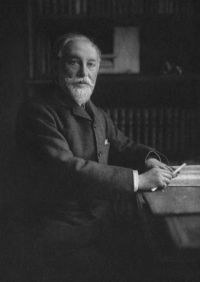 Frederic Harrison,
The Herbert Spencer lecture
(1905)
Frederic Harrison,
The Herbert Spencer lecture
(1905)
“ Let us turn to define Evolution—a word about which much ambiguity exists. In its narrower sense 'Evolution,' a term not at first used by Darwin, means the morphological and physiological variations of organic beings by the action of natural selection. It then came to be loosely applied to almost any specific theory about the origin and development of things. ”
George Ticknor Curtis, Creation or Evolution? A Philosophical Inquiry
“ Thus the improvement and modification induced by natural selection would be enhanced and transmitted by the sexual selection. [24] In regard to the operation of the two kinds of selection in the evolution of man from a lower form of animal, we find the theory to be this: That organic beings with peculiar habits and structure have passed through transitions which have converted the primordial animal into one of totally different habits and structure; that, in these transitions, organs adapted to one condition and mode of life have become adapted to another ”
Walter Kidd, Initiative in Evolution
“ That Plasto-diēthēsis, or the moulding and sifting processes experienced by organisms, represents the beginning and end of higher animal evolution; and that its wide hyphen stands for the provinces where Mendelism, Mutationism, Tetraplasty, Orthogenesis, and the dynamical work of growth on Form, as well as other factors yet to be discovered, can range at large.2. That personal selection is the leading form of that process in higher animals, whereas among Invertebrates, especially unicellular forms, selection of groups is the rule. ”
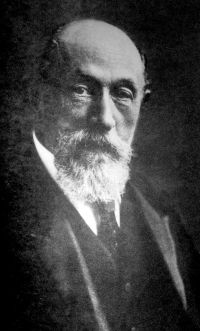 William Lucas Distant,
The Zoologist
(1898)
William Lucas Distant,
The Zoologist
(1898)
“ Here we see natural selection, with its iron and implacable rule, a real factor in the lives and development of these creatures, connected and increasing with an advancing animal evolution, but still only a term to express the modifying influences incidental to a struggle for existence. [33] In fact, natural selection is more an effect than a cause. ”
George John Romanes, The Scientific Evidences of Organic Evolution
“ The theory of evolution by natural selection supposes that hereditary characters admit of being slowly modified wherever their modification will render an organism better suited to a change in its conditions of life. ”
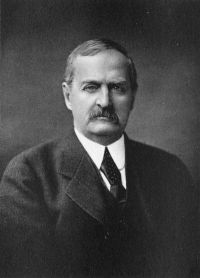 Henry Cadwalader Chapman,
Evolution of Life
(1873)
Henry Cadwalader Chapman,
Evolution of Life
(1873)
“ Let us repeat, then, that whatever may be thought of the causes advanced, as sufficient to bring about a development of life, the theory of Evolution remains the only explanation of the most important generalization of the comparative anatomy of plants and animals, their Paleontology, Embryology, and Geographical Distribution. ”
J. Arthur Thomson, The Outline of Science, Vol. 1…
“ Heritable novelties or variations often crop up in living creatures, and these form the raw material of evolution. These variations are the outcome of expression of changes in the germ-cells that develop into organisms. ”
 Herbert Spencer,
The Principles of Biology — Chapter III.8
(1898)
Herbert Spencer,
The Principles of Biology — Chapter III.8
(1898)
“ Neither this nor any other interpretation of biologic evolution which rests simply on the basis of biologic induction, is an ultimate interpretation. The biologic induction must itself be interpreted. Only when the process of evolution of organisms is affiliated on the process of evolution in general, can it be truly said to be explained. ”
Various, The Catholic World, Vol. 10, October…
“ Can any one conversant with the works of the first of evolutionists, particularly with his First Principles, Principles of Psychology, and Principles of Biology, gainsay the fact that organic evolution implies a tendency in organisms to advance, when under the influence of physical conditions, from the simpler to the more complex? ”
C. Lloyd Morgan,
Animal Life and Intelligence
“ The factors of evolution fall under two heads—origin and guidance. The origin of variations lies in mechanical stresses, and chemical or physical influences. Whether these act on the body (and are transmitted by inheritance) or only on the germ, is a question which divides biologists into two schools. In the latter case all variations are fortuitous; in the former the development of tissue-variations has been in direct response to the physical or chemical influences. ”
 Thomas Henry Huxley,
Science and Culture, and Other Essays
Thomas Henry Huxley,
Science and Culture, and Other Essays
“ And the results of these embryological investigations are in complete harmony with the requirements of the doctrine of evolution. The first beginnings of all the higher forms of animal life are similar, and however diverse their adult conditions, they start from a common foundation. Moreover, the process of development320 of the animal or the plant from its primary egg or germ is a true process of evolution—a progress from almost formless to more or less highly organised matter, in virtue of the properties inherent in that matter. ”
J. Arthur Thomson, Herbert Spencer
“ Stated concretely in regard to living creatures, the general doctrine of organic evolution suggests, as we all know, that the plants and animals now around us—with all their fascinating complexities of structure and function, of life-history, behaviour, and inter-relations—are the natural and necessary results of long processes of growth and change, of elimination and survival, operative throughout practically countless ages ”
The Ohio Naturalist, vol. II, no… (1900)
“ But it is evident that the modern biology is much less concerned in the mere recognition of these innumerable forms of life, these remotest expressions of the force of evolution, than in the gaining of some adequate conception of their relations, the forces of adaptation that have fitted them for their particular niche in the realm of nature, their relation to the other organisms with which they are associated and which constitute for them a source of support or a menace to existence. ”
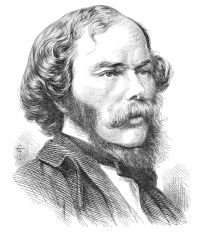 George Henry Lewes,
The Physical Basis of Mind
George Henry Lewes,
The Physical Basis of Mind
“ Darwin tentatively, and his followers boldly, explain the observed resemblances in structure and function as due to blood-relationship. The doctrine of Evolution affirms that all complex organisms are evolved by differentiation from simpler organisms, as we see the complex organ evolved from simpler forms. ”
George Archdall Reid, The present evolution of man — Part 1… (1896)
“ But this tendency of cells to revert to the ancestral unicellular type, to multiply at a rate that is only proportionate to the supply of nutriment and the powers of assimilation, is checked by natural selection, which, by placing at a disadvantage, brings about the ultimate elimination of multicellular organisms, in which the tendency is displayed. ”
Rudolf Schmid, The Theories of Darwin and Their Relation to Philosophy…
“ Moreover, it is well known that long before this no other term than evolution was used to designate the growth of a single organic individual from the primordial cell and egg to its fully developed form and vital function. ”
C. Lloyd Morgan,
Animal Life and Intelligence
“ Modern embryology has completely negatived any such view as that of preformation, and as completely established that the evolution is not the unfolding of a miniature germ, but the growth and differentiation of primitively similar cell-elements. In different animals, as might be expected, the manner and course of development are different. ”
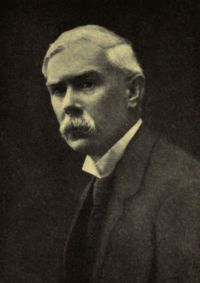 John Arthur Thomson,
The Outline of Science — Part II
John Arthur Thomson,
The Outline of Science — Part II
“ The organism plays its new card in the game of life, and the consequences may determine survival. The relatively less fit to given conditions will tend to be eliminated, while the relatively more fit will tend to survive. If the variations are hereditary and reappear, perhaps increased in amount, generation after generation, and if the process of sifting continue consistently, the result will be the evolution of the species. ”
 A. S. Packard,
Lamarck, the Founder of Evolution…
A. S. Packard,
Lamarck, the Founder of Evolution…
“ Darwin’s phrase ‘natural selection,’ or Herbert Spencer’s term ‘survival of the fittest,’ expresses simply the final result, while the process of the origination of the new forms which have survived, or been selected by nature, is to be explained by the action of the physical environments of the animals coupled with inheritance-force. ”
Herbert Spencer,
The Principles of Biology, Volume 1…
“ The causes of definitely directed evolution are contained, according to my view, in the effects produced by outward circumstances and influences such as climate and nutrition upon the constitution of a given organism. ”
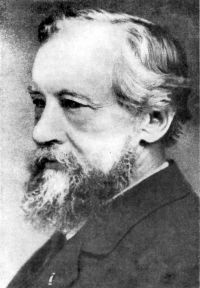 Hugo de Vries,
Species and Varieties, Their Origin by Mutation
Hugo de Vries,
Species and Varieties, Their Origin by Mutation
“ The prevailing belief that slow and gradual, nearly invisible changes constitute the process of evolution in the animal and vegetable kingdom, did not offer a strong stimulus for experimental research. ”
Herbert Spencer,
The Factors of Organic Evolution
“ So that, active as has been the part played by natural selection, alike in modifying and moulding the original 57units—largely as survival of the fittest has been instrumental in furthering and controlling the combination of these units into visible organisms, and eventually into large ones; yet we must ascribe to the direct effect of the medium on the first forms of life, that character of which this everywhere-operative factor has taken advantage. ”
William Lucas Distant,
The Zoologist
(1900)
“ In the summary of views respecting the subject of organic evolution we meet with an advice which we do not remember having seen elsewhere:—"As a preliminary to the study of Darwin's 'Origin of Species,' the student is recommended to read Romanes' 'Evidences of Organic Evolution,' in which the doctrine of Descent is expounded as briefly as is consistent with clearness and accuracy." ”
Charles Gore, St. Paul's Epistle to the Romans…
“ What is the place held in evolution by 'natural selection'? What, if any, the place held by use-inheritance? Is the factor of 'mimicry,' supported by Darwin, an important or even real factor in evolution? What is to be the issue of the controversy between the biologist and the physicist on the question of the time required for organic development? Are we to suppose that organic development at the beginning proceeded very much more rapidly than at a later stage? ”
Various, Popular Science Monthly (1887)
“ The neglect is due partly to the erroneous opinion that not the physiological function, but only its substratum the bodily organ, is capable of evolution. The organ, that much is certain, develops—that is, it passes through a series of transformations before assuming its final form. Any part of every organism will furnish the proof. But what determines the final form during phylogenetic evolution? I answer, Function. With its assertion begins the differentiation of the substratum of primitive beings. It is not the organ from which function derives its origin, but just the reverse. ”
Herbert Spencer,
The Principles of Biology, Volume 2…
(1899)
“ On the hypothesis of Evolution these specializations of tissues and accompanying concentrations of functions, must, like the specializations of shape in an organism and its component divisions, be due to the actions and reactions which its intercourse with the environment involves ”
A. S. Packard,
Lamarck, the Founder of Evolution…
“ Under the head of favorable conditions he enumerates variations in climate, temperature, the action of the environment, the diversity of local causes, change of habits, movement, action, variation in means of living, of preservation of life, of means of defence, and varying modes of reproduction. As the result of the action of these different factors, the faculties of animals, developed and strengthened by use, become diversified by the new habits, so that by slow degrees the new structures and organs thus arising become preserved and transmitted by heredity. ”
Herbert Spencer,
The Principles of Biology, Volume 1…
“ Already it has been necessary to speak of the causes of organic evolution in general terms; and now we are prepared for considering them specifically. The task before us is to affiliate the leading facts of organic evolution, on those same first principles conformed to by evolution at large. ”
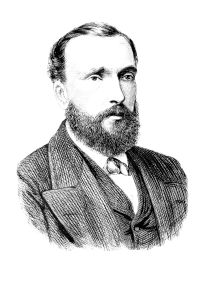 Henry Charlton Bastian,
Popular Science Monthly
(1874)
Henry Charlton Bastian,
Popular Science Monthly
(1874)
“ The embryonic development of one of the higher animals—of man himself, for instance—is a kind of highly-condensed epitome of animal evolution in general. And the varied forms of life of higher organization, both animal and vegetal, which have existed and still exist upon the surface of our earth, are all supposed by the Evolutionist to have arisen by dint of insensible modifications wrought through the long lapse of ages upon successive generations of organic forms. ”
Reginald Crundall Punnett, Mendelism
“ Thenceforward the energies of both {12}botanists and zoologists have been devoted to the construction of hypothetical pedigrees suggesting the various tracks of evolution by which one group of animals or plants may have arisen from another through a long continued process of natural selection. ”
George Ticknor Curtis, Creation or Evolution? A Philosophical Inquiry
“ But how are we to account for the operation of causes that have preserved a parallelism of development, along with the operation of causes that have produced the different modes of development, when all the species are supposed to be derived from a common ancestral stock, which first began to procreate and to develop its descendants in one and the same way? What are the facts which will enable us to say that the mammalian type arose out of the lower vertebrate types, when we compare the different modes of their embryologic development? ”
Related terms
Authors who wrote about “biological evolution”
Herbert SpencerJ. Arthur ThomsonThomas Henry HuxleyGeorge John RomanesJohn Arthur ThomsonC. Lloyd MorganWalter KiddD. Kerfoot Shute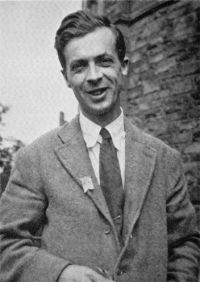 Julian Huxley
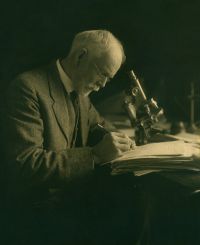 Edmund B. Wilson
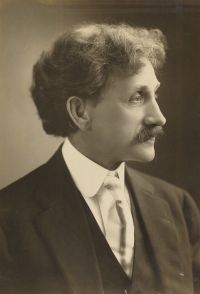 J. Howard Moore
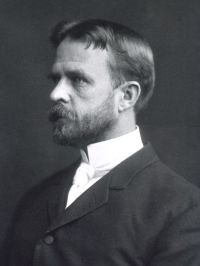 Thomas Hunt MorganWilliam A. LocyRudolf SchmidHenry Charlton BastianVariousWilliam Lucas DistantErnst Haeckel
 Charles DarwinGeorge Ticknor Curtis