Capital and labor

Definition and stakes

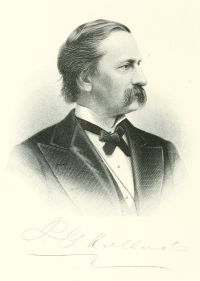
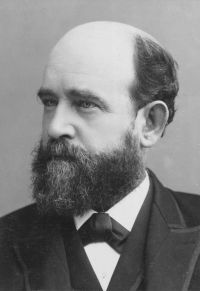
Portrait of Henry George Henry George Progress and Poverty, Volumes I and II

For, upon the assumption that wages are drawn directly from capital, and not from the product of the labor, is based, not only the doctrine that wages depend upon the ratio between capital and labor, but the doctrine that industry is limited by capital—that capital must be accumulated before labor is employed, and labor cannot be employed except as capital is accumulated; the doctrine that every increase of capital gives or is capable of giving additional employment to industry
Source: Gutenberg

Portrait of Henry George Henry George Progress and Poverty, Volumes I and II

The use of capital in production is, therefore, but a mode of labor. As capital can be used only by being consumed, its use is the expenditure of labor, and for the maintenance of capital, its production by labor must be commensurate with its consumption in aid of labor. Hence the principle that, under circumstances which permit free competition, operates to bring wages to a common standard199 and profits to a substantial equality—the principle that men will seek to gratify their desires with the least exertion—operates to establish and maintain this equilibrium between wages and interest.
Source: Gutenberg

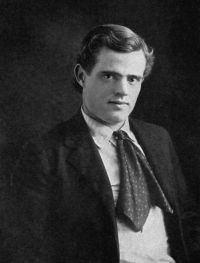
Portrait of Cosmo Hamilton Cosmo Hamilton The Rustle of Silk

Governments now see, what they have never been able to recognize before, that labor does not form the most important section of the three sections of society, the other two being capital and the purchasing power. You have made clear to them, Master Sparrow, that labor and capital are at the mercy of the third element,—the great middle class, the people who buy from capital, pay your wages and who can at any moment, by not buying, reduce both capital and labor to nothingness.
Source: Gutenberg

Get perspective with Kwize: daily news enlightened by great literature