Carving knife

Definition and stakes

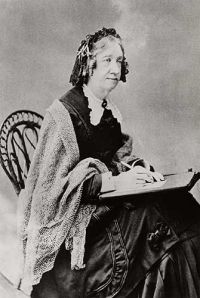
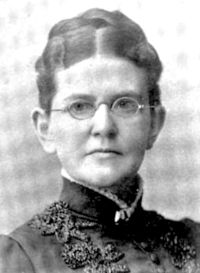
Portrait of Mary J. Lincoln Mary J. Lincoln,  Carving and Serving (1906)

“ It should have a handle easy to grasp, a long, thin, sharp, pointed blade, and be of a size adapted to the article to be carved and to the person using it. A lady or a child will prefer a small knife. Be as particular to have the knife sharp as to have it bright and clean; and always sharpen it before announcing the dinner. It is very annoying for a person to be obliged to wait and sharpen the knife, or to turn the meat round to get it into the right position. Never allow a carving-knife to be used to cut bread, or for any other than its legitimate purpose. ”
Source: Gutenberg

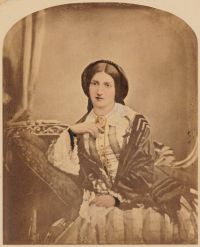
Portrait of Isabella Beeton Isabella Beeton,  Mrs. Beeton's Book of Household Management (1907)

“ When the way to control the knife has been mastered, the keystone to successful carving has been acquired.
The cut should be direct, sharp, and incisive. A saw-like action should never enter into the operation.
Generally speaking, the knife should be held firmly, but it cuts best when applied lightly, and less gravy is squeezed from the meat when the pressure is slight. By using the point of the knife lightly as a wedge, and the fork as a lever, even a big turkey or goose may be easily jointed, provided the carver is aware exactly how the joint is situated and held together.
”
Source: Wikisource

Portrait of Mary J. Lincoln Mary J. Lincoln,  Carving and Serving (1906)

“ Some persons prefer to turn the knife over, drawing it first from the left hand and then toward it, sharpening each surface alternately on the same edge of the steel. This is more difficult to do, as you cannot so surely keep the blade at the same angle,—and this is the most important point. If held at any other than the proper angle, either no edge is made, or it is taken off as soon as obtained. ”
Source: Gutenberg

Get perspective with Kwize: daily news enlightened by great literature