Class (set theory)

Definition and stakes

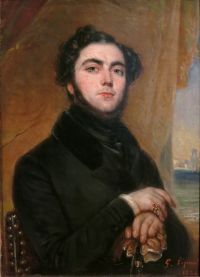
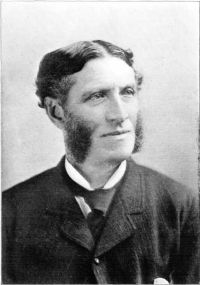
Portrait of John Stuart Mill John Stuart Mill,  A System of Logic, Ratiocinative and Inductive (1881)

“ To these are added, as a sort of appendix, such other species, generally in small number, as possess nearly all the properties selected; wanting some of them one property, some another, and which, while they agree with the rest almost as much as these agree with one another, do not resemble in an equal degree any other group. Our conception of the class continues to be grounded on the characters; and the class might be defined, those things which either possess that set of characters, or resemble the things that do so, more than they resemble any thing else. ”
Source: Wikisource

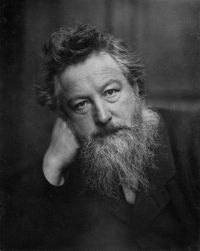
Portrait of William Morris William Morris,  Signs of Change

“ Well, we—sect or party, or group of self-seekers, madmen, and poets, which you will—are at least the only set of people who have been able to see that there is and has been a great class-struggle going on. Further, we can see that this class-struggle cannot come to an end till the classes themselves do: one class must absorb the other. Which, then? Surely the useful one, the one that the world lives by, and on. The business of the people at present is to make it impossible for the useless, non-producing class to live ”
Source: Gutenberg

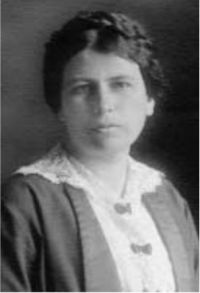
Bartlett Burleigh James,  Women of England

“ One of the most striking of the phenomena of modern life which came about in the nineteenth century is the fusion of classes, making it increasingly difficult to use class definitions. The passage from one to another has become so easy as to make mobility the principal characteristic of modern society. Travel, education, art appreciation, and home decoration are not confined to any section or class. The degree of luxury of living, and not the distinction between luxury and lack, is the only way to set aside one circle of society from another. ”
Source: Gutenberg

Get perspective with Kwize: daily news enlightened by great literature