Coconut palm

Definition and stakes

A. J. Sargent,  The Sea Road to the East, Gibraltar to Wei-hai-wei

“ There is already a larger area under the coconut palm in this form than under tea, and the coconut as a commercial product increases steadily in importance. It is interesting to note that it is the wealthier natives and not the foreign planters who are mainly responsible for the development of this profitable business. In the northern part of the island we find another species of palm 23 tree, the palmyra. This palm is almost as important to the Tamils who inhabit the district as the coconut is to the Sinhalese further south. ”
Source: Gutenberg

A. F. R. Wollaston,  Pygmies & Papuans: The Stone Age To-day in Dutch New Guinea

“ Growing commonly near Wakatimi is another species of palm, which, though it has not the value99 of the coconut palm, is yet more prized by the natives. This is the Sugar palm (Arenga saccharifera) , and from it is made a very potent and intoxicating liquor. When the palm is in fruit—it bears a heavy bunch of dark green fruit—a cut is made in the stem below the stalk of the fruit, and the juice trickles out and is collected in the shell of a coconut. ”
Source: Gutenberg

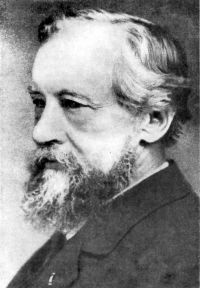
Portrait of Hugo de Vries Hugo de Vries,  Species and Varieties, Their Origin by Mutation

“ Concluding we may state that according to the whole evidence as it has been discussed by De Candolle and especially by Cook, the coconut-palm is of American origin and has been distributed as a cultivated tree by man through the whole of its wide range. This must have happened in a prehistoric era, thus affording time enough for the subsequent development of the fifty and more known varieties. But the possibility that at least some of them have originated before culture and have been deliberately chosen by man for distribution, of course remains unsettled. ”
Source: Gutenberg

Get perspective with Kwize: daily news enlightened by great literature