“ I myself would like to see dressmaking regarded not merely as a learned profession, but as a fine art. To construct a costume that will be at once rational and beautiful requires an accurate knowledge of the principles of proportion, a thorough acquaintance with the laws of health, a subtle sense of colour, and a quick appreciation of the proper use of materials, and the proper qualities of pattern and design. The health of a nation depends very largely on its mode of dress; the artistic feeling of a nation should find expression in its costume quite as much as in its architecture ”
Costume design
Definition and stakes
The theme of “costume design” has been addressed by authors such as Eliza Davis Aria, Emily Burbank, Walter Crane, Florence Mary Gardiner and Wilfred Mark Webb. It is often associated with terms like fashion, clothing, dress, theatre and play.
Quotes about “costume design”
Anna M. Cooley, Clothing and Health: An Elementary Textbook of Home Making
“ Marjorie Allen and the other girls at Pleasant Valley School are very glad Cousin Ann told them too.The costume should be the background as it were. Miss Willing says to remember always that a really artistic costume is one which makes us say "what a lovely girl!" rather than "what a lovely gown she is wearing." A costume should not be so strong in color or design that one thinks only of that. Do you remember how in some rooms we feel the pattern of the wall paper or of the carpet. When one does, the design is poor ”
Mabel W. Daniels, An American Girl in Munich: Impressions of a Music Student
“ Every one who attended was obliged to wear a costume representing some feature pertaining to the woods, and it required no little thought to design something original and effective. Fräulein Hartmann and I had decided to go as flowers, and Mütterchen and the Poet's Wife put their heads together and created a Rose gown and a Violet gown. Frau von Waldfel was so agitated over her own costume that she quite forgot to criticise ours. ”
“ Before the 16th century we find the art of decoration in costume had been confined chiefly to applied ornamental bands at the neck, waist, and borders of skirt and cloak. They had up till this time utilised, with great artistry of design (no doubt partly due to the heraldic study) , the patterns of the finely decorated damasks and velvets. ”
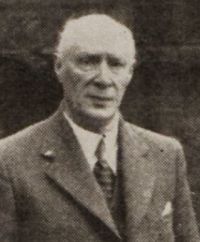 Lewis Spence,
Legends & Romances of Brittany
Lewis Spence,
Legends & Romances of Brittany
“ Several petticoats of pleated cloth, big bibs or plastrons called pièces, of the same shade as their dresses, and a shawl with a fringed border, compose the costume of the women. The aprons of the girls are very plain and devoid of pockets, but the older women’s are rich in texture and design, some of them being of silk and 374 others even of costly brocade. ”
“ If we look for the main stem of principle on which modern Costume develops, we seem to find it in the desire for freshness, for the clean, the uncrushed, and the perfectly fitted and draped. Probably a modern lady's ideal would be to wear a dress once, and then burn it. ”
“ The designing and making of Costume is a craft—sometimes artistic—with which we are all more or less concerned. It is also, in its own way, one of the living arts, that is, it is still carried forward experimentally by experts directly attached to the "business." ”
Manley Hopkins, Once a Week (1863)
“ One observation about milliners and modistes, and our few remarks on modern dress are finished. Why is it that when the tide of taste turns in our favour—when, after many efforts, we at last apprehend simplicity, and rejoice that a female costume rather enhances than detracts from its wearer’s natural beauty—why is it, we ask, that the flood so soon turns, and that next season the charming head-gear and the becoming sleeve have been displaced, and that something different, not so pretty, not so correct, is the only thing to wear? ”
 Edna Ferber,
Emma McChesney and Co
Edna Ferber,
Emma McChesney and Co
“ At present each tries to outdo the other in style and variety of costume. Their shoes are high-heeled, cloth-topped, their blouses lacy and collarless, their hats absurd. We propose a costume which shall be neat, becoming, and appropriate. Not exactly a uniform, perhaps, but something with a fixed idea in cut, color, and style. A corps of twelve young ladies belonging to our best families has been chosen to speak to the shop girls at noon meetings on the subject of good taste, health, and morality in women's dress. ”
“ Finally, as regards drawings of this kind, I would point out that there is absolutely no limit at all to the amount of ‘passably picturesque’ costumes which can be either revived or invented for us; but that unless a costume is founded on principles and exemplified laws, it never can be of any real value to us in the reform of dress. ”

“ Its vogue will be precisely proportioned to the merit the popular taste recognizes in it, just as if it were an invention in mechanics. If a new idea in dress has any merit in it, it is taken up with great promptness, for our people are extremely interested in enhancing personal beauty by costume, and the absence of any arbitrary standards of style such as fashion set for you leaves us on the alert for attractions and novelties in shape and color. It is in variety of effect that our mode of dressing seems indeed to differ most from yours. ”

“ The flickering candles in tin sconces against the walls, or depending in rude chandeliers of barrel-hoops from the ceiling, lit up the most astounding diversity of female costume the master had ever seen. Gowns of bygone fashions, creased and stained with packing and disuse, toilets of forgotten festivity revised with modern additions; garments in and out of season—a fur-trimmed jacket and a tulle skirt, a velvet robe under a pique sacque; fresh young faces beneath faded head-dresses, and mature and buxom charms in virgin' white. ”
“ I mean the principle of suspending all apparel from the shoulders, and of relying for beauty of effect not on the stiff ready-made ornaments of the modern milliner—the bows where there should be no bows, and the flounces where there should be no flounces—but on the exquisite play of light and line that one gets from rich and rippling folds. I am not proposing any antiquarian revival of an ancient costume, but trying merely to point out the right laws of dress, laws which are dictated by art and not by archæology, by science and not by fashion ”
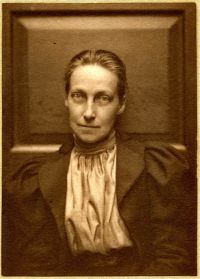 Lucy Maynard Salmon,
Domestic service
(1897)
Lucy Maynard Salmon,
Domestic service
(1897)
“ No costume in itself could be more desirable or better adapted to the work of the wearers, and a more general rather than a more restricted use of this form of dress should be advocated on theoretical grounds. ”
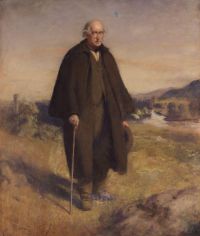 William Poel,
Shakespeare in the Theatre
William Poel,
Shakespeare in the Theatre
“ Needlessly is the attention distracted by these anachronisms which upset the spectator’s equanimity in a play that is pulsating with ever-living human emotion. Then, again, costume is an essential adjunct in drama, as an indication of character. We know at a glance a man’s rank, his wealth, and his taste, by the aid of his clothes, provided always that we are familiar with the period in which the apparel was worn. ”
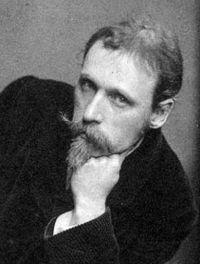 Walter Crane,
Ideals in Art: Papers Theoretical…
Walter Crane,
Ideals in Art: Papers Theoretical…
“ In the various forms of riding-dress, again, we get a certain freedom and variety in costume through adaptation, both in men and women’s dress.What modern costume really lacks is not so much character and picturesqueness, as beauty and romance—a general indictment which might be brought against modern life. We are really ruled by the dead weight of the prosaic, the prudent, the timid, the respectable, over and above the specializing adaptive necessities of utility before mentioned. ”
 Karl Heinzen,
The Rights of Women and the Sexual Relations
(1898)
Karl Heinzen,
The Rights of Women and the Sexual Relations
(1898)
“ Indeed, nobody can tell what is the real dress, there are nothing but dress fragments, piled one upon the other, each successive one shaped and draped more idiotically than the other, and, perhaps, of a different color, so that the ideal costume seems to be the one made up of the most senseless accumulation and mixture of rags and colors imaginable. ”
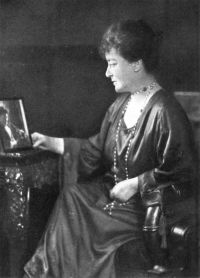 Eliza Davis Aria,
Costume: Fanciful, Historical, and Theatrical
(1906)
Eliza Davis Aria,
Costume: Fanciful, Historical, and Theatrical
(1906)
“ Each tone, gesture, action, falls naturally into a harmony of memory, because the costume was as appropriate as it was picturesquely charming—in fact, it was right, which proves the truth of Sir Henry Irving's doctrine, "You can take it that the right thing on the stage is at once the most effective and the most becoming." A wise doctrine, which may be applied with irrefutable truth to the art of costume on and off the boards—a doctrine which may obtain as guidance through the land of dress in all the centuries, under all circumstances, past and to come. ”
Eliza Davis Aria,
Costume: Fanciful, Historical, and Theatrical
(1906)
“ I regret, from the practical as well as the artistic point of view, the threatened disappearance of local colouring, as emphasised by the characteristic costume of the people, for I am convinced that the adoption of a uniform style of dress by a community greatly furthers the cause of neatness and economy. ”
 Oscar Wilde,
Intentions
(1891)
Oscar Wilde,
Intentions
(1891)
“ But so interwoven are the two that, whenever in our own day historical accuracy has been disregarded, and the various dresses in a play taken from different ages, the result has been that the stage has been turned into that chaos of costume, that caricature of the centuries, the Fancy Dress Ball, to the entire ruin of all dramatic and picturesque effect. For the dresses of one age do not artistically harmonise with the dresses of another: and, as far as dramatic value goes, to confuse the costumes is to confuse the play. ”
Florence Mary Gardiner, The Evolution of Fashion
“ How well each in its way is calculated to serve the purpose for which it is designed, the simple cloth, tweed, or serge costume moulded to the lines of the figure, adapted to our changeful climate, and giving a cachet to the wearer, not always found in much more costly apparel, a rational costume in the best sense of the word, and one which women of all ages may assume with satisfaction to themselves and to those with whom [Pg 11] they come in contact. ”
Eliza Davis Aria,
Costume: Fanciful, Historical, and Theatrical
(1906)
“ I think that designers of theatrical costume as a rule are altogether oblivious of the special requirements of individual faces and figures. To the designer, it seems to me, the actress is merely a note of colour in his general scheme. Only that, and nothing more! I would urge that exactly the same kind of costume cannot possibly be becoming alike to tall, majestic women and a little insignificant nez retroussé person like me! ”
Various, The Atlantic Monthly, Volume 04…
“ Of the absolute beauty of dress form is the most important element, as it is of all arts which appeal to the eye. The lines of costume should, in every part, conform to those of Nature, or be in harmony with them. ”
Sara Ware Bassett, The Story of Porcelain
“ A beautiful style of costume was adopted and retained, and in consequence artists had ever before them men and women who were excellent models for chaste decoration. In our time such a procedure would be impossible, as the national dress of both our men and women has become utilitarian rather than beautiful, and now has little artistic to recommend it. ”
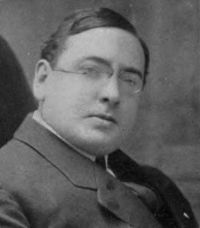 Ned Wayburn,
The Art of Stage Dancing
Ned Wayburn,
The Art of Stage Dancing
“ With the color schemes effectively planned, there follows a further conference between producer and costume designer, in which plot, locale, atmosphere, characters, lyrics, music, and everything else with a bearing on the dance or play in contemplation is fully gone over and considered. The personality of the principals is given attention, and the various possible effects of the ensemble or chorus groupings, evolution and pictures are carefully planned, with regard to lights and color effects. ”
Various, The Atlantic Monthly, Volume 05…
“ I know not why it is that the three ugliest pieces of costume ever invented, the dress-coat, the trousers, and the bonnet, all of which we owe to the French, have been accepted all over Europe, to the exclusion of every national costume. ”
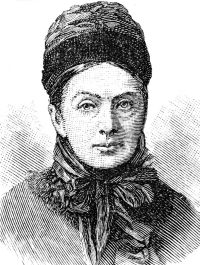 Isabella L. Bird,
Journeys in Persia and Kurdistan…
Isabella L. Bird,
Journeys in Persia and Kurdistan…
“ Though I knew what to expect in the costume of a woman of the upper classes, I was astonished, and should have been scandalised even had women only been present. The costume of ladies has undergone a great change in the last ninety years, and the extreme of the fashion is as lacking in delicacy as it is in comfort. ”
William Barry Lord, The Corset and the Crinoline
“ Until the termination of the fourteenth century very little change appears to have been made either in costume or the treatment of the figure, but at the commencement of the fifteenth century, when such noble families as the Medici, Este, and Visconti established fashions and styles of costume for themselves, each house vied with the other in the splendour of their apparel. The great masters of the period, by painting ideal compositions, also gave a marked tone to the increasing taste for dress. ”
Margaret C. Conkling, The American Gentleman's Guide to Politeness and Fashion
“ Ill, indeed, does it accord with the trim, compact, easily-portable costume of our day, and a miserable imitation, it is of the flowing hair that, in days of yore, fell naturally and gracefully upon the broad lace collar turned down over the velvet or satin short-cloak of the cavaliers and appropriately adorning shoulders upon which, with equal fitness, drooped a long, waving plume, from the wide-brimmed, steeple-crowned, picturesque hat that completed the costume. ”
P. L. Jacob, Manners, Customs, and Dress During the Middle Ages and During the Renaissance Period
“ A fact worthy of remark is, that whilst male attire, through a depravity of taste, had extended to the utmost limit of extravagance, women's dress, on the contrary, owing to a strenuous effort towards a dignified and elegant simplicity, became of such a character that it combined all the most approved fashions of female costume which had been in use in former periods. ”
Mary Wollstonecraft Shelley, History of a Six Weeks' Tour (1817)
“ I heard for the first time the confused buzz of voices speaking a different language from that to which I had been accustomed; and saw a costume very unlike that worn on the opposite side of the channel; the women with high caps and short jackets; the men with earrings; ladies walking about with high bonnets or coiffures lodged on the top of the head, the hair dragged up underneath, without any stray curls to decorate the temples or cheeks. ”
 Thomas Wentworth Higginson,
Carlyle's laugh, and other surprises
(1909)
Thomas Wentworth Higginson,
Carlyle's laugh, and other surprises
(1909)
“ The roads are knee deep in mire, winding through crags and pits, while the wheels groan and totter and the curtain and roof admit the wet at a thousand seams.” We learn the proper costume for a youth of good fortune and family,—“nankeen coat striped with green, a white silk waistcoat elegantly needle-wrought, cassimere pantaloons, stockings of variegated silk, and shoes that in their softness vie with satin.” ”
Eliza Davis Aria,
Costume: Fanciful, Historical, and Theatrical
(1906)
“ An audacious selection is the costume of the Wallflower in gold and brown, which looks its best when made in chiffon and velvet. As a rule, it must be admitted that the finest fancy dress looks the best, and however charming may be the effects arrived at with muslin, cotton, crepe, and calico, she who stands out in the vast crowd will be she who has the most magnificent clothes. ”
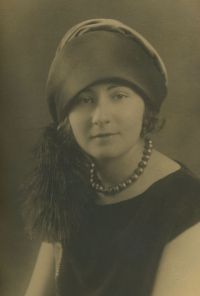 Lillian Eichler,
Book of Etiquette, Volume 2, Part 4…
(1921)
Lillian Eichler,
Book of Etiquette, Volume 2, Part 4…
(1921)
“ How was Fashion created, you ask? To answer thoroughly, we must once more go back to those distant cave-man days when dress itself had its inception. At first one simple costume for both men and women distinguished each tribe. There was nothing different in the way the skins were thrown over the body, no embellishments to render any one costume different from those worn by the others. ”
Giorgio Vasari, Lives of the most Eminent Painters Sculptors and Architects…
“ There, I say, the master of the Company having commanded that every man should present himself dressed in whatever costume he pleased, on condition that those who might resemble one another in their manner of dress by being clothed in the same fashion, should pay a penalty, at the appointed hour there appeared the most beautiful, bizarre, and extravagant costumes that could be imagined. ”
James H. Head, Home Pastimes; or Tableaux Vivants
“ Costume consists of a suit of coarse material, sleeves rolled up to the elbow, leather apron tied about the waist, paper cap on the head, red or gray wig, and shaggy beard. The old lady's costume consists of a cheap calico dress, white ruffled cap, white handkerchief tied about the neck, and spectacles on the nose. The light must come from the right side of the stage, and be of medium brilliancy. ”
Margaret C. Conkling, The American Gentleman's Guide to Politeness and Fashion
“ Still, however, a certain regard must be had to the requirements of good society; and as many of these parties, when they break up, adjourn to the opera, or theatre, where they are pretty sure to meet ladies of their acquaintance, a costume half-way between morning and evening is, by tacit agreement, prescribed; for instance:—a coat of some dark color (generally termed "medley-colored") , cut rounded over the hips; black cap; inner vest, buttoning rather high in the breast; dark-grey trowsers, and black silk neckerchief, or ribbed silk scarf. ”
Related terms
Authors who wrote about “costume design”
Eliza Davis AriaEmily BurbankWalter CraneFlorence Mary GardinerWilfred Mark WebbJames H. HeadMary P. MerrifieldHenry Jones, Oswald Barron, Stanley Cook…Charles Franklin WarnerGiorgio Vasari John RuskinG. Woolliscroft RheadMaud C. CookeEdward Lewes Cutts
 George Somes LayardNed WayburnWilliam Barry LordL. HigginVariousOscar Wilde