Court of law

Definition and stakes

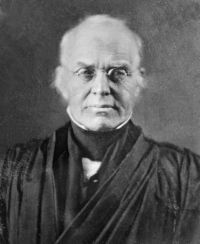
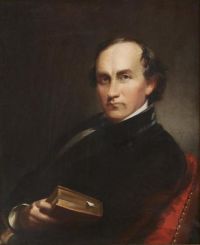
Portrait of Robert Cooper Grier Robert Cooper Grier Peck v. Jenness — Opinion of the Court

It is a doctrine of law too long established to require a citation of authorities, that, where a court has jurisdiction, it has a right to decide every question which occurs in the cause, and whether its decision be correct or otherwise, its judgment, till reversed, is regarded as binding in every other court; and that, where the jurisdiction of a court, and the right of a plaintiff to prosecute his suit in it, have once attached, that right cannot be arrested or taken away by proceedings in another court.
Source: Wikisource

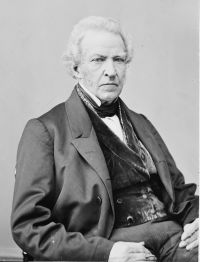
Nathan Clifford Insurance Company v. Bailey — Opinion of the Court

That whenever a court of law in such a case is competent to take cognizance of a right and has power to proceed to a judgment which affords a plain, adequate, and complete remedy, without the aid of a court of equity, the plaintiff must in general proceed at law, because the defendant, under such circumstances, has a right to a trial by jury.
Source: Wikisource

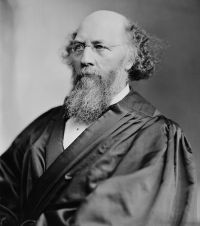
by John Marshall Harlan Robinson v. Fair — Opinion of the Court

Higley to be the almost uniform rule, among the people who make the common law of England the basis of their jurisprudence, to have a distinct tribunal for the establishment of wills, and the administration of the estates of men dying either with or without wills, which tribunals are variously called 'prerogative courts,' 'probate courts,' 'surrogate courts,' 'orphans' courts,' etc.
Source: Wikisource

Get perspective with Kwize: daily news enlightened by great literature