Differential calculus

Definition and stakes

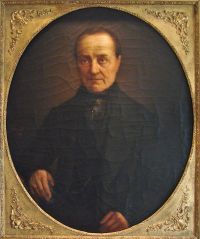
Portrait of Auguste Comte Auguste Comte,  The philosophy of mathematics

“ It would be a real error, though a common one, to assign to the differential calculus, in order to explain its peculiar, direct, and necessary influence, the destination of forming the differential equations, from which the integral calculus then enables us to arrive at the finite equations; for the primitive formation of differential equations is not and cannot be, properly speaking, the object of any calculus, since, on the contrary, it forms by its nature the indispensable starting point of any calculus whatever. ”
Source: Gutenberg

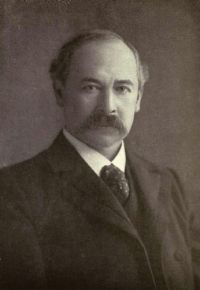
1911 Encyclopædia Britannica, Volume 14… (1911)

“ The theorem of the total differential is immediately applicable to the differentiation of implicit functions. When y is a function of x which is given by an equation of the form ƒ (x, y) = 0, and it is either impossible or inconvenient to solve this equation so as to express y as an explicit function of x, the differential coefficient dy/dx can be formed without solving the equation. We have at once
This rule was known, in all essentials, to Fermat and de Sluse before the invention of the algorithm, of the differential calculus.
”
Source: Wikisource

Portrait of Auguste Comte Auguste Comte,  The philosophy of mathematics

“ This question is now resolved in the most complete and the most simple manner, as are all those of which the differential calculus is composed. It is easy to conceive the general importance which it must have in any of the applications of the transcendental analysis, the fundamental resources of which it may be considered as augmenting, by permitting us to choose (in order to form the differential equations, in the first place, with more ease) that system of independent variables which may appear to be the most advantageous, although it is not to be finally retained. ”
Source: Gutenberg

Get perspective with Kwize: daily news enlightened by great literature