Dioecy

Definition and stakes

Cyril Bailey,  The Religion of Ancient Rome

“ Theology.—The characteristic appellation of a divine spirit in the oldest stratum of the Roman religion is not deus, a god, but rather numen, a power: he becomes deus when he obtains a name, and so is on the way to acquiring a definite personality, but in origin he is simply the 'spirit' of the 'animistic' period, and retains something of the spirit's characteristics. ”
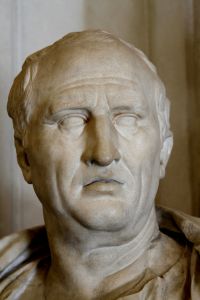
Source: Gutenberg

Portrait of Marcus Tullius Cicero Marcus Tullius Cicero,  Cicero's Tusculan Disputations (1888)

“ But, rejecting these fables with contempt, a Deity is diffused in every part of nature; in earth under the name of Ceres, in the sea under the name of Neptune, in other parts under other names. Yet whatever they are, and whatever characters and dispositions they have, and what ever name custom has given them, we are bound to worship and adore them. The best, the chastest, the most sacred and pious worship of the Gods is to reverence them always with a pure, perfect, and unpolluted mind and voice; for our ancestors, as well as the philosophers, have separated superstition from religion. ”
Source: Wikisource

Pseudo-Dionysius the Areopagite,  Dionysius the Areopagite, Works… (1897)

“ Wherefore also, whilst celebrated as Unit and Triad, the Deity above all is neither Unit nor Triad, as understood by us or by any other sort of being, but, in order that we may celebrate truly. Its super-oneness, and Divine generation, by the threefold and single name of God, we name the Deity, Which is inexpressible to things that be, the Superessential. ”
Source: Wikisource

Get perspective with Kwize: daily news enlightened by great literature