“ In broad outline it may be said that economic evolution has exhibited four progressive phases; the Asiatic economy, the classical economy, the feudalist economy, and the modern bourgeois or capitalist economy. ”
Economic evolution
Definition and stakes
The theme of “economic evolution” has been addressed by authors such as Achille Loria, William Cunningham, Karl Marx, Guy Debord and Frank W. Blackmar. It is often associated with terms like industry, labor, capital, production and economics.
Quotes about “economic evolution”
 Henry Osborn Taylor,
The Mediaeval Mind
(1911)
Henry Osborn Taylor,
The Mediaeval Mind
(1911)
“ Everywhere the population increased; old cities grew apace, and a multitude of new ones came into existence. Economic evolution progressed, advancing with the affranchisement of industry, the organization of guilds, the growth of trade, the opening of new markets, fairs, and freer avenues of commerce: thus more wealth was diffused among the many. ”
William Cunningham, The Cambridge Modern History, Volume 1… (1902)
“ Commercial intercourse has increased enormously; the age of invention has brought about a veritable revolution in the processes of manufacture; and agriculture has been indirectly, but deeply, affected by these influences. Despite the growth, however, in the volume of trade, in the mass of wealth, and in the numbers of the population, similar principles of economic policy and commercial enterprise have been in vogue all this time. ”
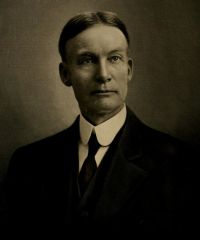 Frank W. Blackmar,
History of Human Society
Frank W. Blackmar,
History of Human Society
“ CHAPTER XXXII THE TREND OF CIVILIZATION IN THE UNITED STATES The Economic Outlook.—The natural resources of forest, mines, and agriculture are gradually being depleted. The rapidity of movement in the economic world, the creation of wealth by vast machinery, and the organization of labor and industry are drawing more and more from the wealth stored by nature in her treasure-houses. ”
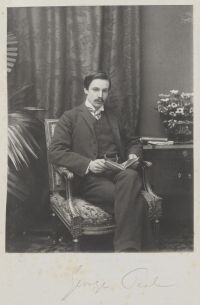 Arthur George Villiers Peel,
The Future of England
(1912)
Arthur George Villiers Peel,
The Future of England
(1912)
“ But demand tends to fluctuate not only thus in detail, but, what is far more important, as a whole and bodily. Ever since the closing years of the eighteenth century, economists have noticed that our trade regularly oscillates in periodic cycles of good and bad times, these being usually reckoned at ten or eleven years. The tide of activity, then, pulses by a general ebb and flow, which dominates the whole economic life of the nation, and enables the history of its collective business to be mapped out into eras of progress and stagnation. ”
Austin Lewis, Proletarian and Petit-Bourgeois (1912)
“ Is it not time to turn from the perspective of history to the realities of the present day economic organizations? Here, in the twentieth century, civilization of the Western World is an economic system which automatically turns into the coffers of those who control the natural resources (forests, ore, coal, fertile land) an endless stream of wealth. ”
Guy Debord, The Society of the Spectacle — Chapter 2… (1967)
“ The entire economy then became what the commodity had already shown itself to be in the course of this conquest: a process of quantitative development. This constant expansion of economic power in the form of commodities transformed human labor itself into a commodity, into wage labor, and ultimately produced a level of abundance sufficient to solve the initial problem of survival — but only in such a way that the same problem is continually being regenerated at a higher level. ”
 William Graham Sumner,
Earth-Hunger and Other Essays
(1913)
William Graham Sumner,
Earth-Hunger and Other Essays
(1913)
“ Our courts of justice, our financial institutions, our methods of trade, and our schools of all grades are examples of social harmonies which found their form by long conflict, and settled down to smooth action by custom. The financial institutions and the methods of trade belong to the economic system. The system of production is modern and new. ”
William Cunningham, The Cambridge Modern History, Volume 1… (1902)
“ Capital offered facilities for the planting of new industries, the development of trade, and the opening up of mines and other natural advantages; so that the means lay at hand for promoting material progress of every kind. Hence new questions of economic policy came to the front. The efforts of traders were no longer confined to retaining exclusive commercial rights; but they began to consider how the various resources within a given area might be developed, so that by the interaction of different interests the greatest material prosperity might be attained in the community as a whole. ”
 Rosa Luxemburg,
The Accumulation of Capital
Rosa Luxemburg,
The Accumulation of Capital
“ They are pre-eminently qualified to stimulate a brisk traffic in goods under conditions hitherto determined by natural economy and both are significant in economic history as mile-stones along the route of rapid dissolution of old economic organisations, of social crises and of the development of modern conditions, that is to say of the development of commodity economy to begin with, and further of the production of capital. ”
 Scott Nearing,
The Next Step: A Plan for Economic World Federation
Scott Nearing,
The Next Step: A Plan for Economic World Federation
“ Farms depend on railroads, railroads on mines, mines on factories, factories on farms, and so on.This extreme specialization of the economic system is the product of the past two hundred years, the outcome primarily of the industrial revolution. The experience of society with these specialized economic forms does not, therefore, extend over more than five or six generations. This experience is sufficient, however, to indicate, that there are three general lines along which economic organization may develop ”
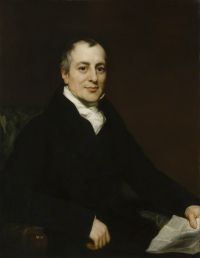 David Ricardo,
On The Principles of Political Economy…
David Ricardo,
On The Principles of Political Economy…
“ The natural price of all commodities excepting raw produce and labour has a tendency to fall, in the progress of wealth and population; for though, on one hand, they are enhanced in real value, from the rise in the natural price of the raw material of which they are made, this is more than counterbalanced92 by the improvements in machinery, by the better division and distribution of labour, and by the increasing skill, both in science and art, of the producers. ”
 Thorstein Veblen,
The Place of Science in Modern Civilisation…
Thorstein Veblen,
The Place of Science in Modern Civilisation…
“ From what has been said it appears that an evolutionary economics must be the theory of a process of cultural growth as determined by the economic interest, a theory of a cumulative sequence of economic institutions stated in terms of the process itself. ”
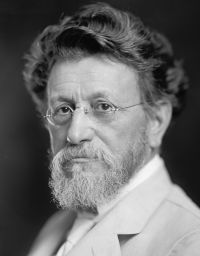 Louis F. Post,
The basic facts of economics
(1927)
Louis F. Post,
The basic facts of economics
(1927)
“ From the natural desire of individual man for production from and upon Natural Resources, social Trade develops, not arbitrarily but as a natural consequence of a related natural cause. Let thoughtless students and professors of Economics who deny natural Economic law—the normal conditions of cause and effect that govern cooperative mankind in making a living—explain Economic phenomena, if they can, without reference to Economic cause and effect, or Economic cause and effect with natural Economic law left out. ”
Viscount James Bryce Bryce, South America: Observations and Impressions
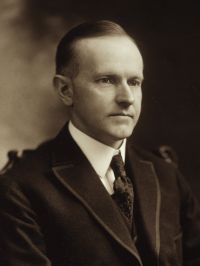
“ The recent economic development of some few of these countries, and especially the extension of their agriculture and their mining, have naturally tended to give a practical turn to thought and action, fixing men's minds on business, on the public improvements which wealth makes possible, and on the enjoyments to which it invites. ”
 Calvin Coolidge,
Fifth State of the Union Address
(1927)
Calvin Coolidge,
Fifth State of the Union Address
(1927)
“ The old-fashioned haphazard system is being abandoned, economics are being applied to ascertain the best adapted unit of land, diversification is being promoted, and scientific methods are being used in production, and business principles in marketing. ”
 John Bates Clark,
Essentials of Economic Theory
John Bates Clark,
Essentials of Economic Theory
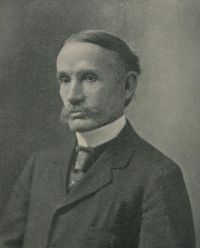
“ Capital is increasing faster than labor, and consumption is growing relatively more luxurious; dwellings, furnishings, equipage, clothing, and food are improving in quality more than they are increasing in quantity. Goods of high cost are predominating more and more, and the subgroups that produce them are getting larger shares of both labor and capital. Population drifts locally toward centers of manufacturing and commerce. ”
 John Stuart Mill,
Principles of Political Economy
John Stuart Mill,
Principles of Political Economy
“ Continuing the inquiry into the nature of the economical changes taking place in a society which is in a state of industrial progress, we shall next consider what is the effect of that progress on the distribution of the produce among the various classes who share in it. We may confine our attention to the system of distribution which is the most complex, and which virtually includes all others—that in which the produce of manufactures is shared between two classes, laborers and capitalists, and the produce of agriculture among three, laborers, capitalists, and landlords. ”
Scott Nearing,
Civilization and Beyond: Learning from History
(1975)
“ Trade, finance and commerce, by producing a regular flow of abundant income, brought into existence a new field of occupations and a new class--business and the businessmen. Herdsmen and farmers depended for their livelihood on nature, her niggardliness or generosity. The businessmen required only the presence of a group large enough to purchase goods and services, pay rent and interest, work for wages and leave the profits to the enterpriser. Each profit beyond the subsistence level enabled the businessmen to expand, buying more goods, hiring more labor, making still greater profits. ”
John Stuart Mill,
Principles of Political Economy
(1871)
“ Has the progress of wealth and industry no effect in regard to cost of production, but to diminish it? Are no causes of an opposite character brought into operation by the same progress, sufficient in some cases not only to neutralize, but to overcome the former, and convert the descending movement of cost of production into an ascending movement? ”
John Bates Clark,
Essentials of Economic Theory
“ Effects experienced within Economic Society from Interchanges with the Environing Area.—The introduction of improved methods of production within the central area usually calls for an expenditure of capital there, and this is largely furnished from the net profits from previous economies in production, and will, in its turn, furnish net profits that will convert themselves into the capital needed for applying future inventions. ”
 Wilhelm Roscher,
Principles of Political Economy…
Wilhelm Roscher,
Principles of Political Economy…
“ The higher civilization advances, the dearer all those commodities in the production of which the factor nature with [pg 390] value in exchange predominates are apt to become; and the cheaper, on the other hand, all those in which labor and capital play the principal productive part.790 This is accounted for, not only by the almost unlimited capacity of labor and capital to be increased, while the natural forces which have value in exchange are susceptible of increase to so small an extent ”
Guy Debord, The Society of the Spectacle — Chapter 2… (1967)
“ Economic growth has liberated societies from the natural pressures that forced them into an immediate struggle for survival; but they have not yet been liberated from their liberator. The commodity’s independence has spread to the entire economy it now dominates. This economy has transformed the world, but it has merely transformed it into a world dominated by the economy. ”
John Stuart Mill,
Principles of Political Economy
(1871)
“ In manufactures, accordingly, the causes tending to increase the productiveness of industry, preponderate greatly over the one cause which tends to diminish it: and the increase of production, called forth by the progress of society, takes place, not at an increasing, but at a continually diminishing proportional cost. ”
Scott Nearing,
Civilization and Beyond: Learning from History
“ The advent of trade (business) and the trading class created a small but potentially powerful class whose income and wealth were not derived from direct contact with nature but came from trade, money changing, lending, insuring and other activities associated with the accumulation and investment of wealth in profit-yielding enterprises. Only in a secondary sense did business depend on animal husbandry or agriculture. ”
 Henry Charles Carey,
The Slave Trade, Domestic and Foreign
Henry Charles Carey,
The Slave Trade, Domestic and Foreign
“ Diversification of employments, resulting from combination of action, thus enables men to economize labour and to increase production. Increased production, on the other hand, makes a demand for labour. ”
J. Currie Elles, The influence of commerce on civilization
“ Old-established laws and customs, in every known branch of trade and profession, give way to new: old sources of supply become dried up, and in turn have become sources of demand. Staple articles of trade and commerce lose ground and become supplanted by others whose existence hitherto had barely maintained a place in economy, from their very uselessness for any known purpose. Science having investigated the various capabilities of the products of the earth, one class is kept in check by the resources of the other. ”
Louis F. Post,
The basic facts of economics
(1927)
“ Springing out of a manifestation of natural law which is rightly distinguished in Economics as “division of labor,” and thus inspiring and facilitating specialization in the Production of Wealth, Trade is a natural phenomenon. Within manifest limits and without extra exertion two producers can produce more than twice as much as one, four more than twice as much as two, and so on, subject only to the limitations of Natural Resources. By exchanging products they therefore naturally multiply their productive powers. ”
Charles Morris, A New History of the United States
“ Its triumphs have not been confined to manufacture and agriculture; it has been as active in commerce, and now stands first in the bulk of its exports and imports. In every other direction of industry it has been as active, as in fisheries, in forestry, in great works of engineering, in vast mining operations; and from the seas, the earth, the mountain sides, our laborers are wresting annually from nature a stupendous return in wealth. ”
Scott Nearing,
Civilization and Beyond: Learning from History
“ Each civilization has had a background of simple use economy—food gathering, animal husbandry, agriculture—in which most of the people produced what they needed and consumed what they produced. Such an economy employs money rarely. ”
Joseph Shield Nicholson, 1911 Encyclopædia Britannica (1911)
“ It will now be evident on what a number of variable elements relative values must depend, even when we consider that the commodities can be indefinitely increased by the proper expenditure of capital and employment of labour. the progress of invention and the development of industrial competition, constant changes are taking place in the various elements, and in the somewhat complicated formula given certain practical elements have been eliminated. ”
John Stuart Mill,
Principles of Political Economy
(1871)
“ The labourer may obtain greater comforts; wages in kind real wages may rise. Or the progress of population may force down cultivation to inferior soils, and more costly processes; thus raising the cost of production, the value, and the price, of the chief articles of the labourer's consumption. On either of these suppositions, the rate of profit will fall. ”
 Edward Potts Cheyney,
An Introduction to the Industrial and Social History of England
Edward Potts Cheyney,
An Introduction to the Industrial and Social History of England
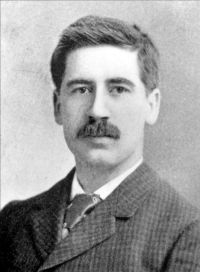
“ Saving up and borrowing were both more practicable. More capital was now in existence and more persons could obtain the use of it. As a result, manufacturing, trade, and even agriculture could now be conducted on a more extensive scale, changes could be introduced, and production was apt to be profitable, as prices were increasing and returns would be greater even than those calculated upon. ”
William Arthur Shaw, The History of Currency, 1252 to 1896
“ But the process of development which alone made it possible—the development of modern banking, the invention of paper currency media, the breaking down of international trade restrictions, all the mechanical and scientific inventions which have resulted in the binding of the world together in one whole as far as commerce is concerned,—all this would comprise in brief the essential features of the complete commercial development of two centuries or more, and how far they are related as cause or effect it would be hard to say. ”
John Stuart Mill,
Principles of Political Economy
(1871)
“ We have surveyed the field of economical facts, and have examined how they stand related to one another as causes and effects; what circumstances determine the amount of production, of employment for labour, of capital and population; what laws regulate rent, profits, and wages; under what conditions and in what proportions commodities are interchanged between individuals and between countries. We have thus obtained a collective view of the economical phenomena of society, considered as existing simultaneously. ”
John Stuart Mill,
Principles of Political Economy
“ It follows that the exchange values of manufactured articles, [pg 483] compared with the products of agriculture and of mines, have, as population and industry advance, a certain and decided tendency to fall. Money being a product of mines, it may also be laid down as a rule that manufactured articles tend, as society advances, to fall in money price. The industrial history of modern nations, especially during the last hundred years, fully bears out this assertion. ”
Related terms
Authors who wrote about “economic evolution”
 Achille LoriaWilliam Cunningham
 Karl MarxGuy DebordFrank W. BlackmarArthur George Villiers PeelAustin LewisWilliam Graham SumnerHenry Osborn TaylorRosa LuxemburgScott NearingLouis F. PostThorstein VeblenViscount James Bryce BryceJohn Bates ClarkCharles MorrisUnited Nations World Commission on Environment and Development