
“ In the Third figure, since we get by right no universal conclusions at all, but only particular conclusions, the conclusion of the Enthymeme, though it may happen to be true, is open to refutation. Where by the laws of Syllogism no affirmative conclusion whatever is possible, as in the Second figure, the conclusion obtained by Enthymeme is altogether suspicious. In contrast with the Sign in these figures, that which enters as an effective middle term into the First figure, should be distinguished under the name of Proof (τεκμήριον.) 78 ”
Enthymeme
Definition and stakes
The theme of “enthymeme” has been addressed by authors such as Aristotle, Carveth Read, George Grote, Epictetus and Donald Lemen Clark. It is often associated with terms like Endymion, syllogism, love, ether and death.
Quotes about “enthymeme”
“ And as the enthymeme is, we may say, the syllogism dealing with such things, maxims are the premises or conclusions of enthymemes without the syllogism. For example:“No man who is sensible ought to have his children taught to be excessively clever,” is a maxim; but when the why and the wherefore are added, the whole makes an enthymeme ”
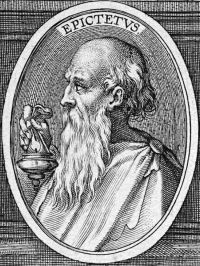 Epictetus,
 the Discourses as reported by Arrian…
(1925)
Epictetus,
Epictetus, the Discourses as reported by Arrian…
(1925)
“ And no man is better fitted to employ such variations skilfully than the philosopher. For if, indeed, the enthymeme is an incomplete syllogism, it is clear that he who has been exercised in the perfect syllogism would be no less competent to deal with the imperfect also. ”
Donald Lemen Clark, Rhetoric and Poetry in the Renaissance
“ So the subject of poetry is the feigned fable and the fabulous, and its means or instrument is the example. [347] This has its ultimate source in the Rhetoric of Aristotle, who made the following distinction between logic and rhetoric: Logic aims at demonstration by the syllogism and by induction; rhetoric aims at persuasion by the enthymeme and the example. The enthymeme is a rhetorical syllogism, usually with the conclusion or either premise unexpressed. Moreover the premises of an enthymeme are likely to rest on opinion rather than on axioms. ”
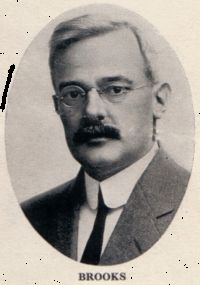 Stratton D. Brooks,
Composition-Rhetoric
Stratton D. Brooks,
Composition-Rhetoric
“ The Enthymeme.+—We seldom need to state our argument in the syllogistic form. One of the premises is usually omitted, and we pass directly from one premise to the conclusion. If we say, "Henry will not succeed as an engineer," and when asked why he will not, we reply, "Because he is not good in mathematics," we have omitted the premise, "A knowledge of mathematics is necessary for success in engineering." A shortened syllogism, that is, a syllogism with one premise omitted, is called an enthymeme. ”
 Aristotle,
Organon
(1853)
Aristotle,
Organon
(1853)
“ Now an Enthymeme is a syllogism from likelihoods or signs, but a sign is assumed triply in as many ways as the middle in the figures, for it is either as in the first, or as in the middle, or as in the third, as to show that a woman is pregnant because she has milk is from the first figure, for the middle is to have milk. Let A, be to be pregnant, B to have milk, C a woman. But that wise men are worthy, for Pittacus is a worthy man, is through the last figure, let A be worthy, B wise men, C Pittacus. ”
Carveth Read, Logic: Deductive and Inductive
“ An Epicheirema, then, is an abbreviated chain of reasoning, or Polysyllogism, comprising an Episyllogism with one or two enthymematic Prosyllogisms. The major premise in the above case, All men are mortal, for they are animals, is an Enthymeme of the First Order, suppressing its own major premise, and may be restored thus:All animals are mortal ”
Carveth Read, Logic: Deductive and Inductive
“ It is certainly very common to meet with arguments whose statement may be represented by one or other of these three forms; indeed, the Enthymeme is the natural substitute for a full syllogism in oratory: whence the transition from Aristotle's to the modern meaning of the term. The most unschooled of men readily apprehend its force; and a student of Logic can easily supply the proposition that may be wanted in any case to complete a syllogism, and thereby test the argument's formal validity. ”
 William Pittenger,
Extempore Speech: How to Acquire and Practice It
William Pittenger,
Extempore Speech: How to Acquire and Practice It
“ Something must be taken for granted in all kinds of argument, and the wider the domain of such assumptions can be fairly made the better for the interest and effectiveness of the arguments which follow.A syllogism in which one of the essential parts is left to be supplied in the mind is called an enthymeme, and is the most common of all forms of reasoning. Whenever we state a fact, and adduce a reason for that fact, it takes this form. As an instance, we may give the beatitudes in the fifth chapter of St. ”
St. George William Joseph Stock, Deductive Logic
“ An epicheirema is said to be of the first or second order according as the major or minor premiss is thus supported. The double epicheirema is a combination of the two orders.§ 805. An epicheirema, it will be seen, consists of one syllogism fully expressed together with one, or, it may be, two enthymemes (§ 557) . In the above instance, if the reasoning which supports the premisses were set forth at full length, we should have, in place of the enthymemes, the two following pro-syllogisms— (i) All E is A. All B is E. .'. All B is A. Whatever promotes the general welfare is praiseworthy. ”
 Arnobius,
Ante-Nicene Fathers Vol. VI, Adversus Gentes…
(1885)
Arnobius,
Ante-Nicene Fathers Vol. VI, Adversus Gentes…
(1885)
“ Do enthymemes, syllogisms, and other such things, assure us that these men know what is true? or are they therefore such that credence should necessarily be given to them with regard to very obscure subjects? A comparison of persons must be decided, not by vigour of eloquence, but by the excellence of the works which they have done. ”
Jean Lang, A Book of Myths (1915)
“ The days of Endymion were filled by longing day-dreams. His sleeping hours ever brought him ecstasy. Ever, too, to the goddess, the human being that she loved seemed to her to grow more precious. For her all the joy of day and of night was concentrated in the moments she spent by the side of the sleeping Endymion. The flocks of the shepherd flourished like those of no other herd. No wild beast dared come near them; no storm nor disease assailed them. Yet for Endymion the things of earth no longer held any value. ”
 John Keats,
Endymion
(1818)
John Keats,
Endymion
(1818)
“ Woe! Woe to that Endymion! Where is he?—-Even these words went echoing dismallyThrough the wide forest—-a most fearful tone,Like one repenting in his latest moan;And while it died away a shade pass’d by,As of a thunder cloud. When arrows flyThrough the thick branches, poor ring-doves sleek forthTheir timid necks and tremble; so these bothLeant to each other trembling, and sat soWaiting for some destruction—-when lo,Foot-feather’d Mercury appear’d sublimeBeyond the tall tree tops; and in less timeThan shoots the slanted hail-storm, down he droptTowards the ground ”
John Keats,
Endymion: A Poetic Romance
“ Endymion was calm'd to life again. Opening his eyelids with a healthier brain, He said: "I feel this thine endearing love All through my bosom: thou art as a dove Trembling its closed eyes and sleeked wings About me; and the pearliest dew not brings Such morning incense from the fields of May,470 As do those brighter drops that twinkling stray From those kind eyes,–the very home and haunt Of sisterly affection. Can I want Aught else, aught nearer heaven, than such tears? ”
Oliver Wendell Holmes, A Mortal Antipathy
“ Don't be frightened about me, Euthymia. I don't mean to give him a chance to work me into his paper, if I can help it. But if you can get him to try his skill upon this interesting personage and his antipathy, so much the better. I am very curious about it, and therefore about him. I want to know what has produced this strange state of feeling in a young man who ought to have all the common instincts of a social being. ”
 John Lyly,
Endymion, The Man in the Moon
(1591)
John Lyly,
Endymion, The Man in the Moon
(1591)
“ GYPTES: With Pythagoras, that it is enchantment, and that so strange that no art can undo it, for that heaviness argueth a malice unremovable in the enchantress, and that no power can end it until she die that did it, or the heavens show some means more than miraculous.FLOSCULA: O Endymion, could spite itself devise a mischief so monstrous as to make thee dead with life, and living being altogether dead? Where others number their years, their hours, their minutes, and step to age by stairs, thou only hast thy years and times in a cluster, being old before thou rememberest thou wast young. ”
John Keats,
The complete poetical works and letters of John Keats…
(1899)
“ A scowl is sometimes on his brow, but who Look full upon it feel anon the blue Of his fair eyes run liquid through their souls. Endymion feels it, and no more controls The burning prayer within him; so, bent low, He had begun a plaining of his woe. But Venus, bending forward, said: “My child, Favour this gentle youth; his days are wild With love—-he—-but alas! too well I see Thou know’st the deepness of his misery. ”
Various, The New Gresham Encyclopedia. Ebert to Estremadura
“ Endym ́ion, in Greek mythology, a huntsman, a shepherd, or a king of Elis, who is said to have asked of Zeus, or to have received as a punishment, eternal sleep. Others relate that Selēnē or Diana (the moon) conveyed him to Mount Latmos in Caria, and threw him into a perpetual sleep in order that she might enjoy his society whenever she pleased. Endymion is also supposed to be a personification of the sun, or of [236] the plunge of the setting sun into the sea.—Cf. Keats, Endymion.Energy, Physical, is the capacity which a body or system of bodies has for doing work. ”
P. Austin Nuttall, The Nuttall Encyclopædia
“ The liquid of lesser density passes more rapidly through the dividing tissue, and raises the level of the liquid in the other vessel, this action is named endosmose; while the flowing of the liquid of greater density into the vessel whose level is falling, is called exosmose.Endymion, a beautiful shepherd, son of Zeus, whom Selene (q. v.) carried off to Mount Lemnos, in Caria, where, as she kissed him, he sank into eternal sleep. This is one version of the story.Eneid, an epic poem of Virgil, the hero of which is Æneas of Troy. ”
 Sidney Colvin,
Life of John Keats: His Life and Poetry…
Sidney Colvin,
Life of John Keats: His Life and Poetry…
“ He had read no Plato, though he was of course familiar enough with Spenser’s mellifluous dilution of Platonic and neo-Platonic doctrine in his four Hymns. In Endymion, as in the speculative passages of the letters we have quoted, his mind has to go adventuring for itself among those ancient, for him almost uncharted, mysteries of Love and Beauty. He does not as yet conceive himself capable of anything more than steppings, to repeat his own sober phrase, of the imagination towards truth. ”
 Arthur Stanwood Pier,
Endymion Uncut
(1909)
Arthur Stanwood Pier,
Endymion Uncut
(1909)
“ She had learned that long ago. So she drew up a chair and watched him while he slipped the string over the corners of the package. Paper followed string to the floor; a thin, flat book was revealed, with a paper label on the back."Endymion!" cried Mr. Averill. "The first edition, Mary! And look inside it, will you? Now, won't old Max turn green with envy!"She took the book and opened it. "Why, the leaves aren't cut!" she said."Exactly! It's a treasure—perhaps the only one of its kind in existence.""But I've heard Max speak of his first edition of Endymion as uncut." ”
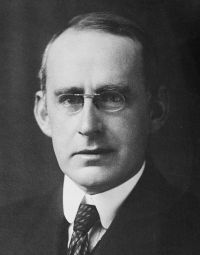 Sir Arthur Stanley Eddington,
The nature of the physical world
(1928)
Sir Arthur Stanley Eddington,
The nature of the physical world
(1928)
“ But in the parallelism between entropy-gradient and “becoming” the subjective and objective seem to have got on to the wrong sides. Surely “becoming” is a reality—or the nearest we can get to a description of [Pg 95] reality. We are convinced that a dynamic character must be attributed to the external world; making all allowance for mental imagery, I do not see how the essence of “becoming” can be much different from what it appears to us to be. On the other side we have entropy which is frankly of a much more subjective nature than most of the ordinary physical qualities. ”
Earl of Beaconsfield Benjamin Disraeli, Endymion
“ That seems unreasonable; but mankind, fortunately, are not always governed by reason, but by sentiment, and often by very tender sentiment. When Endymion, sitting in his little room, analysed his feelings, he came to the conclusion that his sadness was occasioned by his having to part from Imogene. It often requires an event in life, and an unexpected one, to make us clearly aware of the existence of feelings which have long influenced us. ”
John Keats,
Endymion: A Poetic Romance
“ Has wept for thee, calling to Jove aloud.610 Thee, gentle lady, did he disenthral: Ye shall for ever live and love, for all Thy tears are flowing.– Endymion heard not: down his steed him bore, Prone to the green head of a misty hill. His first touch of the earth went nigh to kill. "Alas!" said he, "were I but always borne Through dangerous winds, had but my footsteps worn A path in hell, for ever would I bless621 Horrors which nourish an uneasiness For my own sullen conquering: to him Who lives beyond earth's boundary, grief is dim, Sorrow is but a shadow: now I see The grass ”
Arthur Stanwood Pier,
Endymion Uncut
(1909)
“ So we sat down; and pretty soon he heaved a sigh and pulled a book out of his pocket. 'I will read you Endymion.' he said, and he read the first line—‘"A thing of beauty is a joy forever."’ Then he stopped and looked at me—one of those languishing looks.""I can imagine.""It got on my nerves at last, so I told him to continue with his reading. But without moving his eyes he repeated: ‘"A thing of beauty is a joy forever." How true! How true!' So then I just turned and let him have my back." ”
John Keats,
Endymion: A Poetic Romance
“ Dearest Endymion! my entire love! How have I dwelt in fear of fate: 'tis done– Immortal bliss for me too hast thou won. Arise then! for the hen-dove shall not hatch Her ready eggs, before I'll kissing snatch Thee into endless heaven. Awake! awake! The youth at once arose: a placid lake Came quiet to his eyes ”
Catherine Crowe, The Night-Side of Nature; Or, Ghosts and Ghost-Seers
“ As soon as the intellectual life, the life of the brain, and the external world, broke in, the instinctive life receded, and the intuitive knowledge was obscured. Or, according to Dr. Ennemoser’s theory, the polar relations changed, and the nerves were busied with conveying sensuous impressions to the brain, their sensibility or positive state now being transferred from the internal to the external periphery. It is by the contrary change that Dr. Ennemoser seeks to explain the insensibility to pain of mesmerized patients. ”
John Lyly,
Endymion, The Man in the Moon
(1591)
“ FLOSCULA: Corsites, I would Tellus saw your amiable face. [Corsites rubs out his spots with lunary from the bank. Semele laughs.] ZONTES: [Pointing his finger at her.] How spitefully Semele laugheth, that dare not speak!CYNTHIA: Could you not stir Endymion with that doubled strength of yours?CORSITES: Not so much as his finger with all my force.CYNTHIA: Pythagoras and Gyptes, what think you of Endymion? What reason is to be given, what remedy?PYTHAGORAS: Madam, it is impossible to yield reason for things that happen not in compass of nature. ”
John Keats,
Endymion: A Poetic Romance
“ Peona of the woods!–Can she endure– Impossible–how dearly they embrace!810 His lady smiles; delight is in her face; Endymion, weep not so! Why shouldst thou pine When all great Latmos so exalt will be? Thank the great gods, and look not bitterly; And speak not one pale word, and sigh no more. ”
John Keats,
Endymion: A Poetic Romance
“ Immortal, starry; such alone could thus Weigh down thy nature. Hast thou sinn'd in aught Offensive to the heavenly powers? Caught A Paphian dove upon a message sent?510 Thy deathful bow against some deer-herd bent, Sacred to Dian? Haply, thou hast seen Her naked limbs among the alders green; And that, alas! is death. No, I can trace Something more high perplexing in thy face!" Endymion look'd at her, and press'd her hand, And said, "Art thou so pale, who wast so bland And merry in our meadows? How is this? Tell me thine ailment: tell me all amiss! ”
John Keats,
Endymion: A Poetic Romance
“ The breathless Latmian wonder'd o'er and o'er;430 Until, impatient in embarrassment, He forthright pass'd, and lightly treading went To that same feather'd lyrist, who straightway, Smiling, thus whisper'd: "Though from upper day Thou art a wanderer, and thy presence here Might seem unholy, be of happy cheer! For 'tis the nicest touch of human honour, When some ethereal and high-favouring donor Presents immortal bowers to mortal sense; As now 'tis done to thee, Endymion. ”
