Extracellular fluid

Definition and stakes

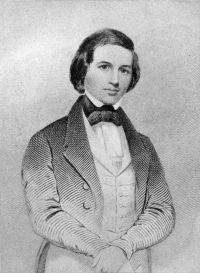
Portrait of T. S. Arthur T. S. Arthur,  Grappling with the Monster; Or…

“ If these membranes are rendered too porous, and let out the colloidal fluids of the blood—the albumen, for example—the body so circumstanced, dies; dies as if it were slowly bled to death. If, on the contrary, they become condensed or thickened, or loaded with foreign material, then they fail to allow the natural fluids to pass through them. They fail to dialyse, and the result is, either an accumulation of the fluid in a closed cavity, or contraction of the substance inclosed within the membrane, or dryness of membrane in surfaces that ought to be freely lubricated and kept apart. ”
Source: Gutenberg

Aldred Scott Warthin,  Practical pathology (1897)

“ Care must be taken to change the fluids so slowly that isolated cells will not be washed away.
1. Physiologic or Indifferent Fluids. Serous exudates, blood-serum, hydrocele fluid, etc.; artificial serum made by a mixture of 9 parts physiologic salt-solution with 1 part white of egg; or physiologic salt-solution (0.9 per cent for warm-blooded animals, 0.6 per cent for cold-blooded) .
2. Maceration Fluids. 33 per cent alcohol (24 hours) ; chromic acid 1:5000 (24 hours) ; potassium bichromate 0.1-0.2 per cent solution (2-4 days for nervous tissue) ; 0.1 per cent osmic acid (12-24 hours)
”
Source: Gutenberg

George W. Hunter,  A Civic Biology, Presented in Problems

“ This is done by pulsation of the vacuole, which ultimately bursts, passing fluid waste to the outside. Solid wastes are passed out of the cell in somewhat the same manner. No breathing organs are seen, because osmosis of oxygen and carbon dioxide may take place anywhere through the cell membrane. The nucleus of the cell is not easily visible in living specimens. ”
Source: Gutenberg

Get perspective with Kwize: daily news enlightened by great literature