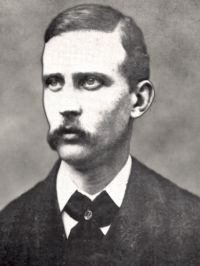
"Findings of fact" refer to the systematic identification and validation of empirical evidence, serving as a cornerstone of knowledge and argumentation. This theme has been explored by philosophers and thinkers such as Israel Zangwill, who questioned the threshold of "thorough, plain fact," and James Frederick Ferrier, who emphasized the necessity of moving from abstract hypotheses to concrete empirical study.
Josiah Royce framed the self as an "Ego," a fact indirectly known yet foundational to reality, while Leslie Stephen underscored the need for reflective observation to discern systematic principles within data. These perspectives highlight the interplay between evidence, critical analysis, and the pursuit of objective truth, revealing how the concept bridges empirical rigor and philosophical inquiry. The synthesis of these approaches underscores that factual findings are neither purely objective nor purely subjective, but emerge through disciplined engagement with data and structured reasoning.
 Israel Zangwill,
The Grey Wig (collection)
(1903)
Israel Zangwill,
The Grey Wig (collection)
(1903)