“ A force is that which tends to cause a change in the size or shape of a body or in its state of motion. In other words a force is a push or a pull. That is, force tends to produce distortion or change of motion in a body. Force itself is invisible. We measure it by the effect it produces. Forces are usually associated with the objects exerting them. Thus we speak of muscular force, air pressure, liquid pressure, the force of a spring, the force of the earth's attraction and so on. ”
Force (physics)
Definition and stakes
The theme of “force (physics)” has been addressed by authors such as Richard Feynman, Henry Kater, John Bernhard Stallo, Hermann von Helmholtz and Balfour Stewart. It is often associated with terms like matter, motion, gravity, mass and electricity.
Quotes about “force (physics)”
Aram D'Abro, The evolution of scientific thought from Newton to Einstein (1927)
“ In order to remedy this indeterminateness, it is usual to specify that the body on which the force is acting is one of unit mass; it is then called a test-body. Under these circumstances, we can explore a field of force by placing our test-body in successive regions of space and determining the magnitude and direction of the force which is acting on the body. When we have mapped out the magnitude and direction of the force for every point of space, we are in a position to state that we have determined the lay of the field of force.In physics we are often concerned with fields of force. ”
 D'Arcy Wentworth Thompson,
On Growth and Form
“ In the Newtonian language of elementary physics, force is recognised by its action in producing or in changing motion, or in preventing change of motion or in maintaining rest. When we deal with matter in the concrete, force does not, strictly speaking, enter into the question, for force, unlike matter, has no independent objective existence. It is energy in its various forms, known or unknown, that acts upon matter. ”
 P. W. Bridgman,
The logic of modern physics
(1927)
“ We thus see that in extending the notion of force from bodies in rest to bodies in motion, the character of the concept has changed, because the operations by which force is measured change—the force acting on a body is now measured in terms of its acceleration. ”
Various, The Catholic World, Vol. 19, April 1874‐September 1874
“ Büchner. Physics, as I stated to you on another occasion, “makes us acquainted with eight different forces—gravitation, mechanical force, heat, light, electricity, magnetism, affinity, cohesion, which, inseparably united to matter, form and give shape to the world. These [pg 643] forces are, with few exceptions, mutually convertible, so that nothing is lost in the process of conversion” (p. 18) . ”
 William Whewell,
History of scientific ideas
(1858)
“ These are the principal examples of mechanical science; although some other portions of Physics, as Magnetism and Electrodynamics, introduce mechanical doctrines very largely into their speculations.Now in all these sciences we have to consider Forces. In all mechanical reasonings forces enter, either as producing motion, or as prevented from doing so by other forces. Thus force, in its most general sense, is the cause of motion, or of tendency to motion ”
Various, Popular Science Monthly (1913)
“ He asks, for example, that the scientific notion of force be extended from inorganic to organic matter, from physics to biology. For force in the scientific sense is not an immanent power residing in bodies by means of which they pull or push one another, but it is a simple phenomenon of motion, and is measured by rate of change of motion. ”
“ Forces, then, are always found in pairs. Thus to break a string, to stretch an elastic band, to squeeze a lemon, one must exert two equal and opposite forces. Such a thing as a single force acting alone is unknown. Usually, however, we give our attention mainly to one of the forces and ignore the other. When a force acts upon a body the change of shape or size resulting is called a strain. ”
 George Henry Lewes,
The Physical Basis of Mind
“ The conception of an entity must be rejected, because it is metempirical and unverifiable, § 34. The conception of a force must be rejected, because it is irreconcilable with any definite idea we have of force. What the term Force signifies in Physics and Chemistry, namely, mass animated by velocity, or directed pressure, which is the activity of the agent,—is precisely that which these vitalists pertinaciously exclude. They assume a force which has nothing in common with mass and velocity; which is not a resultant, but a principle ”
 Frank Wigglesworth Clarke,
Popular Science Monthly
(1874)
“ We have learned that force is one, indestructible and uncreatable, and that all its manifestations are mutually convertible one into another. Either of the great modes of force may be active in affecting chemical composition; may cause chemical union or chemical separation; may be the motive of either analysis or synthesis. Now, in the direction here suggested, the main work of physics is being done. The chief object of the physicist to-day is to determine quantitatively the relations connecting all the different varieties of energy. Under what circumstances, and how, are forces transformed? ”
John Bernhard Stallo, Popular Science Monthly (1874)
“ And, in the second place, physiologists, like Du Bois-Reymond, recognize force as the invariable concomitant, if not the essential attribute of matter, and assume that to every constant primordial mass belongs a constant primordial quantity of force, so that the problem of physics, chemistry, and physiology, resolves itself into the quantitative determination of the mechanical interactions of material constants primarily endowed with forces acting equally in all directions, or, as they express it, constant central forces. ”
 Joseph Lovering,
The Mathematical and Philosophical State of the Physical Sciences
(1874)
“ In the phraseology of our mechanics we define matter and force as if they had an independent existence. But we have no conception of inert matter or of disembodied force. All we know of matter is its pressure and its motion. ”
Edward L. Nichols, Popular Science Monthly (1904)
“ Here speculation is excluded. Matter is simply one of the three factors which enters, by virtue of its mass, into our formulae for energy, momentum, etc. Force is simply a quantity of which we need to know only its magnitude, direction, point of application and the time during which it is applied. The Newtonian conception of force—the producer of motion—is adequate. All troublesome questions as to how force acts, of the mechanism by means of which its effects are produced are held in abeyance. ”
Joseph Lovering,
Popular Science Monthly
(1874)
“ The fundamental and only admissible idea of force is that of pressure, exerted either actively by the ether against the surface of the atoms, or as reaction of the atoms on the ether by resistance to that pressure. The principle of deriving fundamental physical conceptions from the indications of the senses does not admit of regarding gravity, or any other force varying with distance, as an essential quality of matter, because, according to that principle, we must, in seeking for the simplest idea of physical force, have regard to the sense of touch. ”
 Thomas P. Jones,
Conversations on Natural Philosophy…
“ We know also by experience, that the heavier a body is, the greater is its force; it is not therefore difficult to understand, that the whole power, or momentum of a body, must be composed of these two properties, its weight and its velocity: but I do not understand why they should be multiplied, the one by the other; I should have supposed that the quantity of matter, should have been added to the quantity of motion? ”
 Thomas Henry Huxley,
Science Primers, Introductory
“ Again, gravitation is spoken of as a force; and as the word force is in very common use, let us try to make out what we mean by it. A man is said to exert force when he pushes or pulls anything so as either to exert pressure upon it or to put it in motion. A wrestler’s force is proved by his hug; a bowler’s force is shown by the swiftness of motion of the ball. ”
 John F. W. Herschel,
Preliminary Discourse on the Study of Natural Philosophy
“ For example, in198 the theory of gravitation we suppose an agent,—viz. force, or mechanical power,—to act on any material body which is placed in the presence of any other, and to urge the two mutually towards each other. This is a vera causa; for heavy bodies (that is, all bodies, but some more, some less,) tend to, or endeavour to reach, the earth, and require the exertion of force to counteract this endeavour, or to keep them up. Now, that which opposes and neutralizes force is force. ”
Various, The Catholic World, Vol. 11, April…
“ The theory which reduces all to force, which recognizes in bodies an intrinsic mode of acting, whether it divide these forces in the mass of matter, or cause them to mount up to the primitive element, to the atom, indivisible point, or monad, seems to us in every case to beg the question. What is in fact a force, and especially a force attributed to any object? It is undoubtedly neither a being, since it is joined to a first element, nor a substance, since it is considered as an attribute. ”
1911 Encyclopædia Britannica, Volume 12… (1911)
“ In 1846 he published his famous book on The Correlation of Physical Forces, the leading ideas of which he had already put forward in his lectures: its fundamental conception was that each of the forces of nature—light, heat, electricity, &c.—is definitely and equivalently convertible into any other, and that where experiment does not give the full equivalent, it is because the initial force has been dissipated, not lost, by conversion into other unrecognized forces. ”
Joseph Lovering,
The Mathematical and Philosophical State of the Physical Sciences
(1874)
“ Now, by this sense, we obtain a perception of force as pressure, distinct and unique, and not involving the variable element of distance, which enters into the perception of force as derived from the sense of sight alone. ”
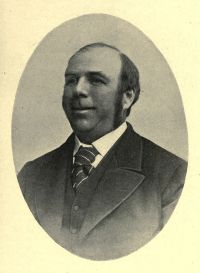 Robert S. Ball,
Experimental Mechanics
“ If we try to conceive a body free in space, and not acted upon by any force, it is more natural to suppose that such a body, when once started, should go on moving uniformly for ever, than that its velocity should be altered. ”
 James Clerk Maxwell,
A Treatise on Electricity and Magnetism
(1873)
“ In this way both the unit of force and the unit of mass are made to depend on the value of the force of gravity, which varies from place to place, so that statements involving these quantities are not complete without a knowledge of the force of gravity in the places where these statements were found to be true. ”
 John Wesley Powell,
Truth and Error — Chapter XI.
(1898)
“ Assuming that force is motion and gravity force, then if the particle can lose any of its speed it can lose gravity, which is absurd; and if in the collision of a body speed is transferred from its particles to the particles of another body, then the other body must weigh more, which also is absurd ”
 Isaac Newton,
The Mathematical Principles of Natural Philosophy…
“ If a body in an uniform medium, being uniformly acted upon by the force of gravity, ascends or descends in a right line; and the whole space described be distinguished into equal parts, and in the beginning of each of the parts, (by adding or subducting the resisting force of the medium to or from the force of gravity, when the body ascends or descends) you collect the absolute forces ”
George F. Barker, Half Hours With Modern Scientists…
“ A few simple experiments will help us to fix in our minds the great fact of the convertibility of force. Starting with actual visible motion, correlation requires that when it disappears as motion, it should reappear as heat, light, or electricity. If the moving body be elastic like this rubber ball, then its motion is not destroyed when it strikes, but is only changed in direction. ”
 Thomas Reid,
An Essay on Quantity
(1843)
“ You will find none that is more simple, more distinct, or more agreeable to the common use of the word force: and he that rejects one definition that has these properties, has equal right to reject any other. I say, then, that it is impossible, by mathematical reasoning or experiment, to prove that the force of a body is as its velocity, without taking for granted the thing you would prove, or something else that is no more evident than the thing to be proved. ”
William Whewell,
History of scientific ideas
(1858)
“ The clear Definition of a uniform accelerating force, and the Proposition that gravity is such a force, were co-ordinate and contemporary steps in this discovery. In defining accelerating force, reference, tacit or express, was necessarily made to the second of the general axioms respecting causation,—That causes are measured by their effects. Force, in the cases now under our notice, is conceived to be, as we have already stated, (p. 236,) any cause which, acting from without, changes the motion of a body. ”
John Bernhard Stallo, Popular Science Monthly (1874)
“ Every particle of matter of which we have any knowledge attracts every other particle in conformity to the law of gravitation; and every material element exerts chemical, electrical, magnetic, thermic, and similar forces upon other elements which in respect to these forces are its correlates. The whole presence of matter to the senses consists in the manifestation of power, in the exhibition of force. All this has been very clearly seen and very explicitly stated by numerous physicists ”
 C. Lloyd Morgan,
Spencer's Philosophy of Science
“ There can be no objection to the treatment, by physicists, of energy as an entity in the sense given below in note 82. Those phenomena to which 1/2 mv2 has reference are fundamental realities for physical science. [44] In a statement of the law of gravitation we may substitute the words 'in a degree' for 'with a force'; we may speak of 'the measure of attraction' instead of 'the force of attraction'. ”
William Whewell,
Novum organon renovatum
(1858)
“ Induction of Force.—The inference of Mechanical Forces from phenomena has been so abundantly practised, that it is perfectly familiar among scientific inquirers. From the time of Newton, it has been the most common aim of mathematicians; and a persuasion has grown up among them, that mechanical forces,—attraction and repulsion,—are the only modes of action of the particles of bodies which we shall ultimately have to consider. ”
 John Stuart Mill,
A System of Logic, Ratiocinative and Inductive
(1881)
“ The endeavor to define a Uniform Force was combined with the assertion that gravity is a uniform force; the attempt to define Accelerating Force was immediately followed by the doctrine that accelerating forces may be compounded; the process of defining Momentum was connected with the principle that momenta gained and lost are equal; naturalists would have given in vain the definition of Species which we have quoted, if they had not also given the characters of species so separated.... ”
William Bower Taylor, Kinetic Theories of Gravitation… (1876)
“ As force is thus conceived, not as an absolute entity acting upon matter, but as a condition of the parts of matter itself, and as a condition determined by the relative masses and distances of these parts, any valid hypothesis of a force or of a motion to account for any set of phenomena is thus seen to imply an assertion as to relative masses and distances which can be more or less readily submitted to experiment or observation and analysis. ”
Aram D'Abro, The evolution of scientific thought from Newton to Einstein (1927)
“ It is, as we have said, the variations in value of these potentials from point to point that are associated with the existence of forces. When this variation is uniform in one direction and no variation exists in directions at right angles, we are in the presence of a uniform field of force. When the variation is irregular, we have a non-uniform field of force. When the potential has the same constant value throughout space, so that it does not change in value from place to place, no forces can be present; there is then no field of force. ”
Aram D'Abro, The evolution of scientific thought from Newton to Einstein (1927)
“ These two species of fields of force were regarded by classical science as of a totally different nature. There appeared to be very good reasons for this distinction. Suppose, for instance, that a train is slowing down. If we are standing in the train, we shall feel a force pulling us towards the engine and it may require a certain effort on our part to resist its pull. As such, the force is obviously real, in that it is experienced. ”
Aram D'Abro, The evolution of scientific thought from Newton to Einstein (1927)
“ ACCORDING to classical science, force may be defined as the product of mass by acceleration. When no force is acting, the motion of a body is always Galilean; only when a force is acting will the motion of a body become accelerated. [76] Now it must be noted that when a body is subjected to some definite muscular pull the magnitude of this pull or force depends solely on the muscular effort which we are willing or able to produce. ”
Related terms
Authors who wrote about “force (physics)”
 Richard FeynmanHenry KaterJohn Bernhard Stallo
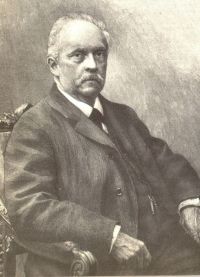 Hermann von Helmholtz
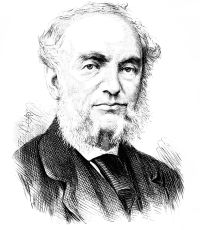 Balfour StewartJoseph Le ConteThomas D. CopeThomas P. JonesEdward L. NicholsGeorge F. Barker
 Bertrand RussellWilliam George HooperGeo. W. WarderWilliam Bower Taylor
 Albert EinsteinP. W. BridgmanIsaac NewtonFrank Wigglesworth ClarkeVariousJames Clerk Maxwell
